Clément Blanchet Architecture’s proposal for the France Pavilion at Dubai 2020
The practice Clément Blanchet Architecture shares with us its finalist proposal for the France Pavilion at Dubai 2020, which will be designed by Atelier du Prado. The project was developed with architect Etienne Tricaud of Arep and the contractor Vinci Grands Projets.
See also:
- Our special report on Dubai Expo 2020
- Atelier du Prado’s winning project for the France Pavilion
- Franklin Azzi Architecture’s finalist proposal for the France Pavilion
Before presenting the architectural project, we asked the architects at Clément Blanchet Architecture how the collaboration with Arep came about: “Our first collaboration with AREP was in 2017, on the competition for the ANTONYPOLE station district, as part of the IMGP (Inventons la Métropole du Grand Paris) calls for ideas, which we won. Following that successful collaboration, we realised that our practices were complementary and that we could go on enriching one another. We were lucky enough to do exactly that once again on the pavilion.”
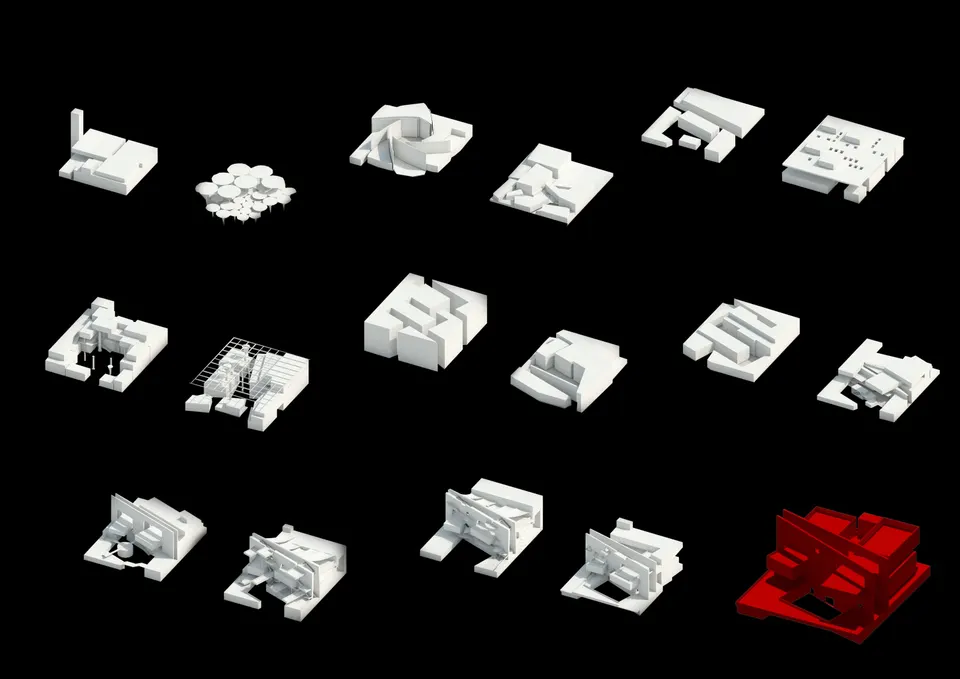
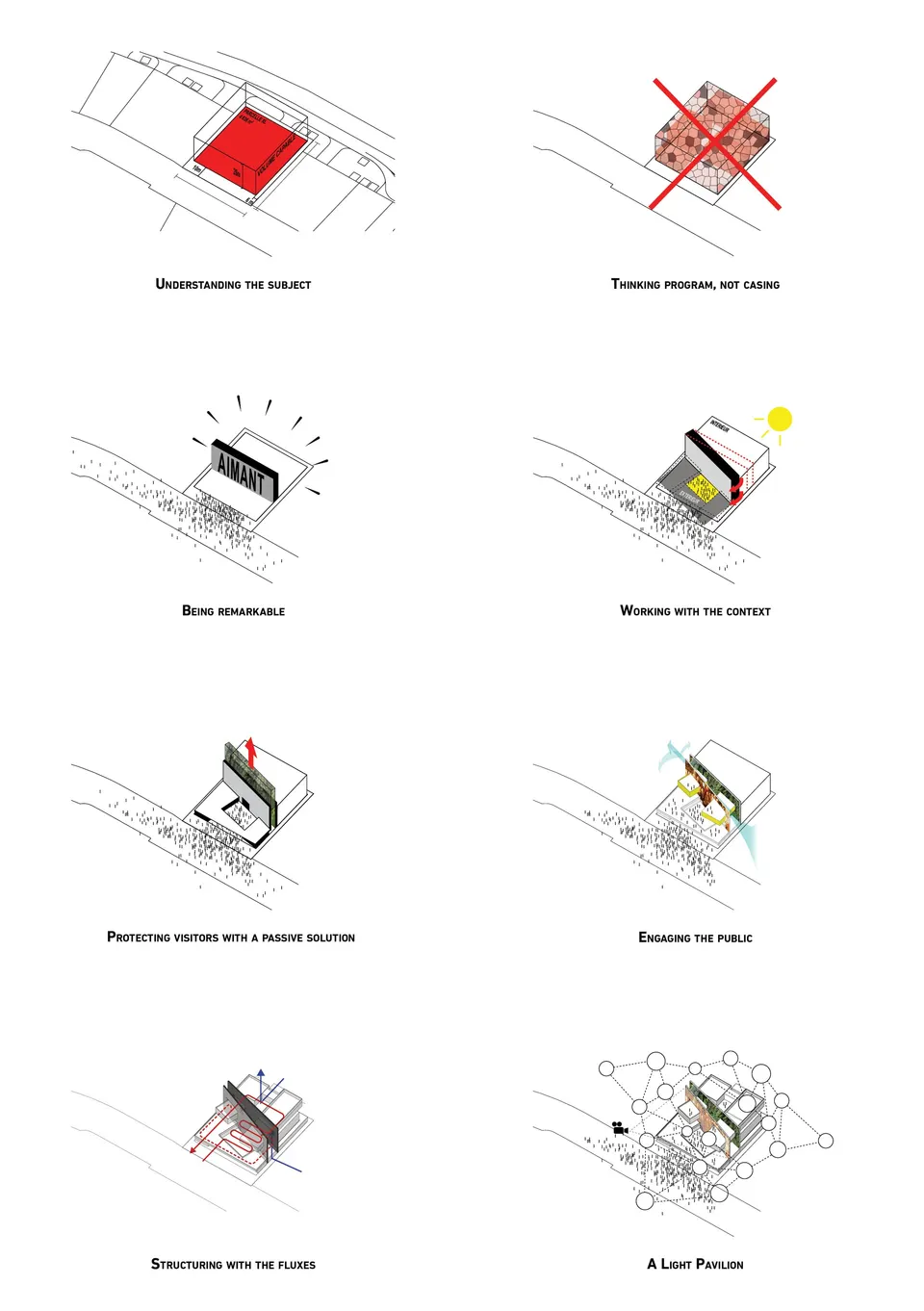
Asked about the complex aspects of the project, the architects replied: “The most complex thing is probably finding an idea, a concept that is true and fair, that tells of a way of doing, living and thinking without being a caricature or a postcard image of France. Once that idea is found, it is up to the architect to formalise it and make it tangible. Many iterations of the same concept therefore emerged over several months, until we found a compromise that met the client’s requirements without corrupting the purity of the message.”
With its proposal, Clément Blanchet Architecture therefore sought to connect elements that are usually set against each other: the real world versus the virtual world, tradition versus innovation.
This trajectory can also be seen in the economy today, where digital players such as Amazon are expanding into physical shops as a continuation of the online customer experience. The same goes for the telepresence robots found in Veolia’s rural branches, which give the company’s advisers a life-size presence while ensuring a human exchange between customer and adviser.
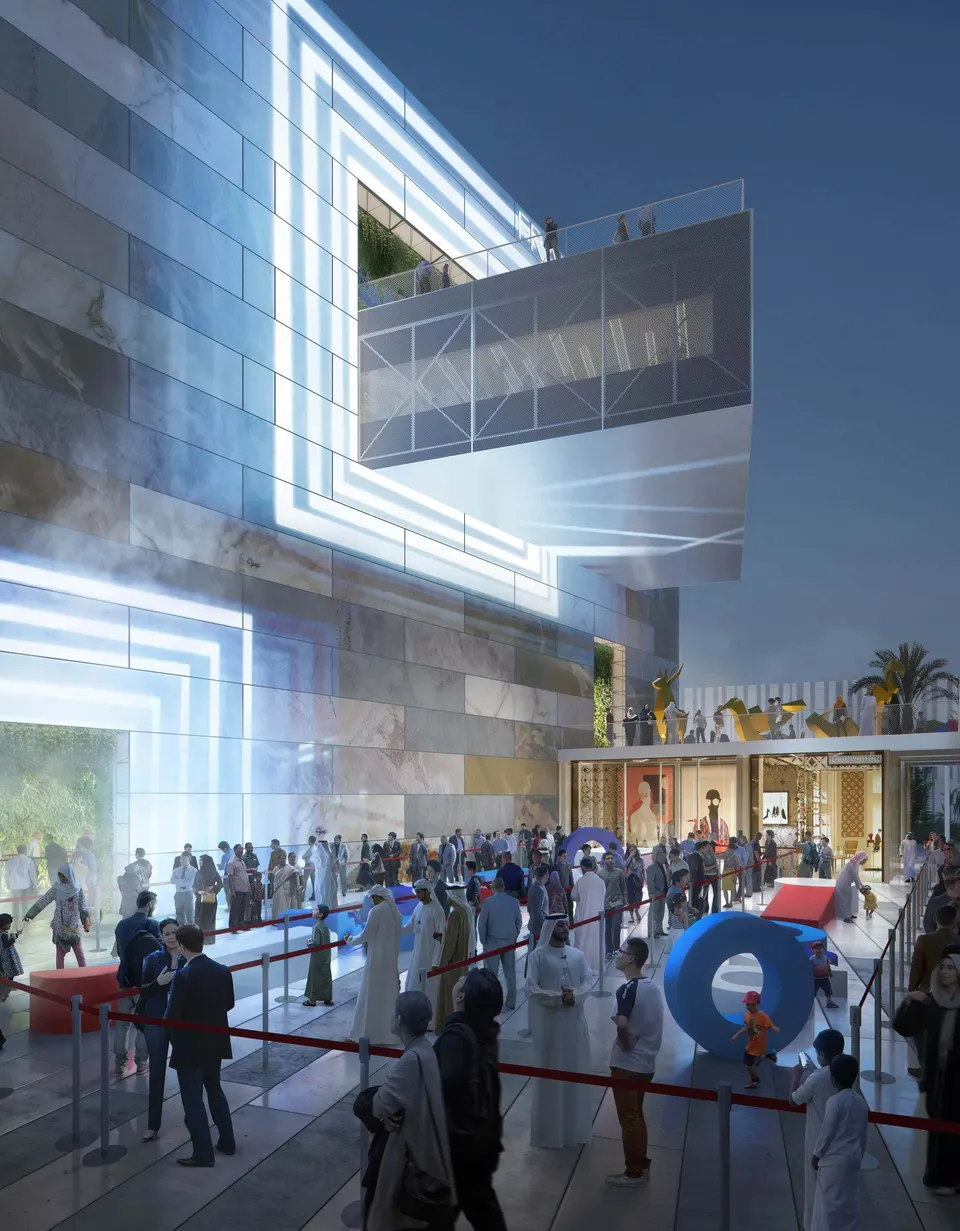
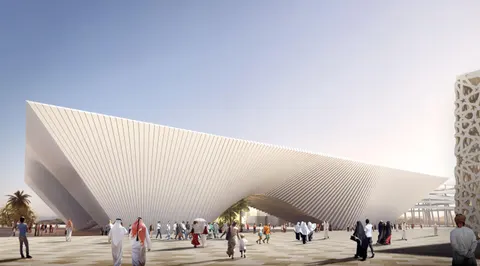
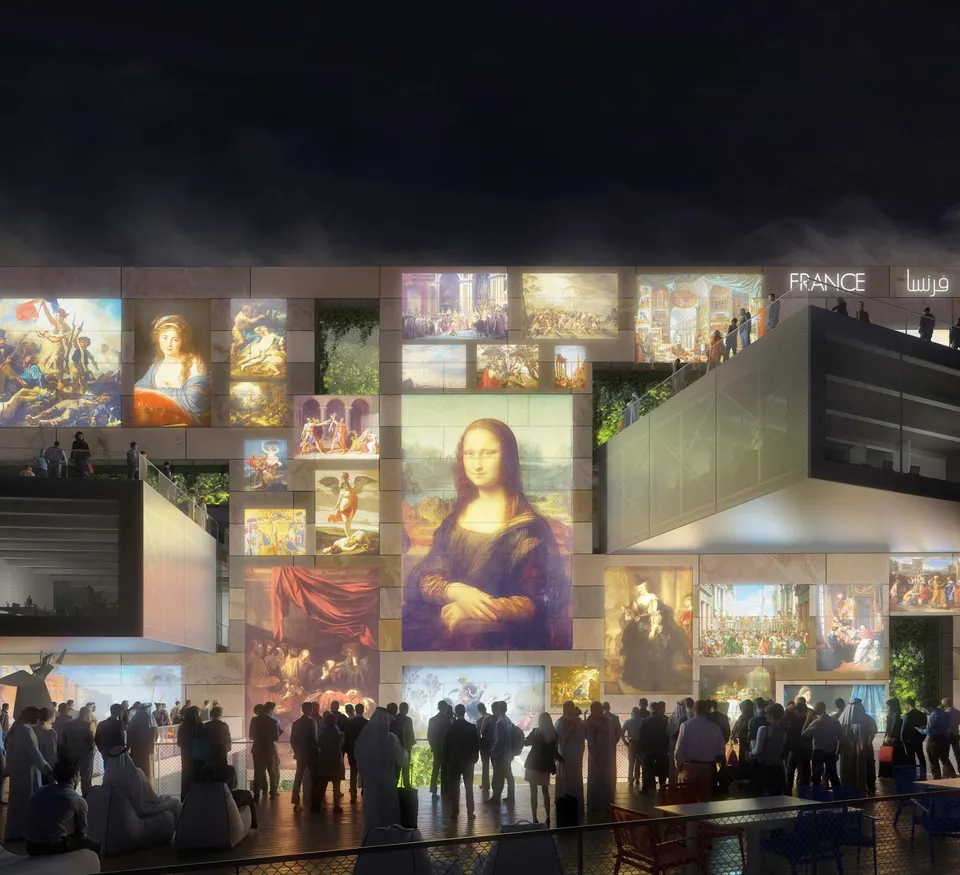
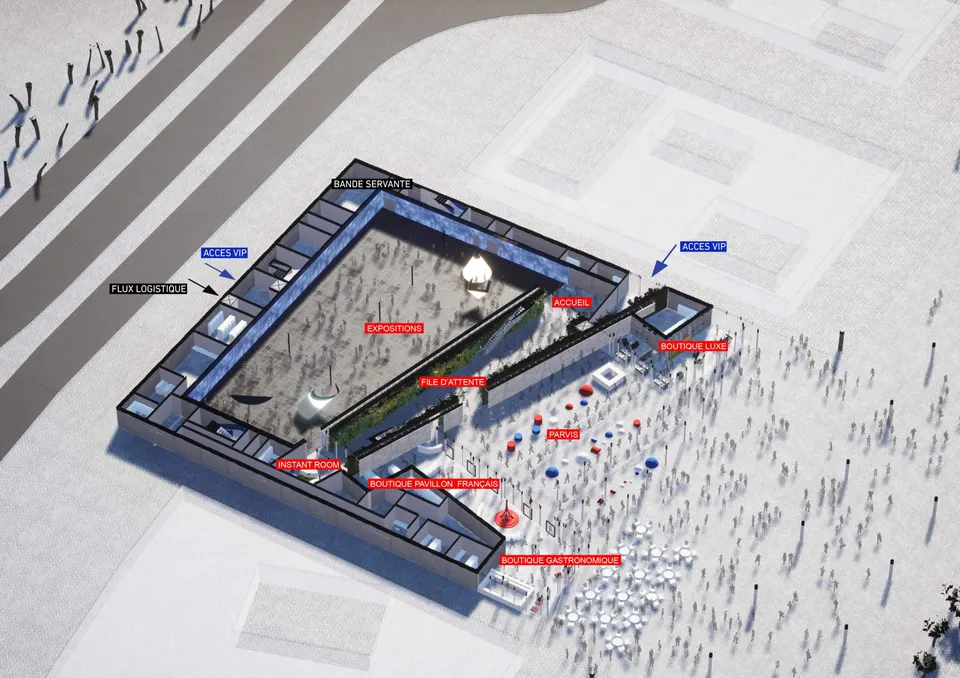
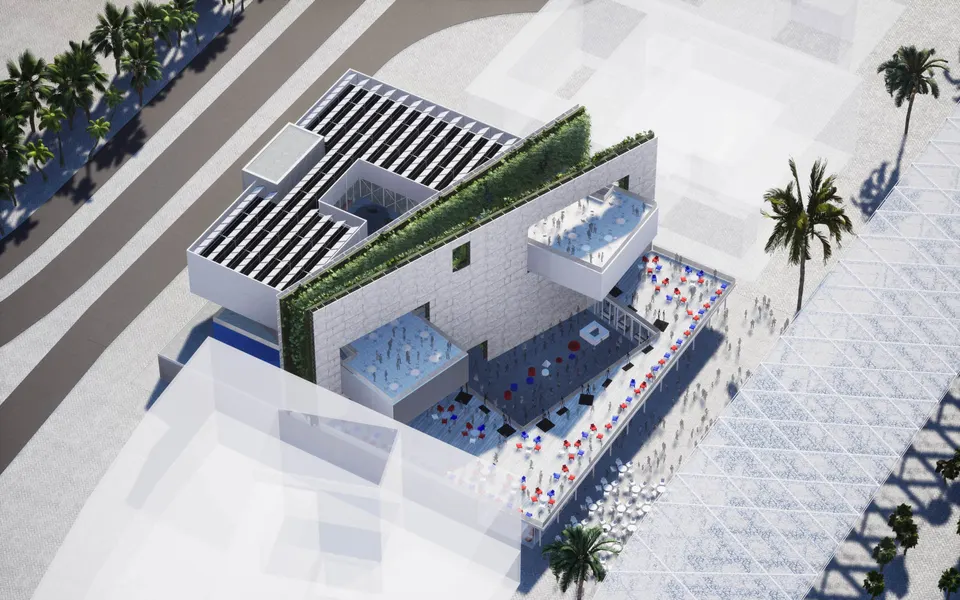
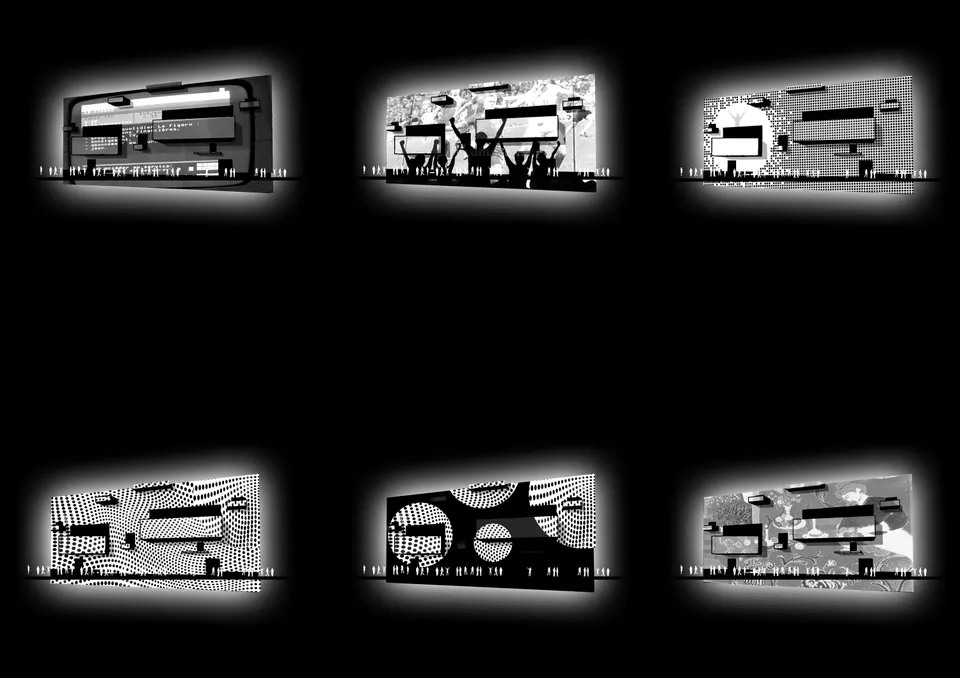
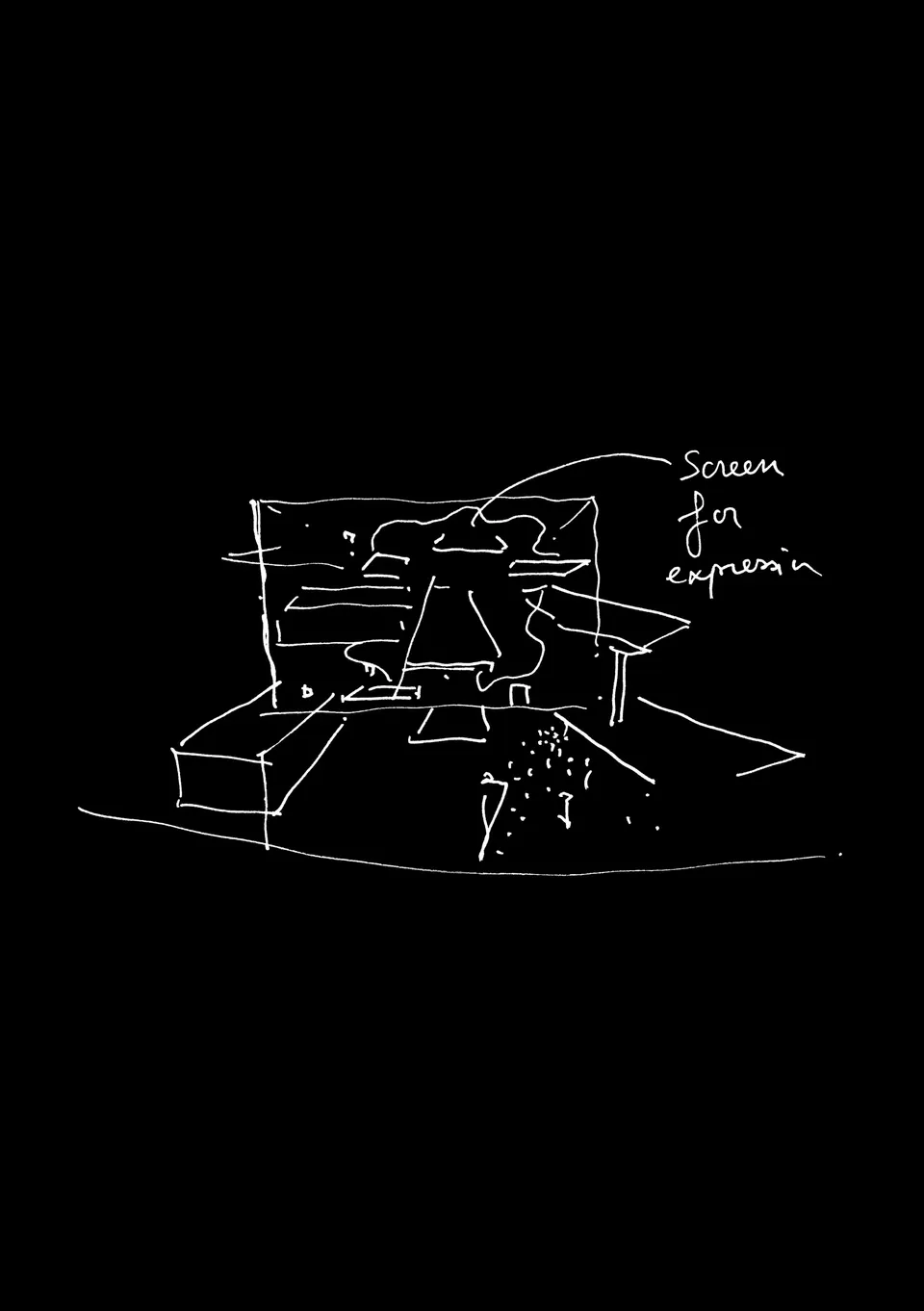
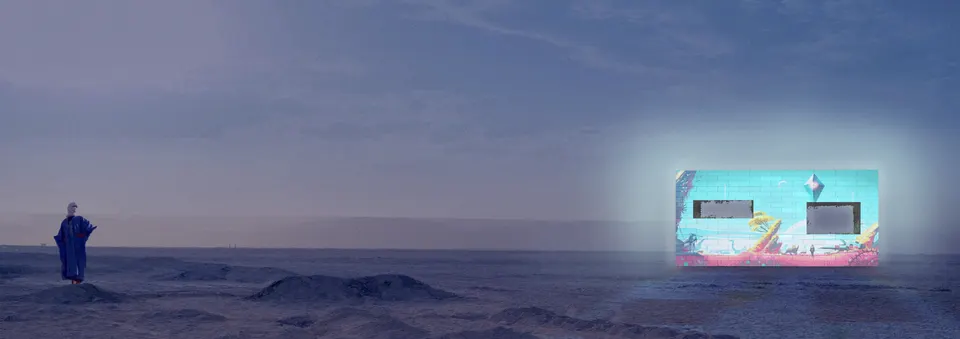
Accordingly, the mineral façade rising in front of the forecourt that welcomes visitors stands tall with large stones, in reference to French heritage. Once night falls, it becomes a medium for French cultural heritage, thanks to innovation.
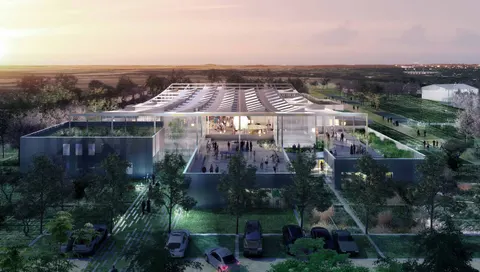
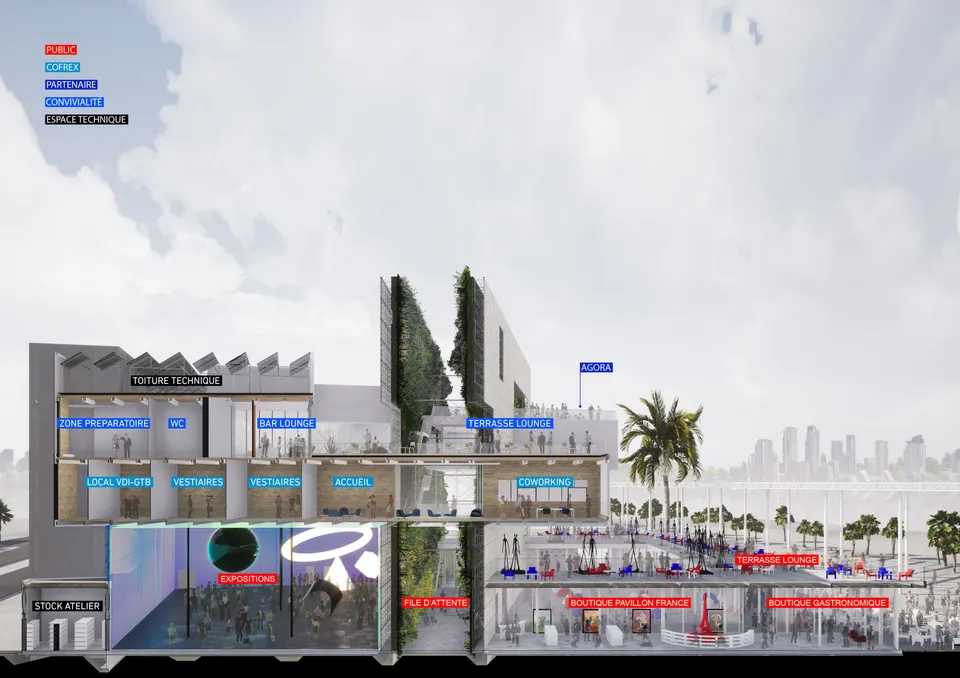
The forecourt, meanwhile, gives access to the shop, offers visitors some breathing space and provides a play area for children.
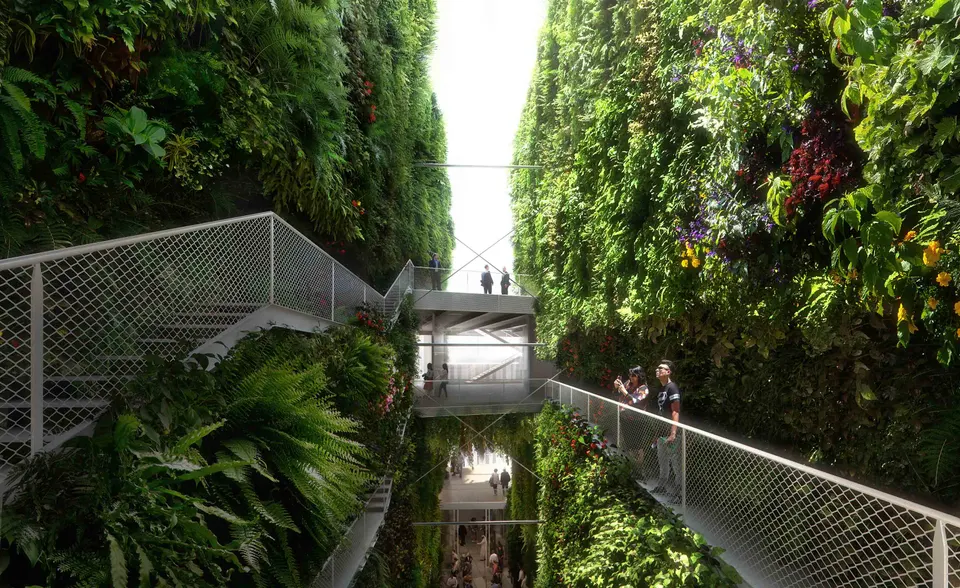
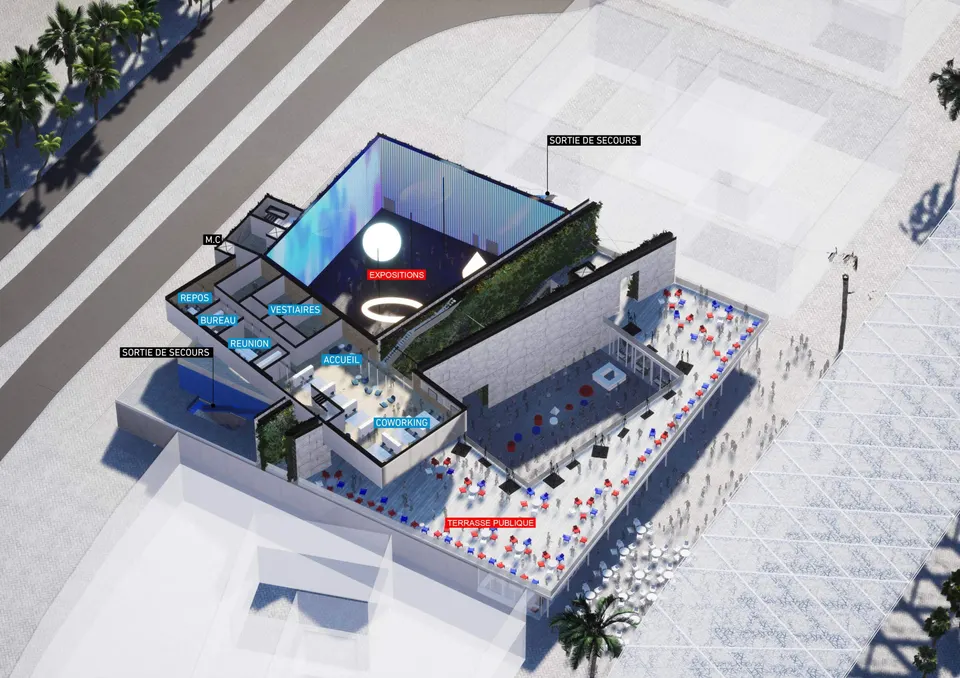
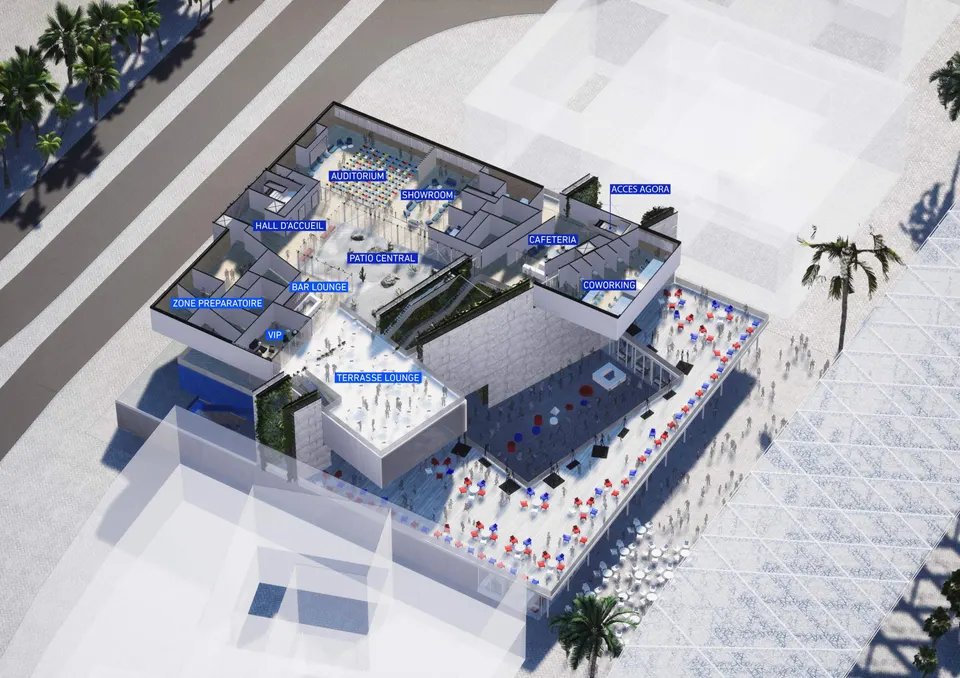
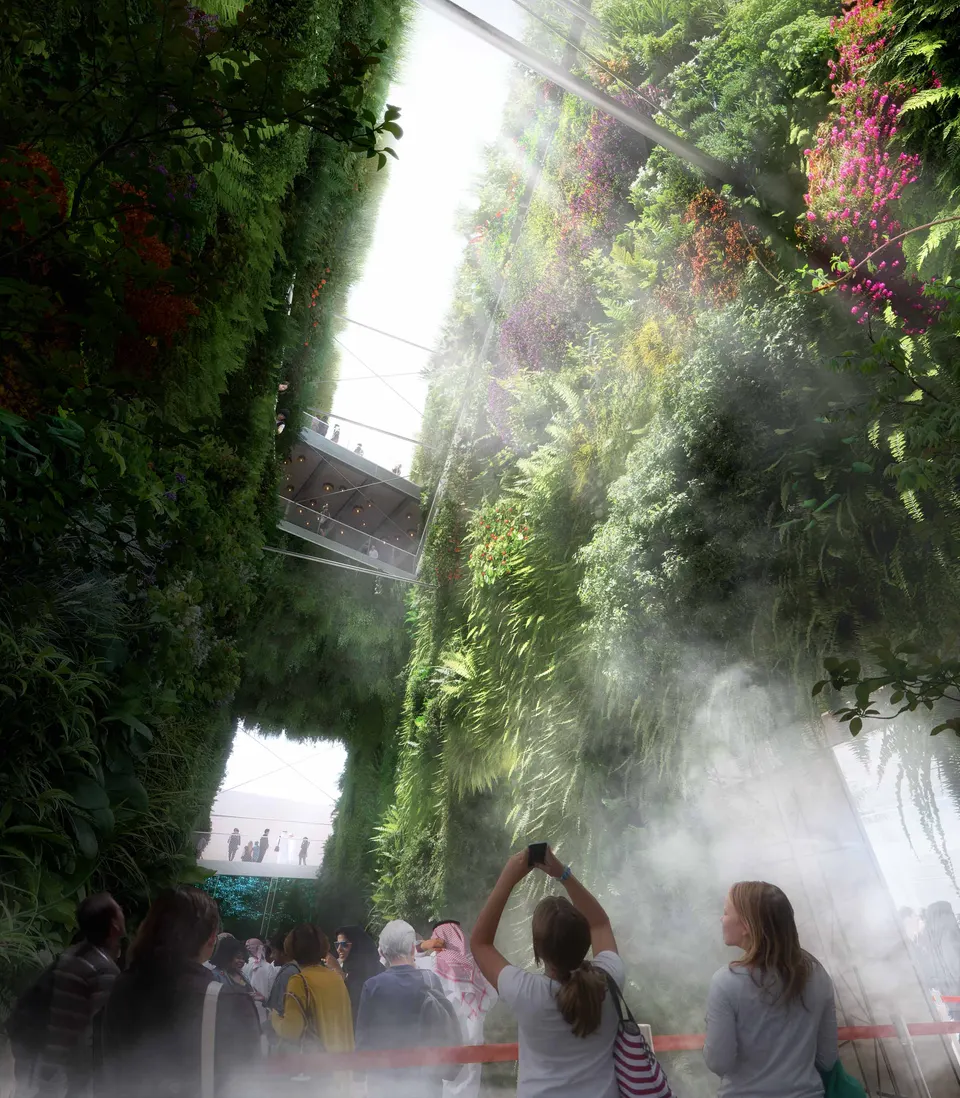
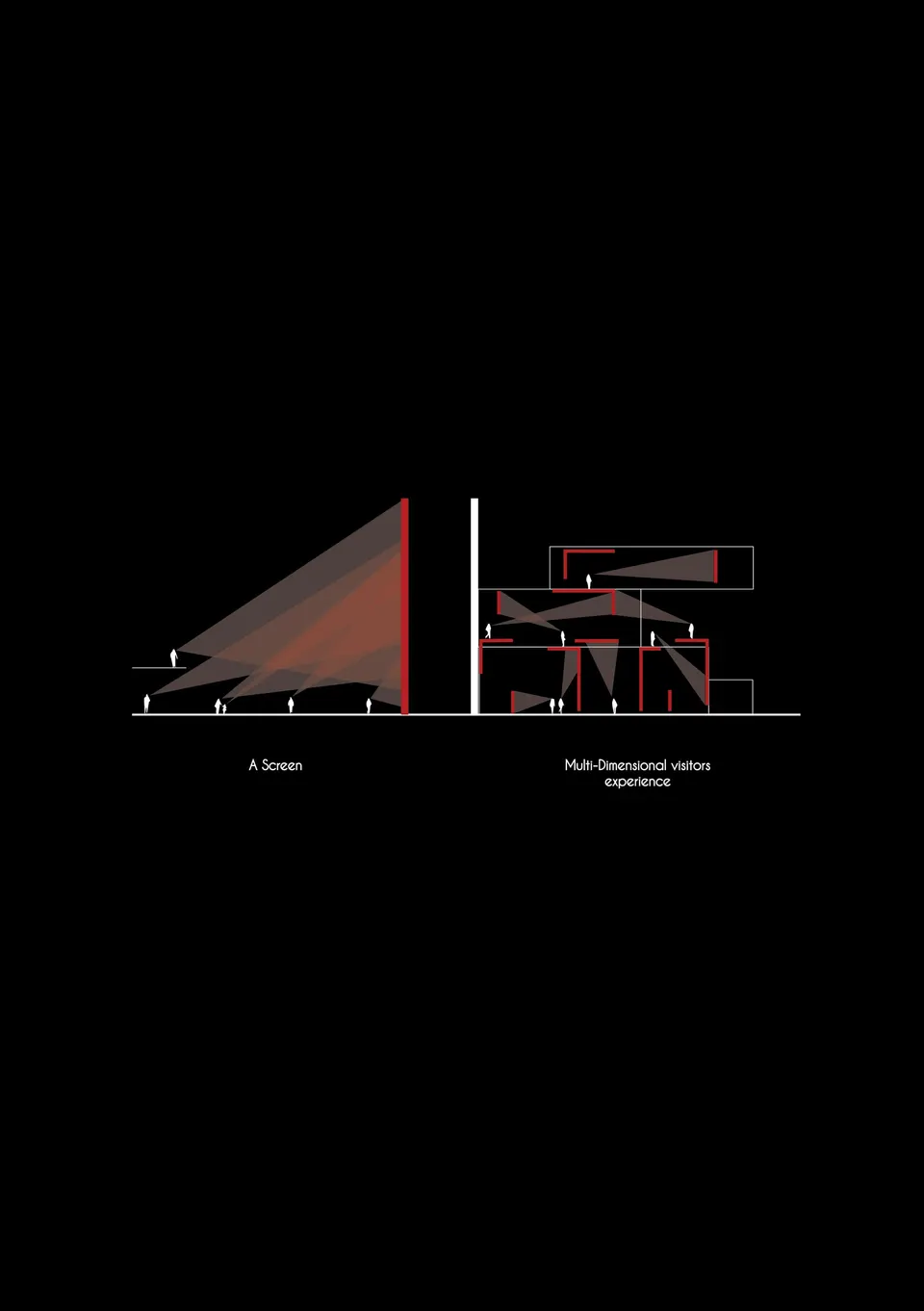
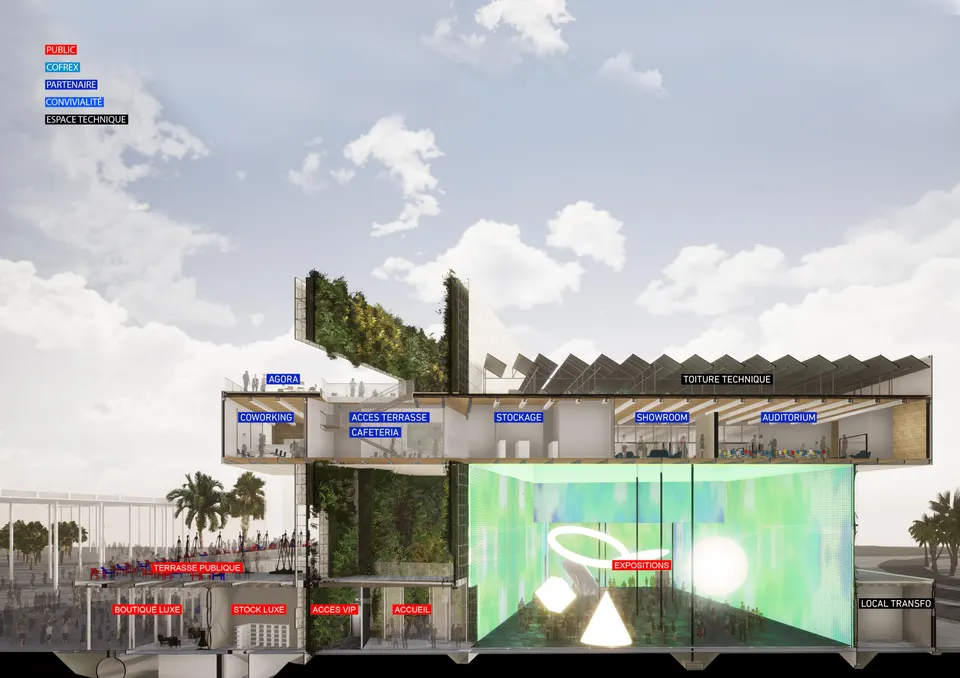
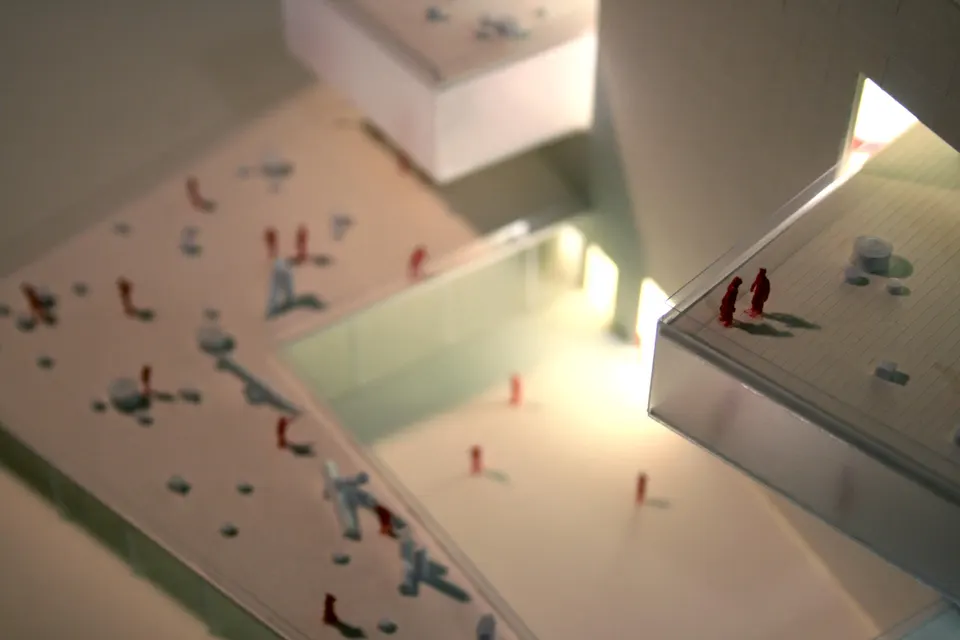
Once visitors pass through this mineral thickness, they find themselves immersed in a tropical oasis recalling the greenery of the French countryside. This large cleft also affords glimpses of the exhibition content through two suspended volumes. The architects at Clément Blanchet Architecture sought to play on verticality, echoing the tall towers built in Dubai, set against the horizontality of the nearby desert.
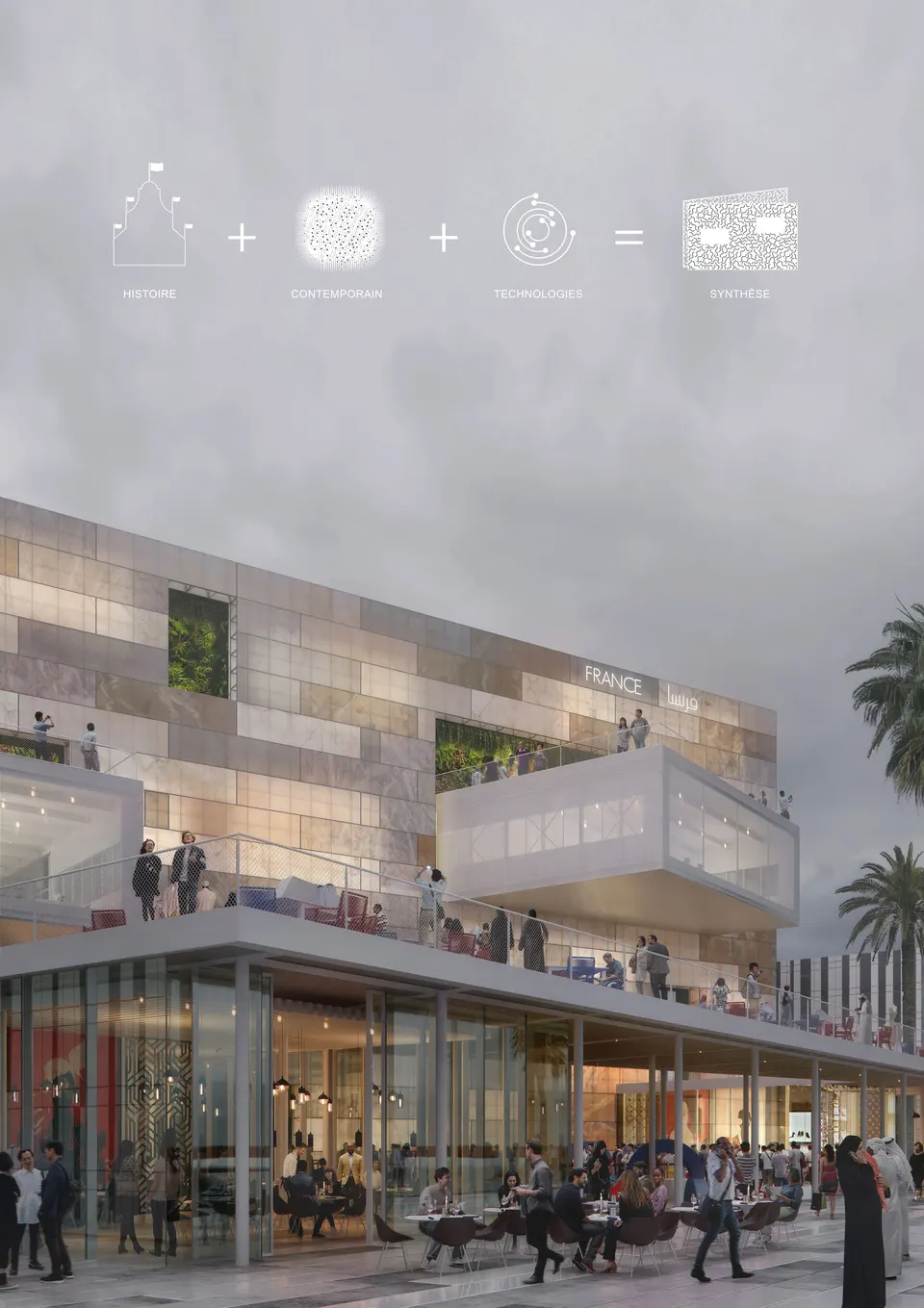
Building in Dubai is quite different from building in Europe, so we asked the architects to tell us about the constraints their team encountered while designing the France Pavilion: “The first issue in Dubai is obviously shelter and coolness. The desert is a harsh environment, not conducive to waiting in long queues. For that reason we created an object entirely tailored to its context in terms of wind and sun, with a self-protecting form. We wanted to offer people coolness and nature, so we conceived the project as an oasis, in which plants grow sheltered from the harsh sunlight. Another major challenge was building ‘local’, yet in Dubai local materials are thin on the ground. One might think a concrete solution would be reasonable, since all the sand required could be taken straight from the desert… However, Dubai’s sand is unsuitable for construction, which makes Dubai one of the world’s biggest importers of sand… So we sought to build with this sand, using a reworked gabion system designed both to hold up the pavilion and to act as a gravity wall, allowing shallow foundations. What is interesting is that Franklin Azzi’s team also took this route, using sand in the façade in a very elegant and dramatic way.”
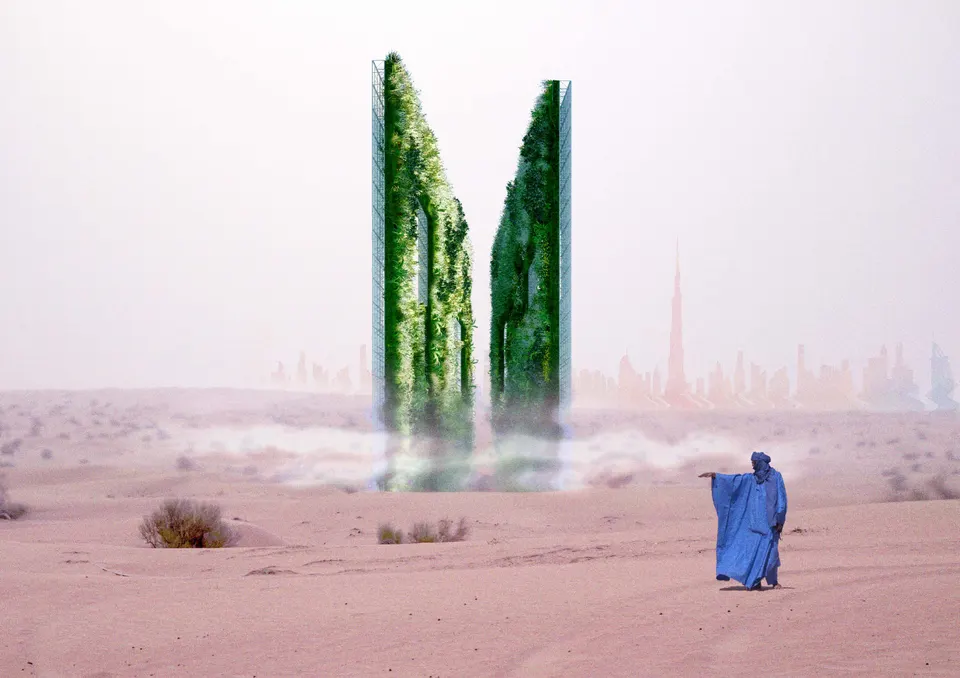
For the construction of the France Pavilion, the team had planned a sand gabion system to receive shallow, easily relocatable foundations. These steel modules contain canvas bags filled with sand. As the architect explained above, this system made it possible to use local sand in the construction, sand that cannot be used in concrete.
As for the building envelope, the steel structure is bolted and the floors were designed in CLT. Finally, the walls are clad in expanded metal set flush with the structure. The pavilion’s carbon footprint would have been limited at dismantling, since the elements that ballast the project (foundations, planted wall) would be returned to the site, being local sand.
The architectural proposal did not win over the jury, but the practice nevertheless draws a positive assessment, as Clément Blanchet Architecture explains: “Above all, this is a project that was built as a team. Alongside Vinci Grands Projets, Etienne Tricaud and Arep, there was Operel, the structural engineers MAP3, the environmental engineers Franck Boutté, the building services engineers Terrel… In short, we were fortunate to work with many extremely capable people and to form a close-knit team throughout the dialogue. There is no doubt that this experience benefited us all greatly and that we learned from one another, not without a few creative frictions, of course! And then, quite obviously, designing a world expo pavilion for your own country is a chance that does not come along every day. Each of us was aware of that throughout the exercise, which naturally carried us and pushed us to give our best. We remain glad to have taken part in this competition, despite its outcome.”
I now invite you to discover the winning project designed by Atelier du Prado, as well as the finalist proposal by Franklin Azzi Architecture. You can also read our special report on Dubai Expo 2020.
Gallery
22 images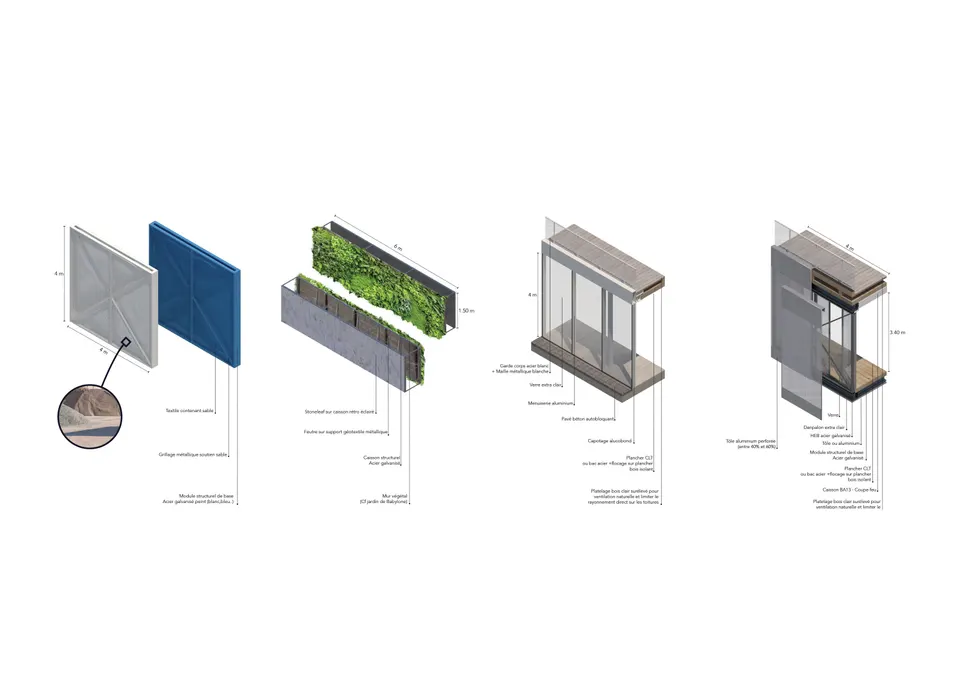
- © Plompmozes
- © Clément Blanchet Architecture
Also available in FrançaisDeutsch