Qatar National Library by OMA

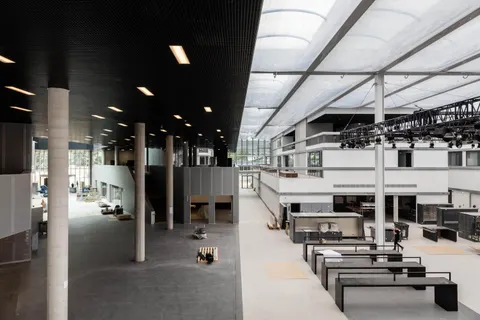
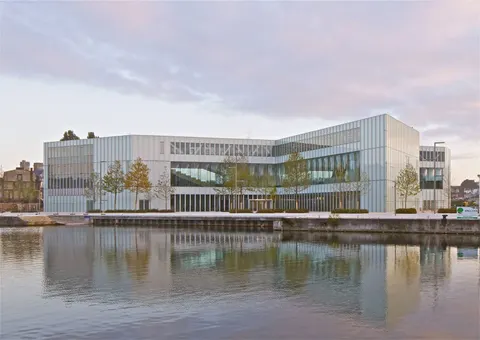
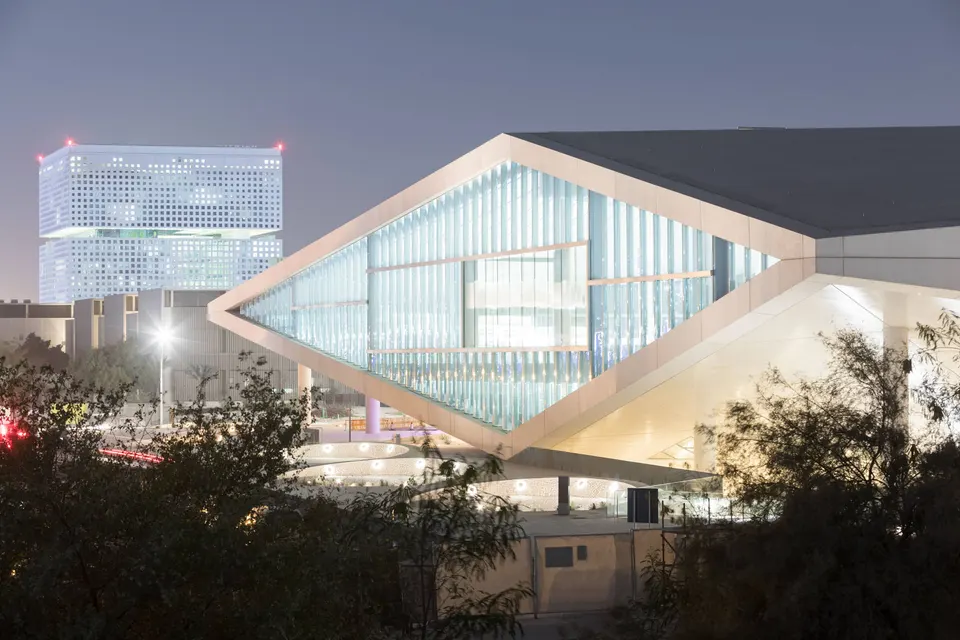
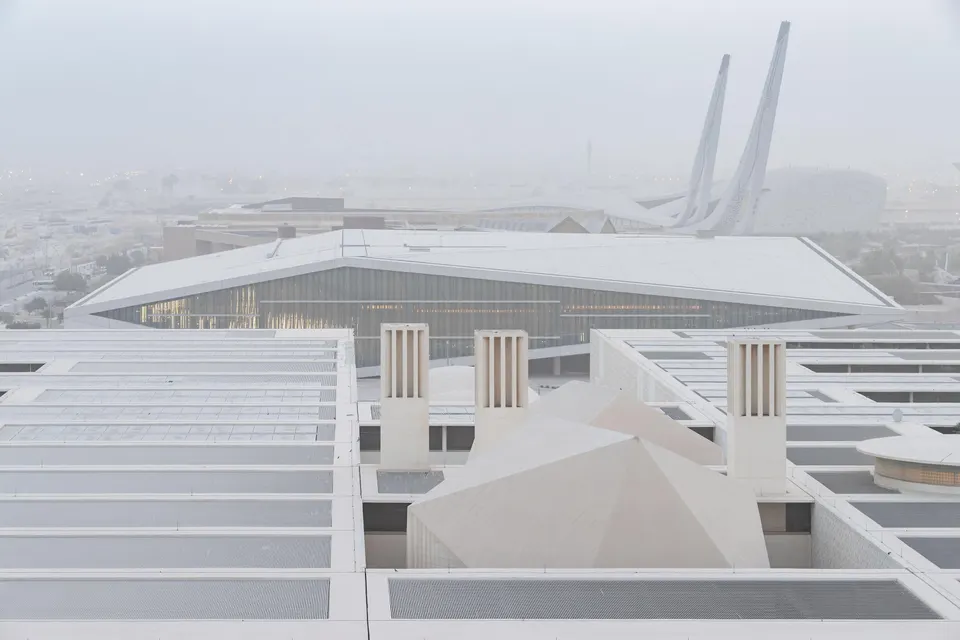
Open to the public since October 2017, the new Qatar National Library in Doha, designed by OMA, will remind many French visitors of the Alexis de Tocqueville library in Caen, also designed by Rem Koolhaas's Dutch practice. It was in France, in fact, that the practice first began working on this building type, with its proposal for the Bibliothèque Nationale de France in 1989, followed by the Jussieu university library in 1992.
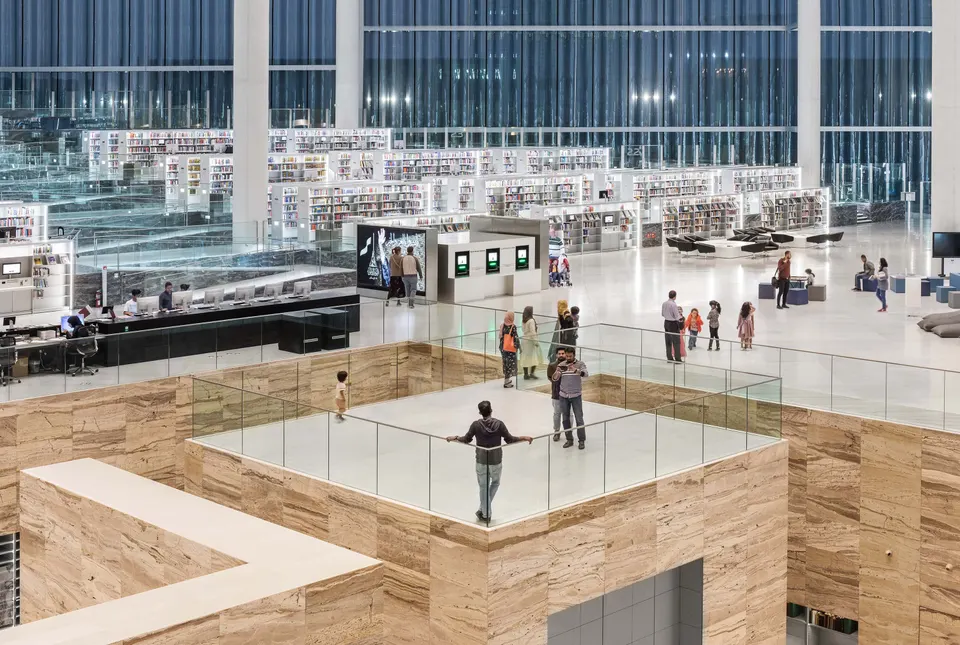
The Qatar National Library brings together several collections from the Qatar National Library, the public library and the Doha university library, and also houses a heritage collection of manuscripts and precious texts. In all, more than 800,000 books are currently catalogued across 32,000 m² of net floor area, and the library will be able to hold one million in future. Note that the library holds not only works in Arabic but also books in English and French, among other languages.
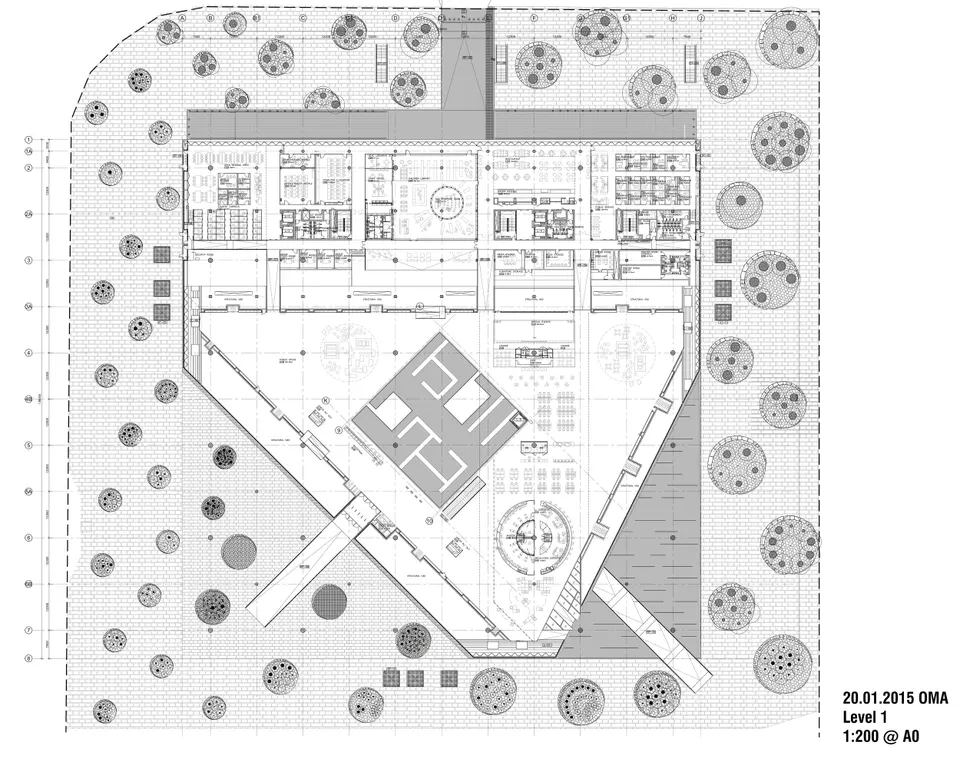
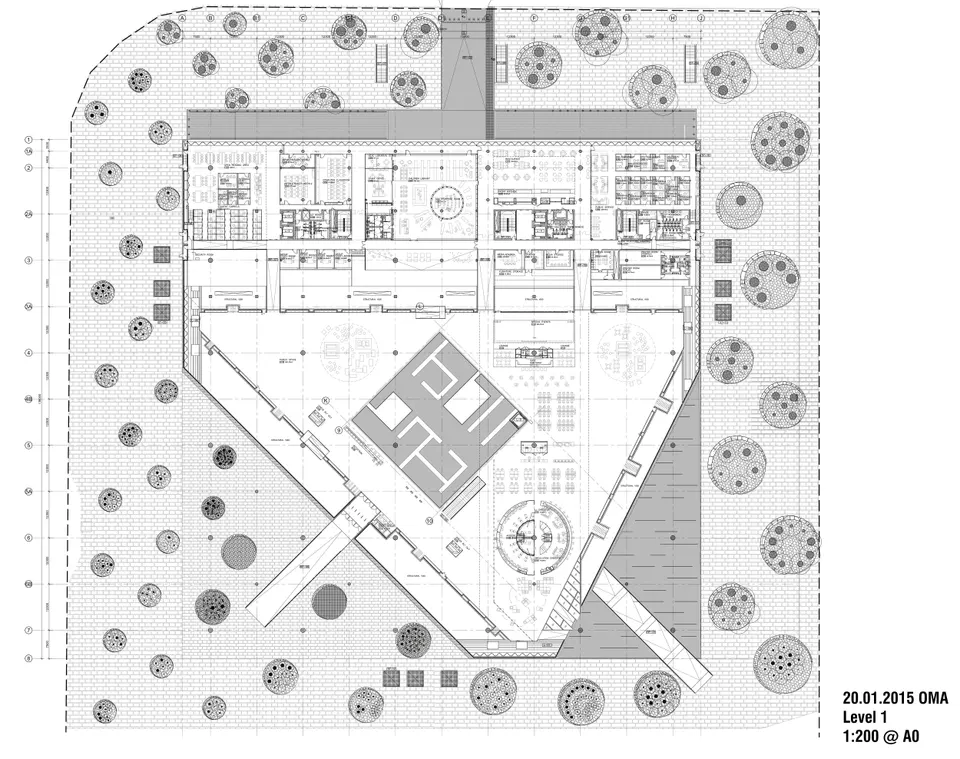
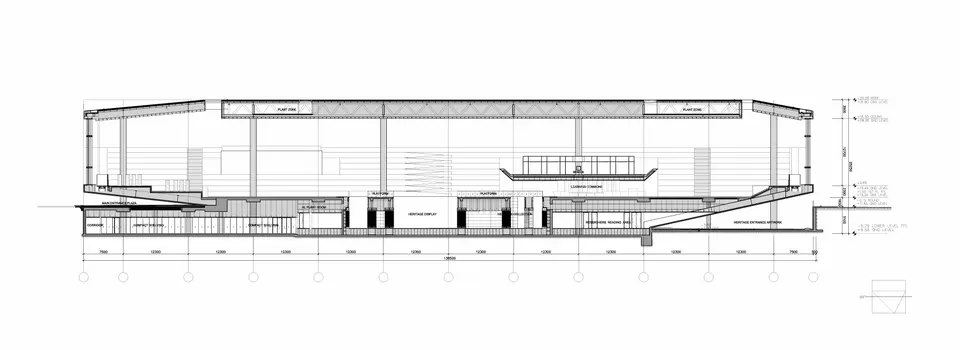
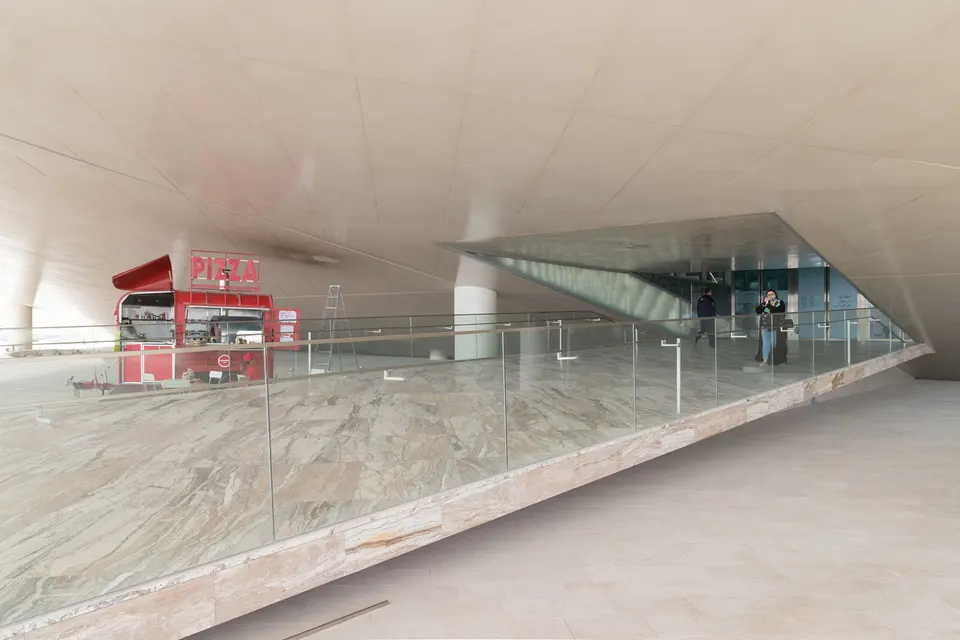
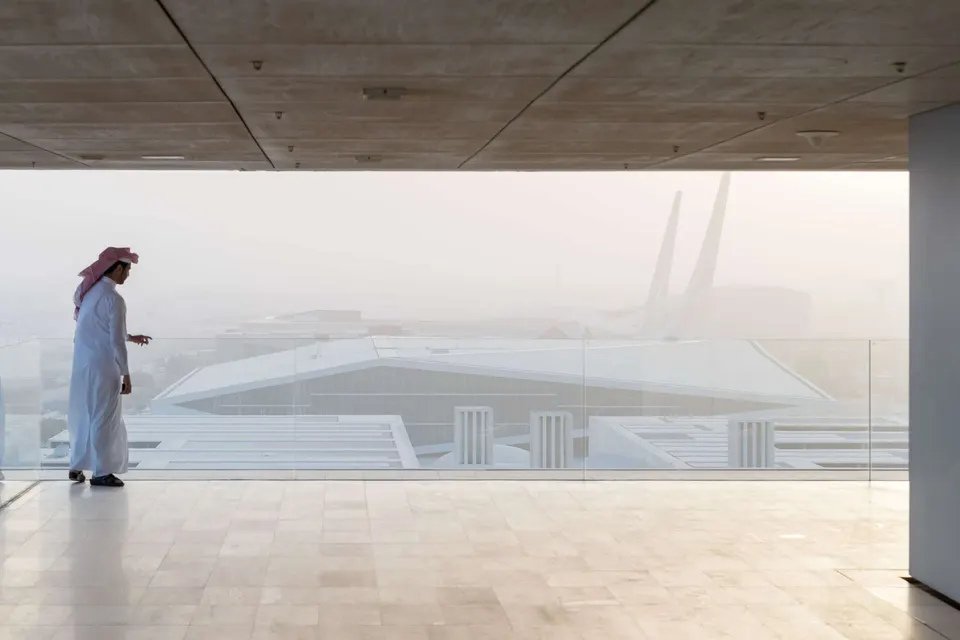
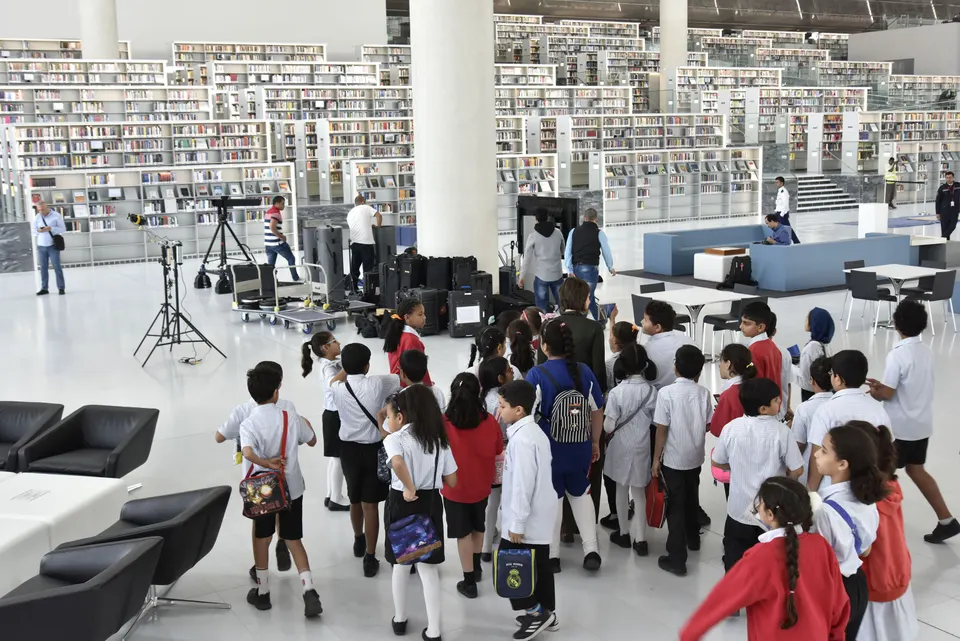
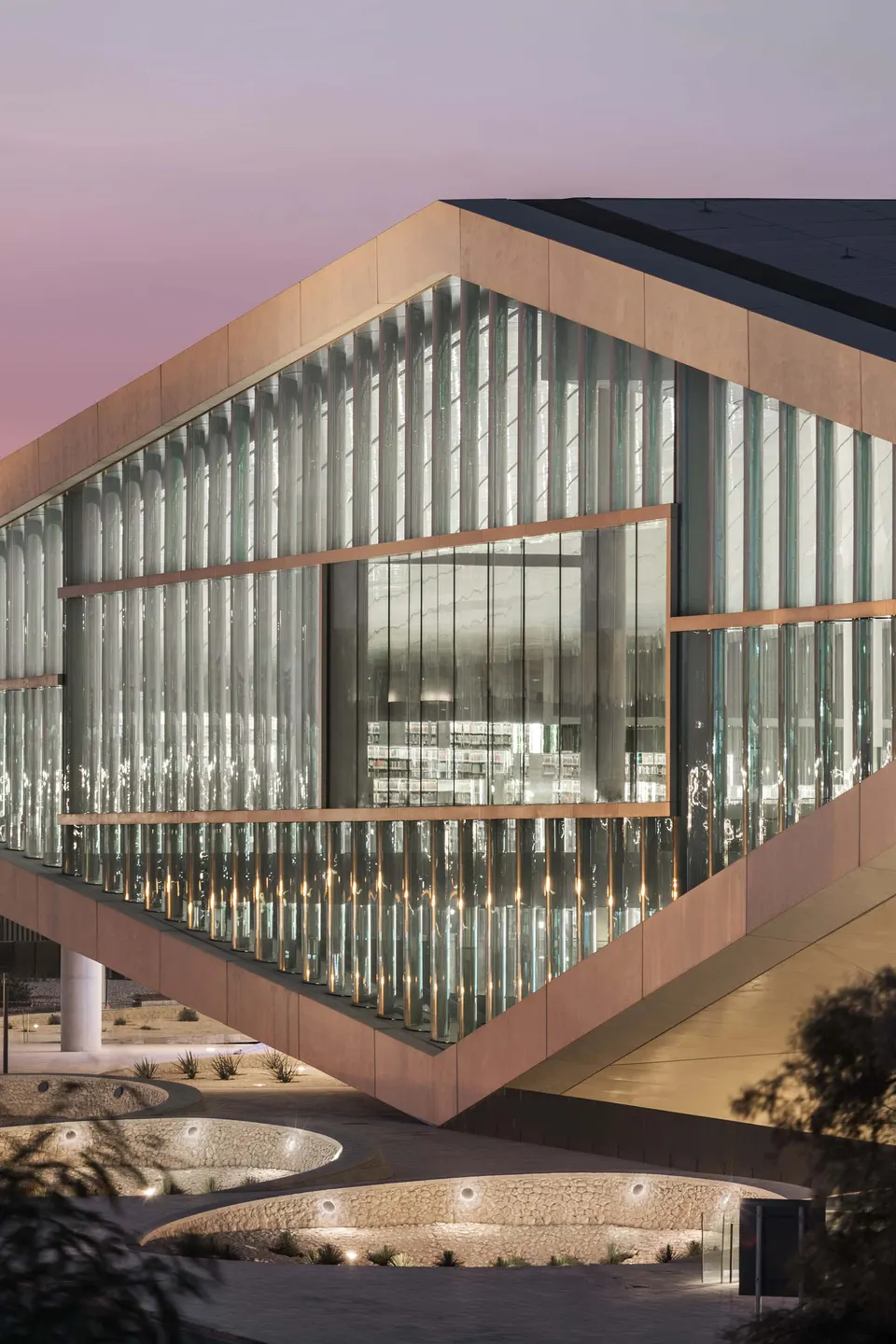
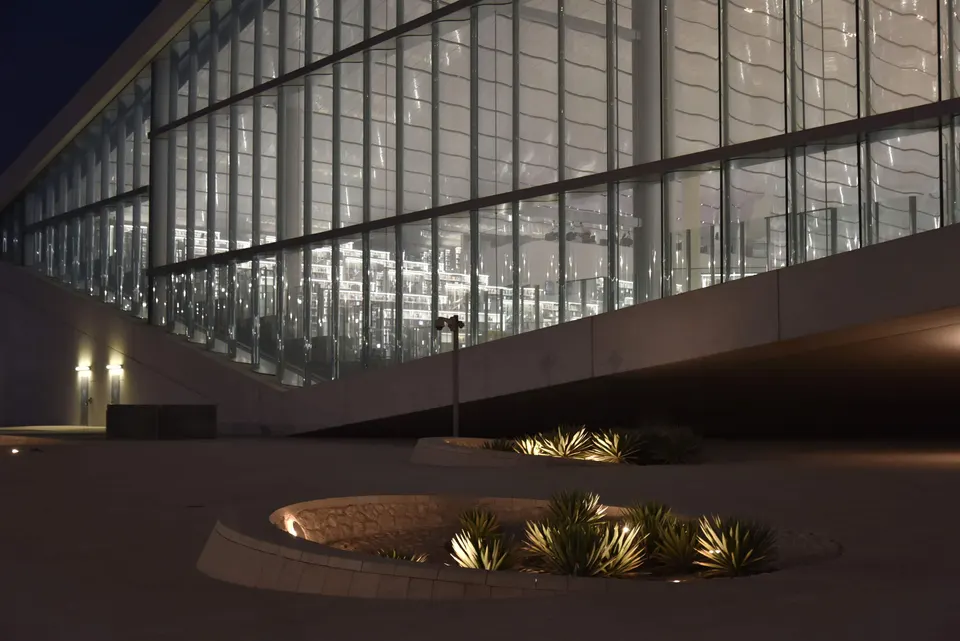
To enter the library, visitors slip in between the ground and the building. The first level houses the children's library for under-12s, which comprises nearly 100,000 books. Interestingly, it is by far the most popular collection at present: of the 252,000 books borrowed since opening, 158,125 came from it. It is therefore a space that deserves great care. The first level is completed by individual study rooms and computer rooms. It also contains reading areas and a restaurant.
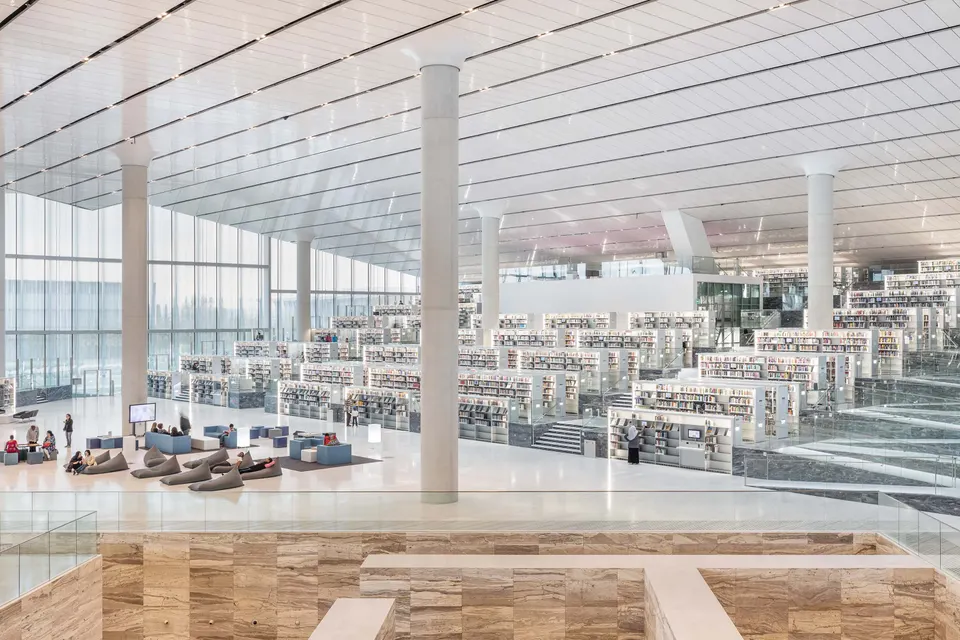
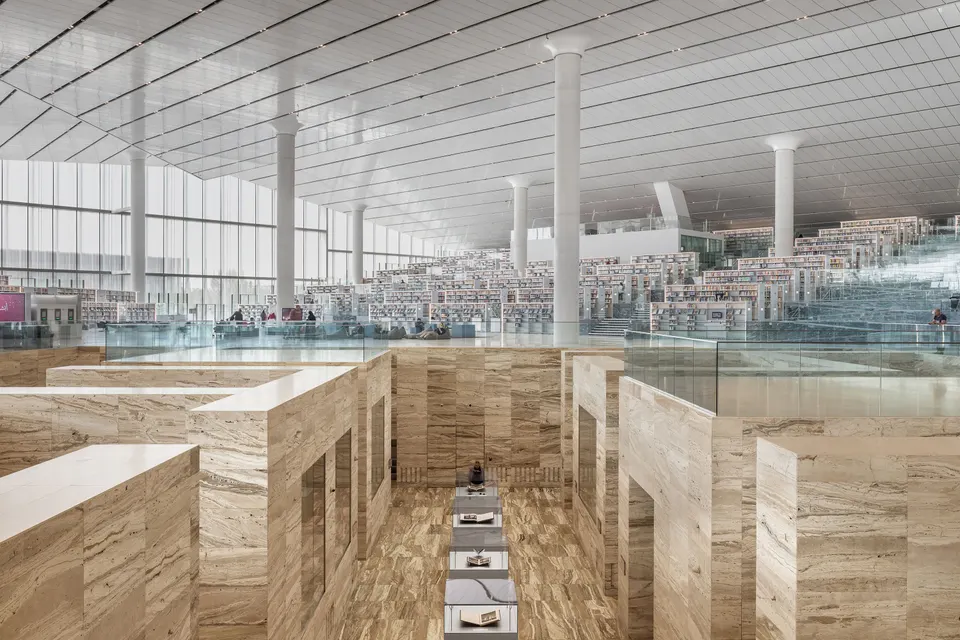
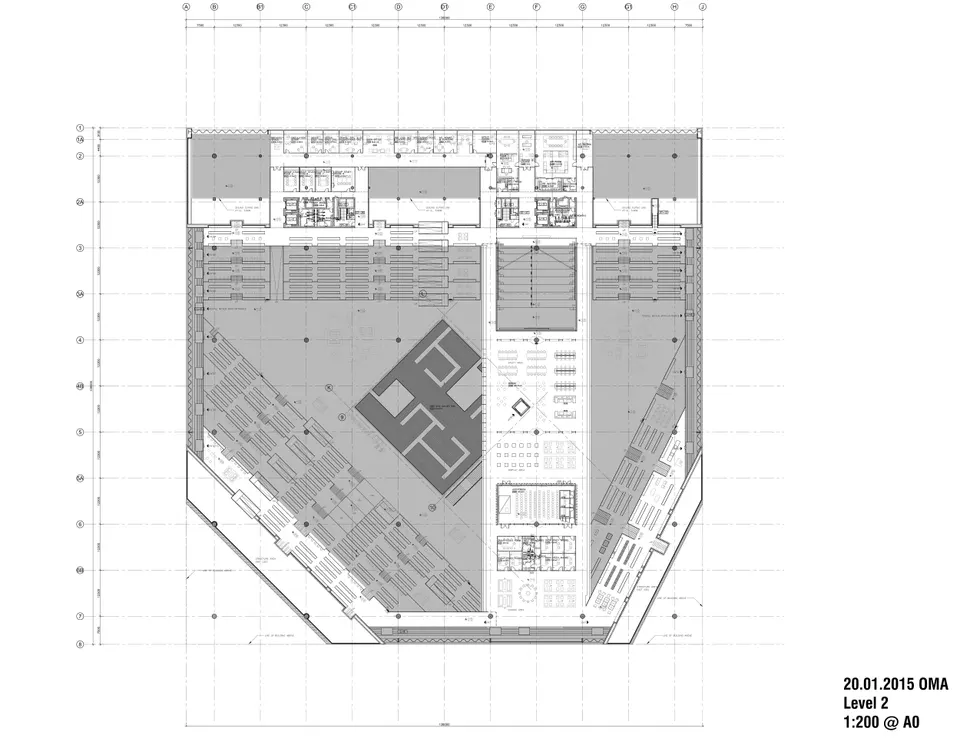
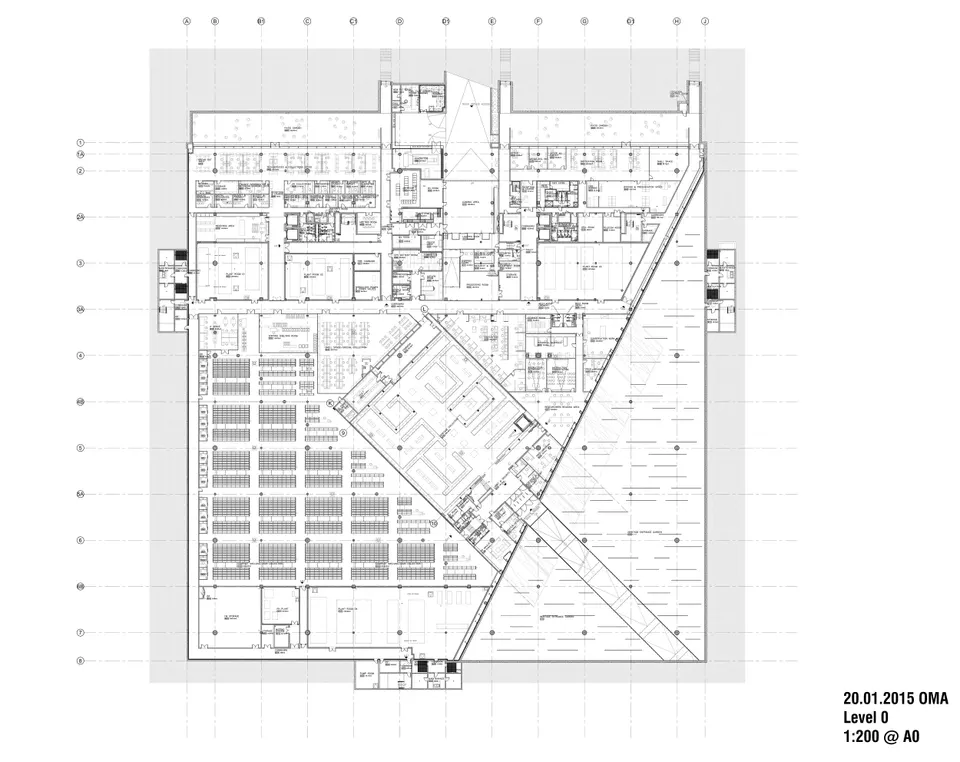
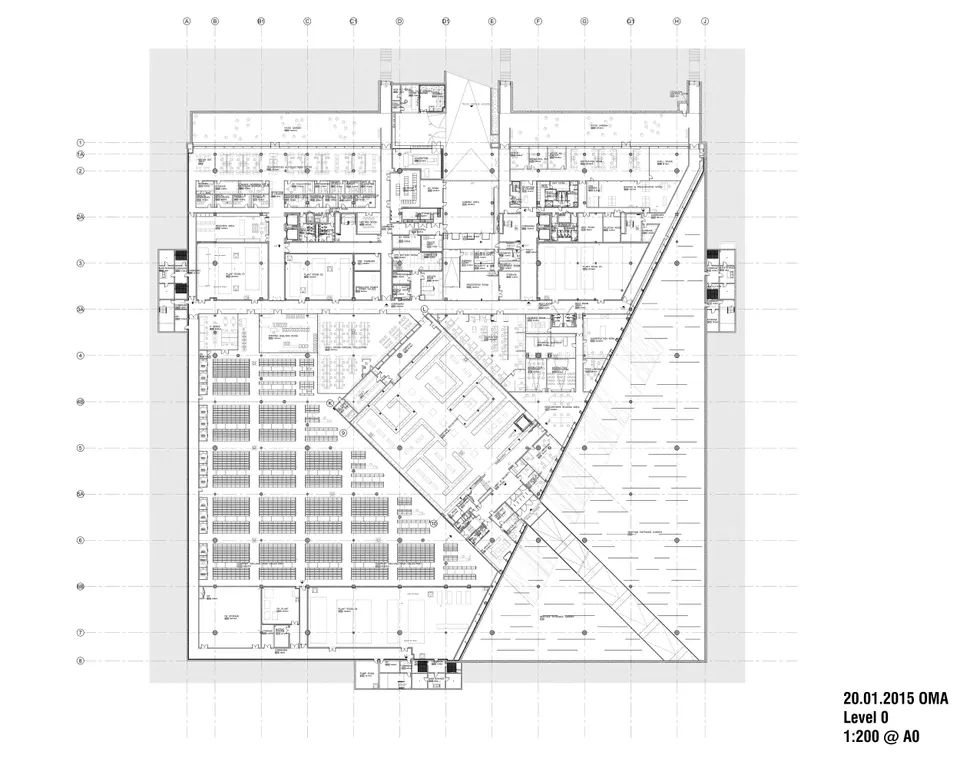
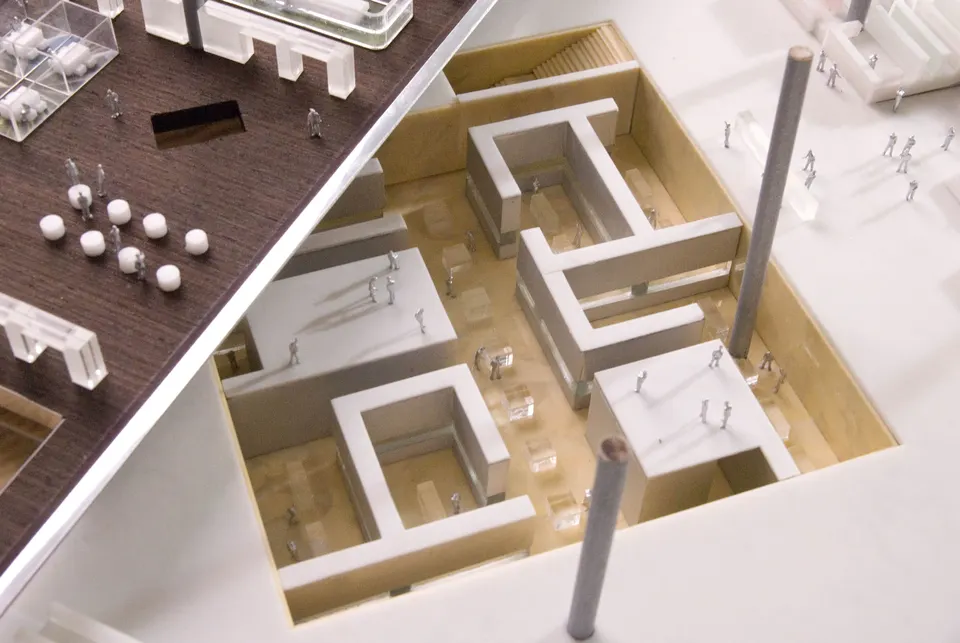
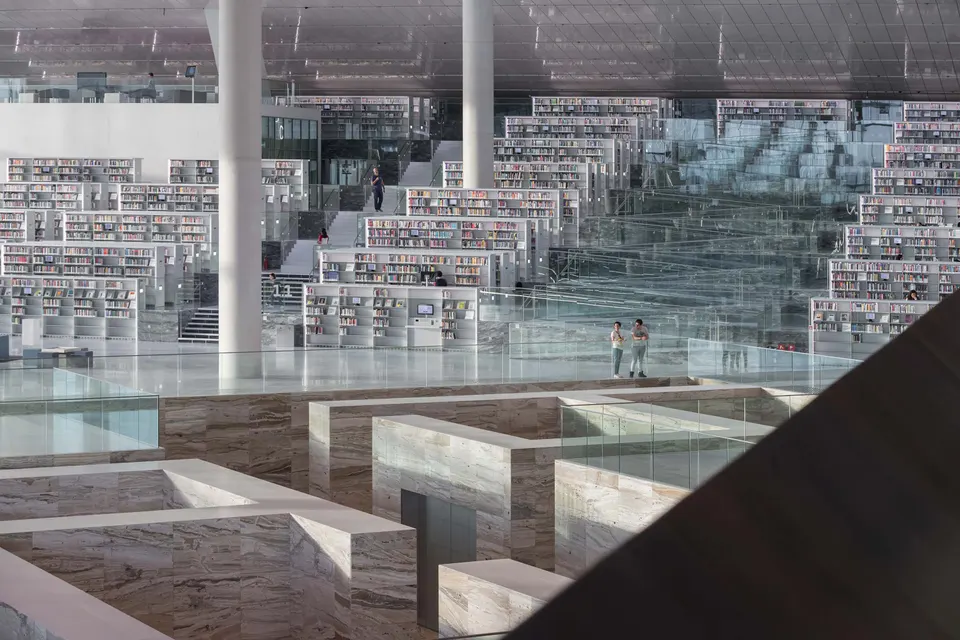
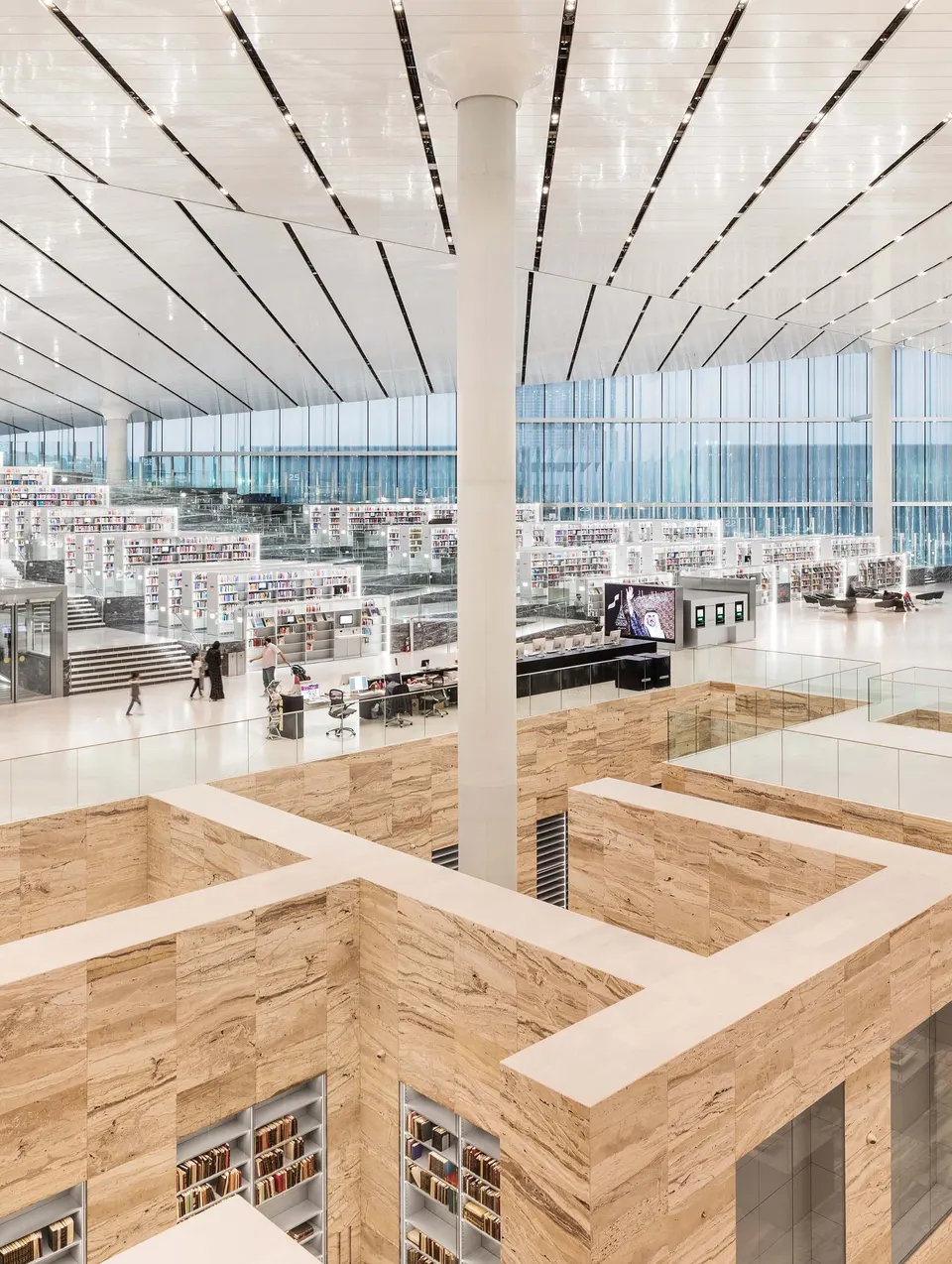
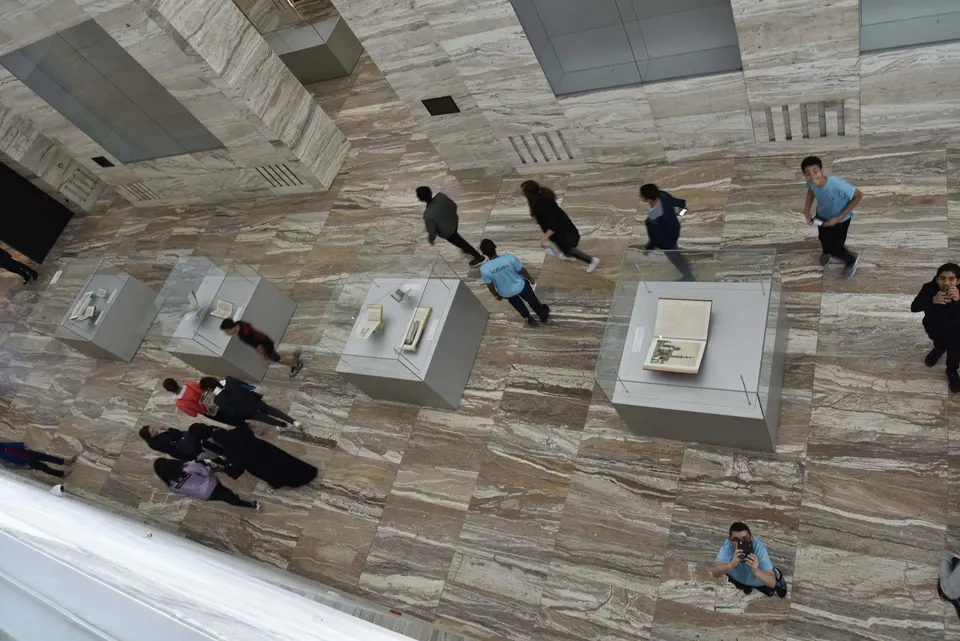
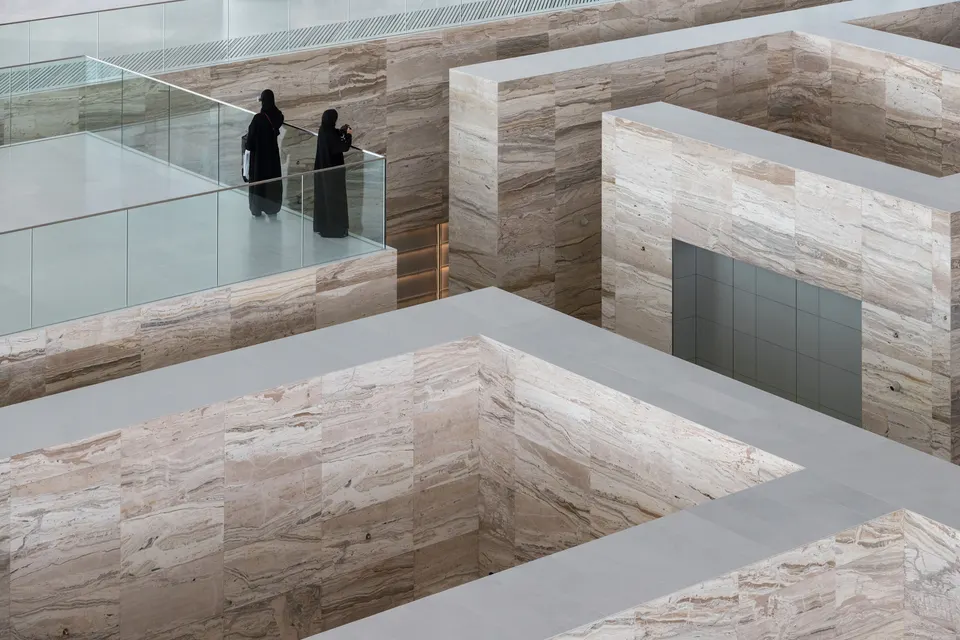
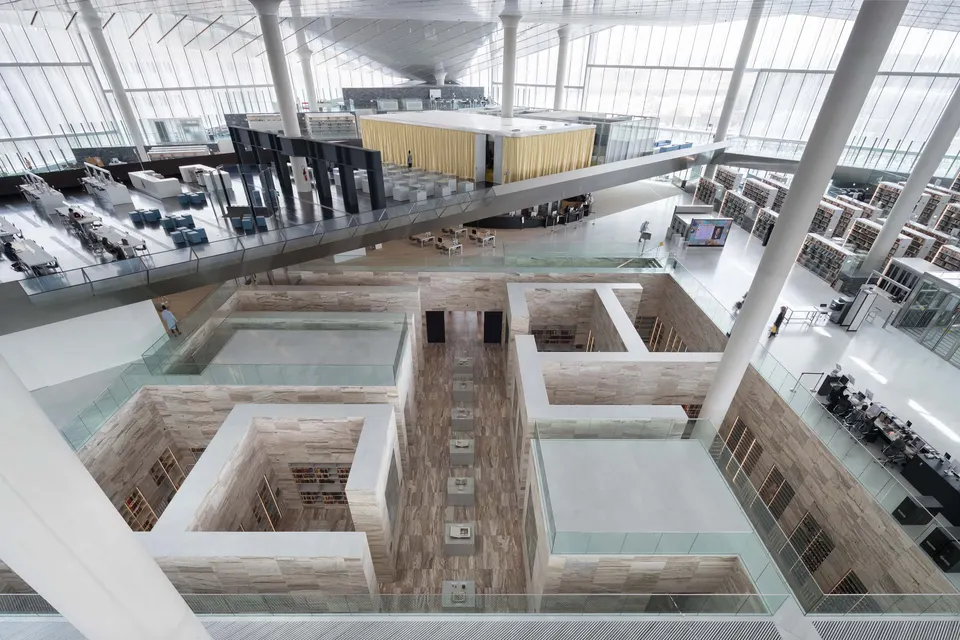
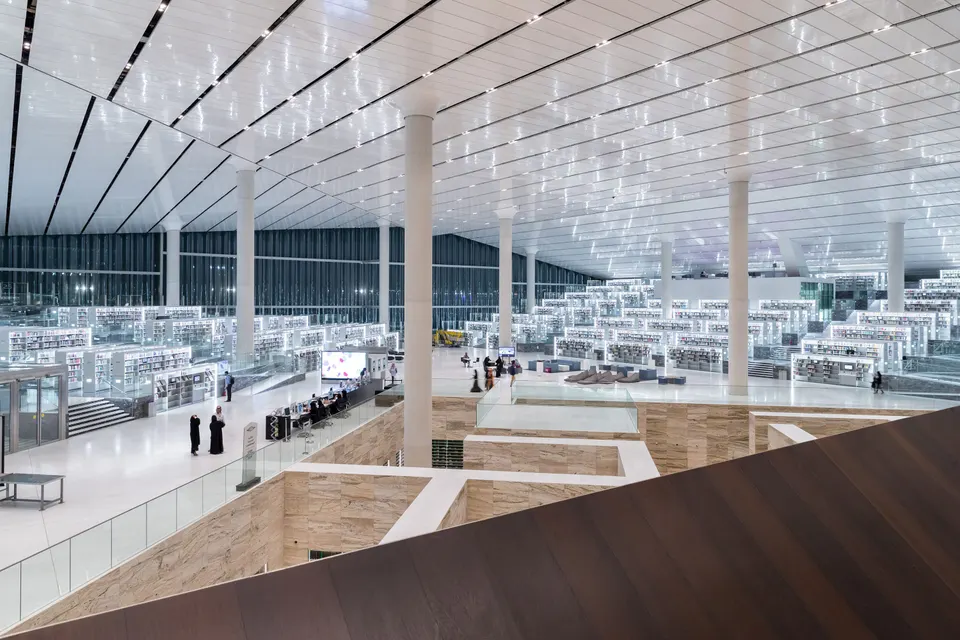
The second level showcases the heritage of the place. The Dutch architect has opted for a labyrinthine layout to house the heritage texts. Stored in sand-coloured units almost 6 metres high, like an archaeological dig, the sacred books become the heart of the building. While protecting them from the influence of the public, Rem Koolhaas does not hide them – quite the contrary: the intrigue of the void makes this space the focal point. This vast level is then completed by stacks that are closed to the public.
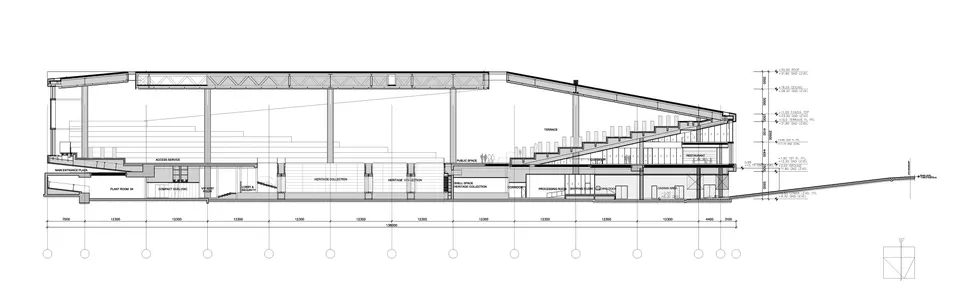
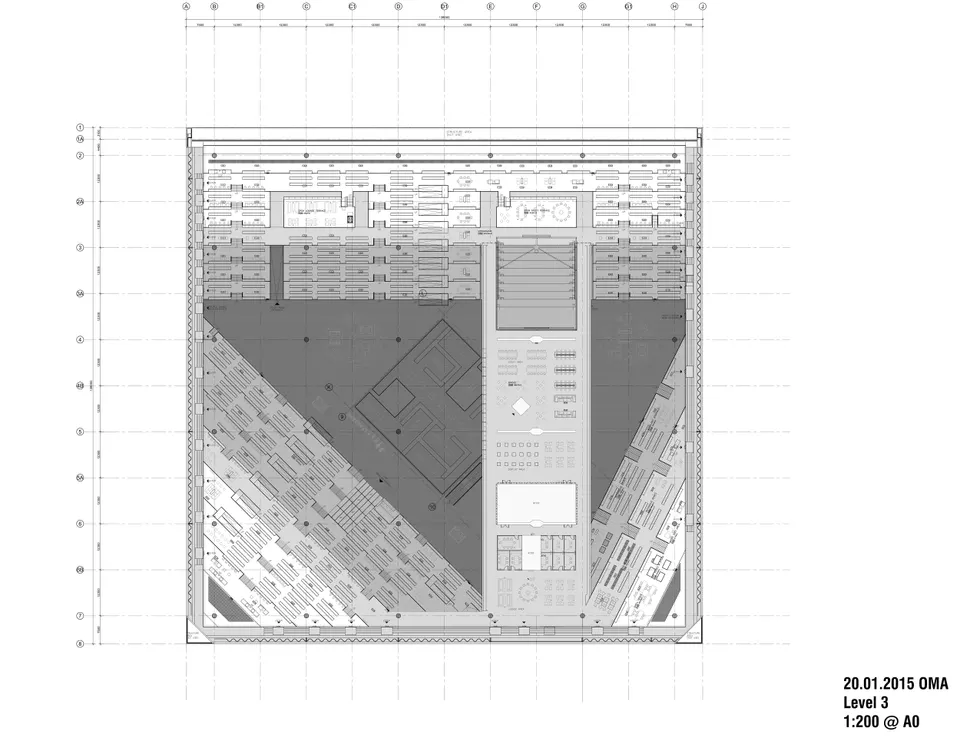
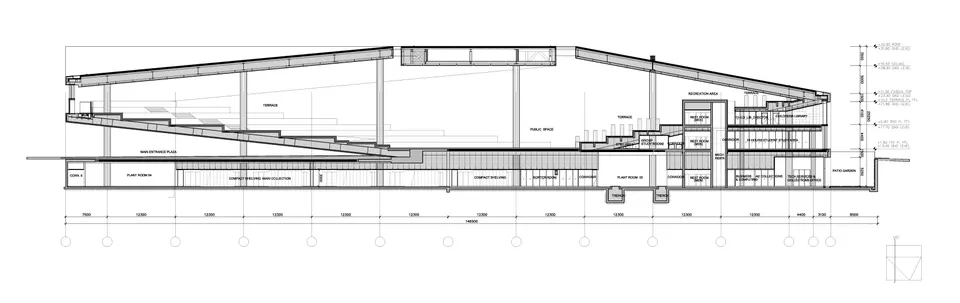
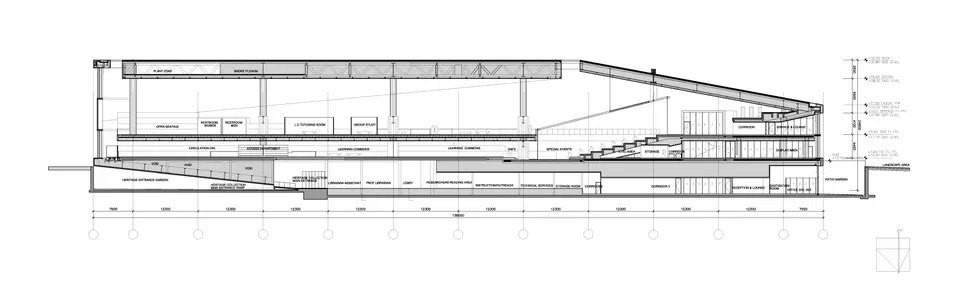
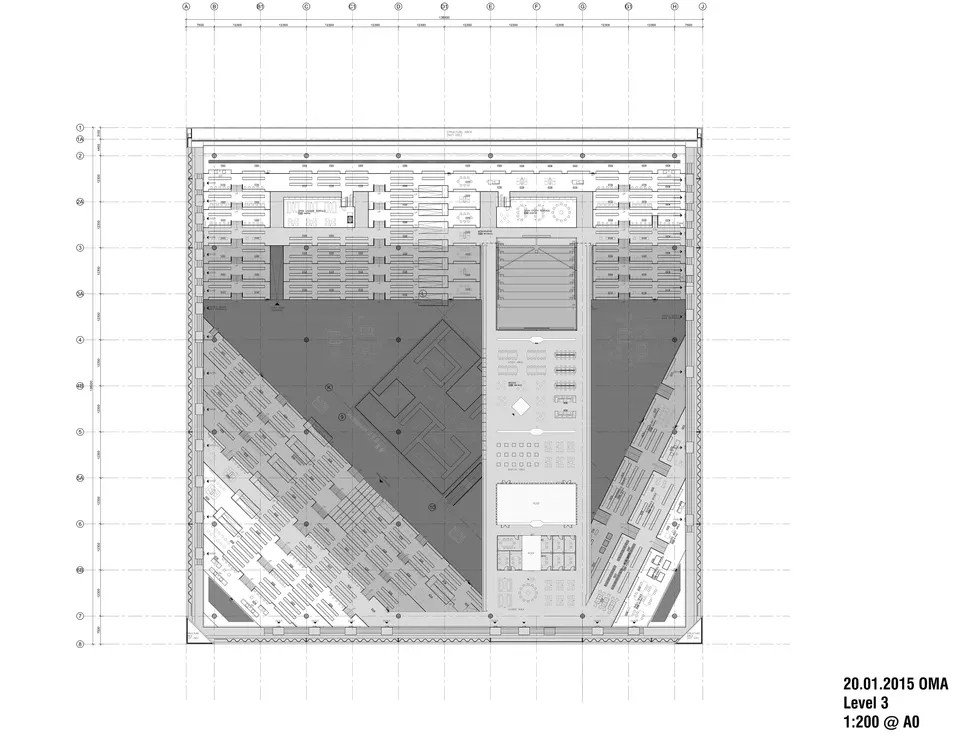
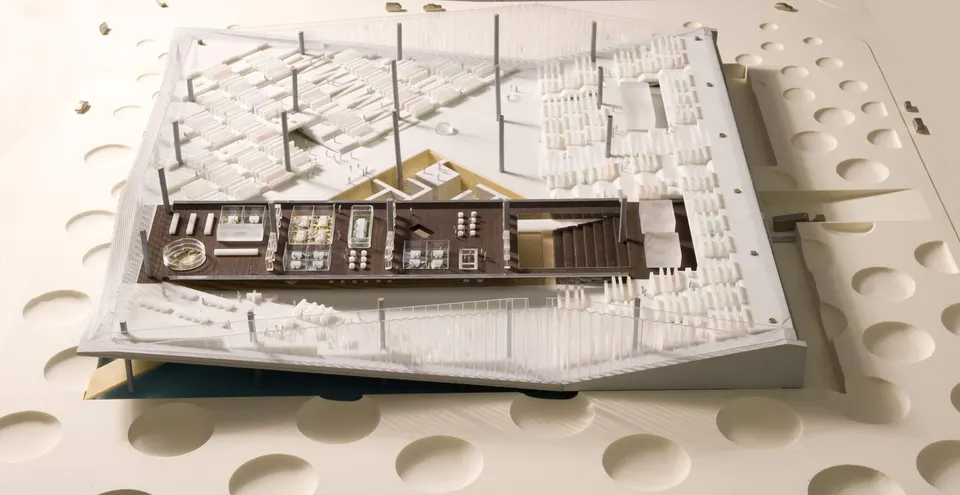
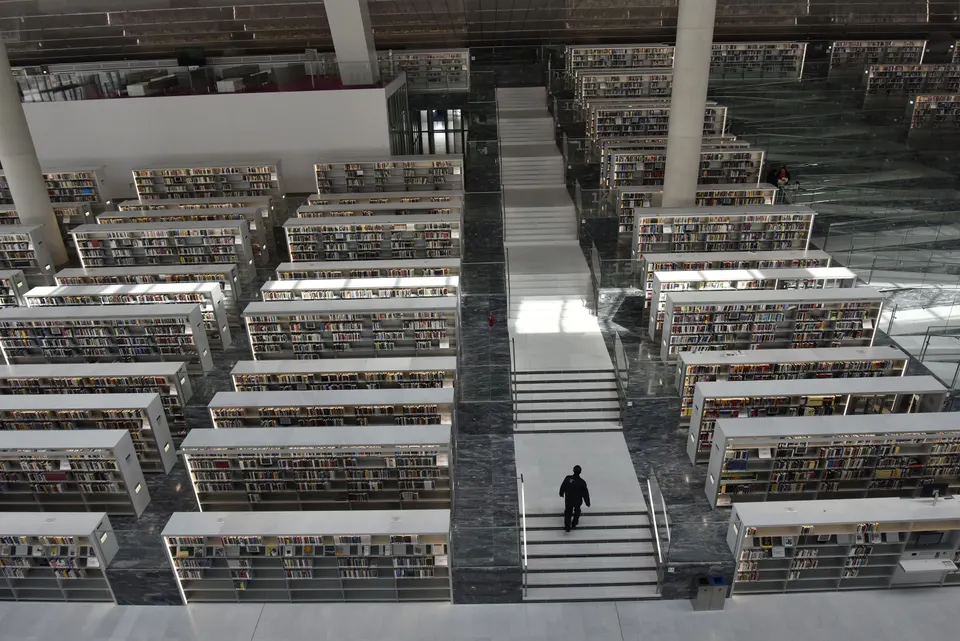
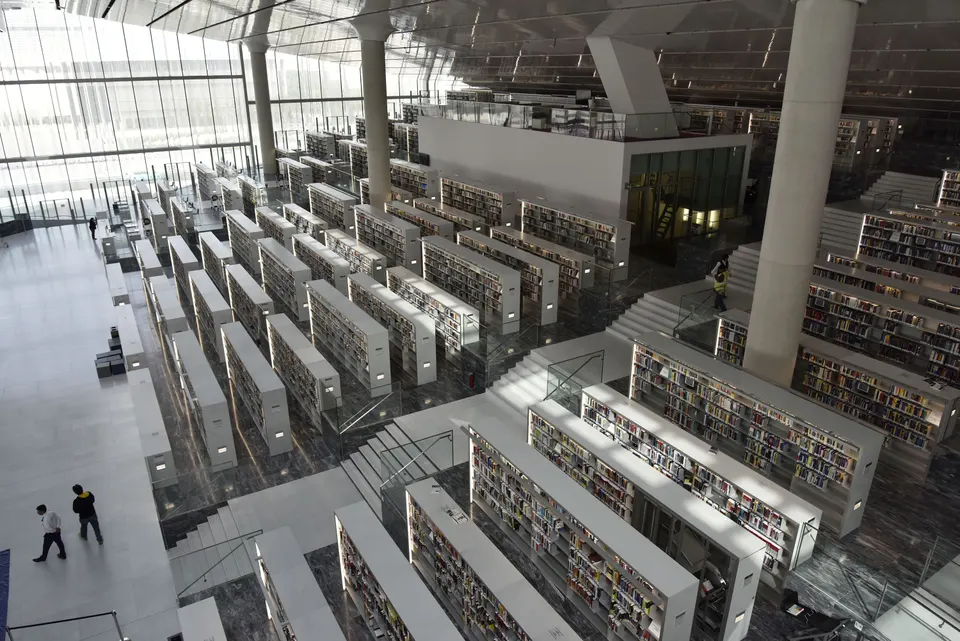
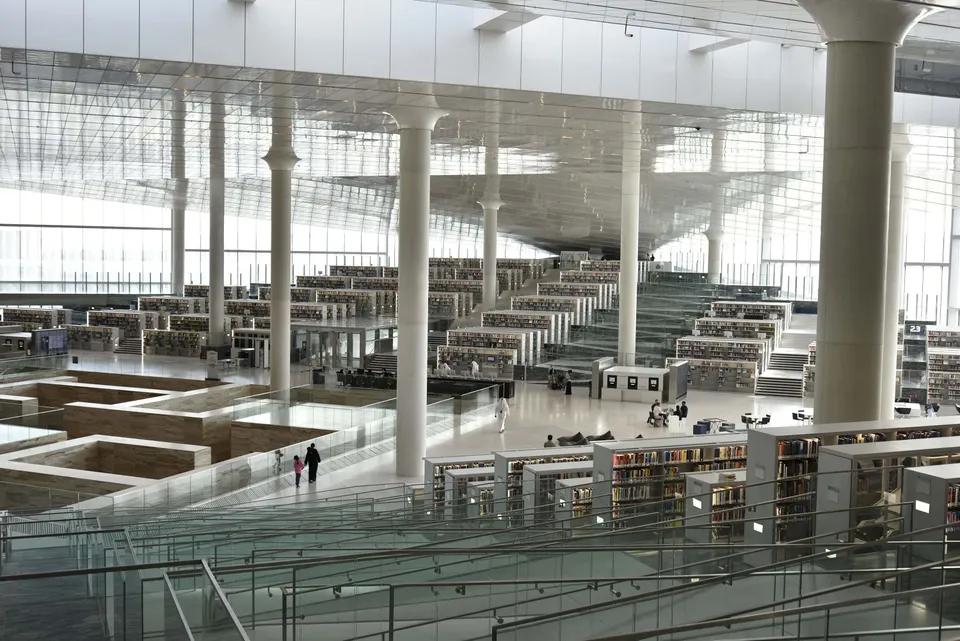
The author of Delirious New York comments: "Libraries, as a typology, are so exceptionally well suited to producing radical architecture. There is apparently a paradox in such a traditional form producing inventive solutions, and this is the case with the Qatar National Library." Knowledge is universal, and the architect demonstrates this through the library's spatial organisation. From the outset, Rem Koolhaas opposed a vertical stratification of the collections. Instead, he proposes a single large volume that allows everyone to be physically confronted with the whole of knowledge.
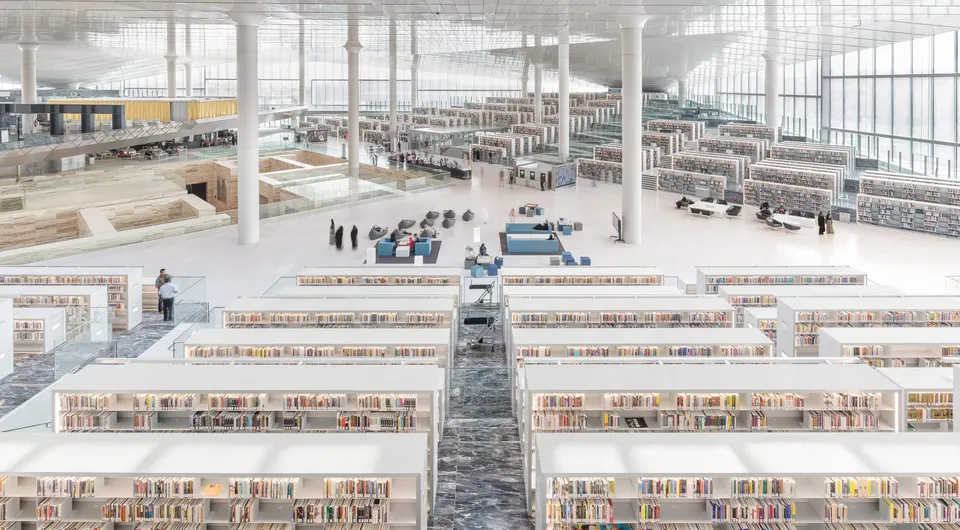
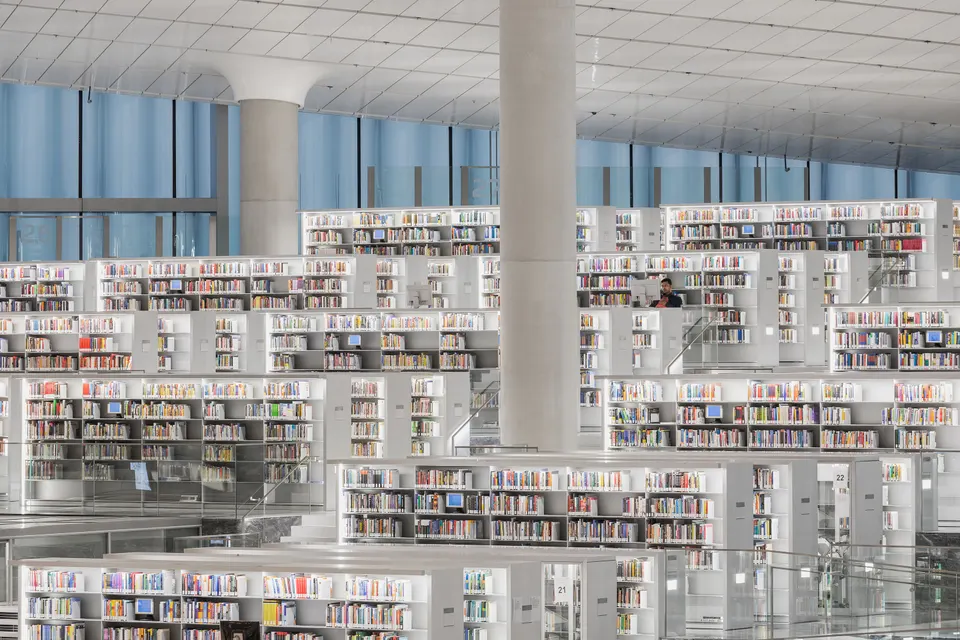
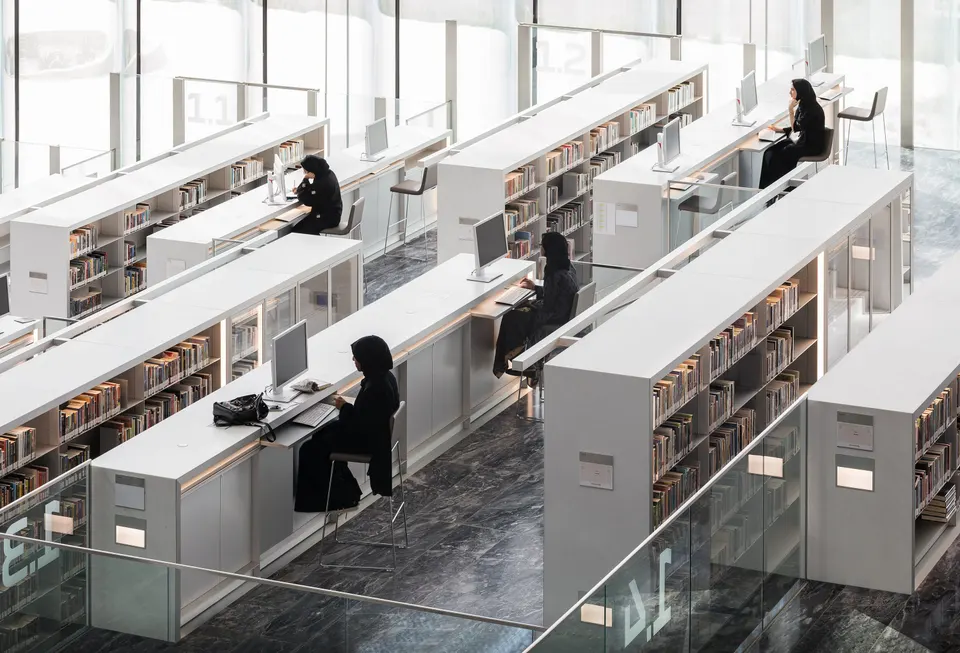
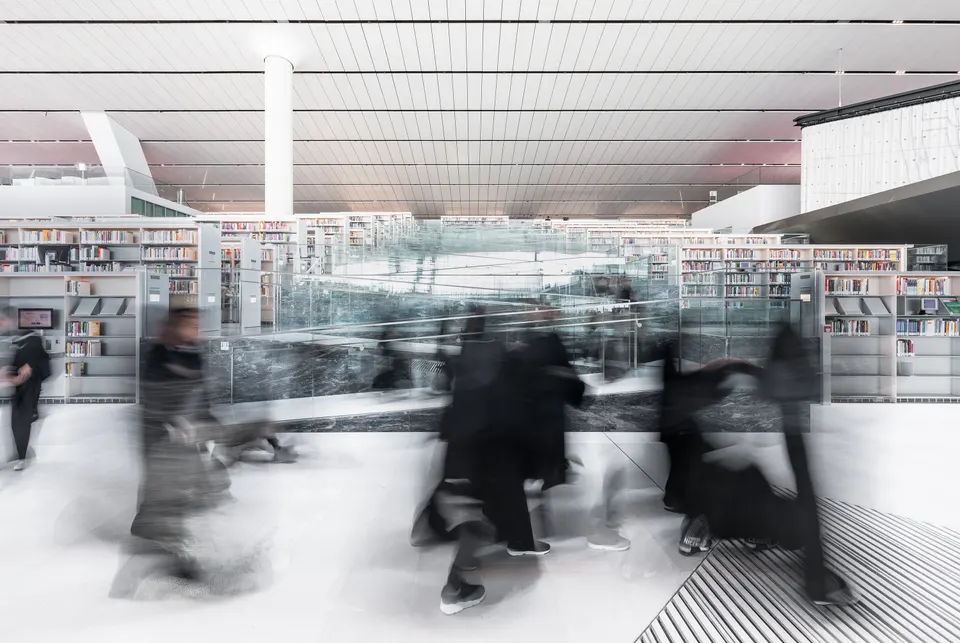
The main volume is entered through its centre. This staging allows each visitor to enter the heart of the building rather than from the side, as is customary. Readers are then confronted with a succession of strata formed by the rows of books. These shelves, in marble like the floor, turn into consultation desks at each change of half-level.
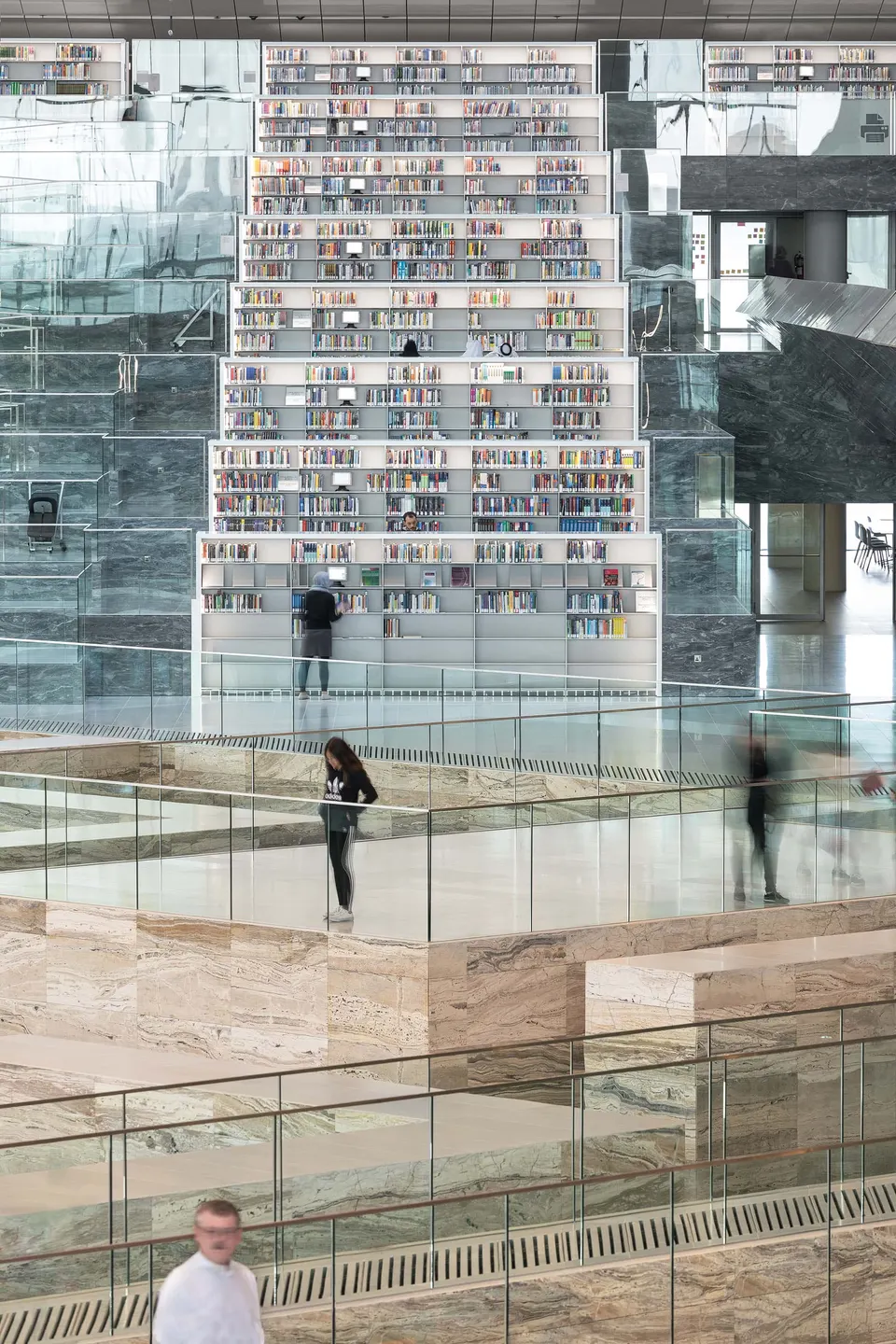
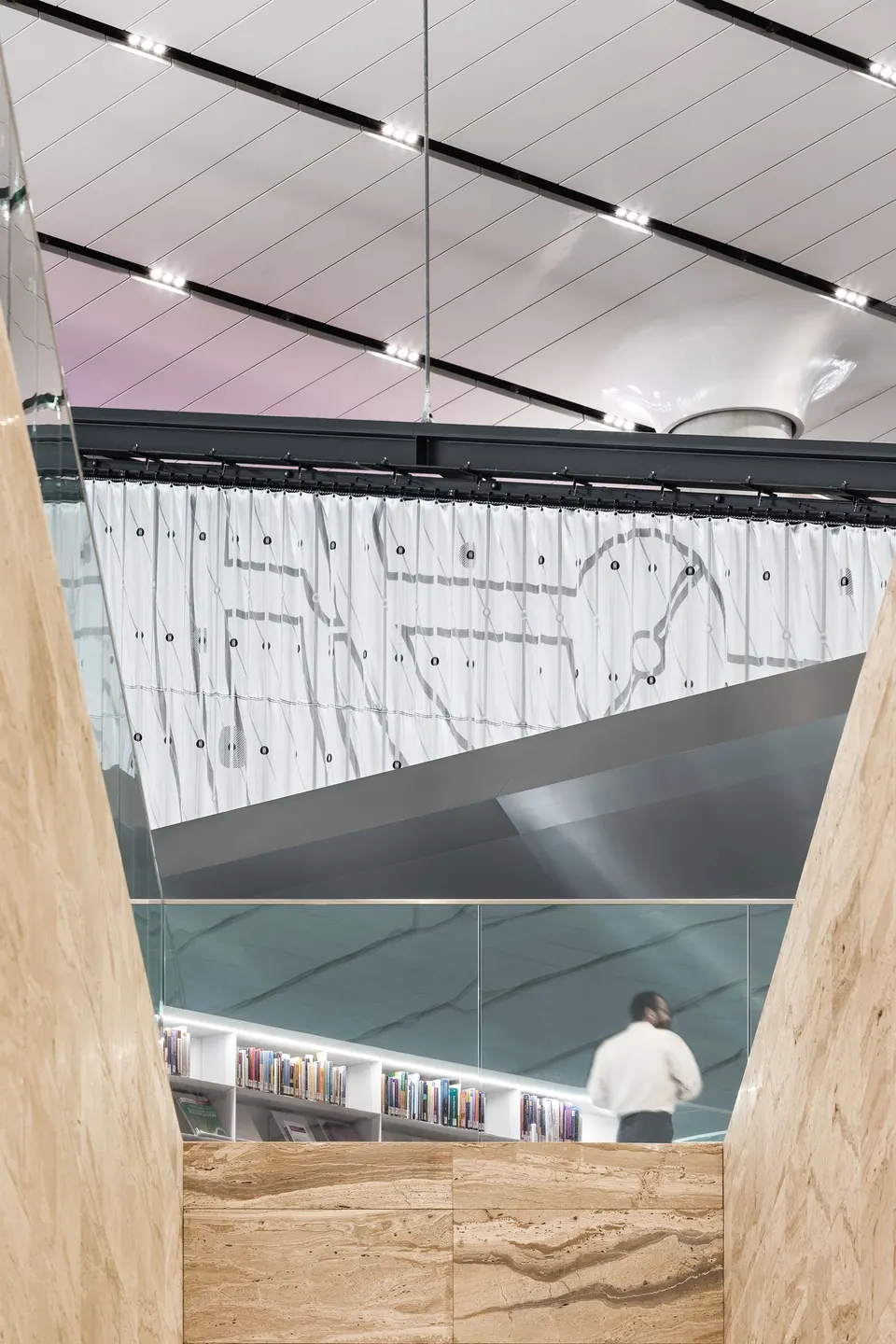
A large bridge allows visitors to cross the library without going through its various levels. It houses the auditorium, which is delimited by large curtains.
Gallery
45 images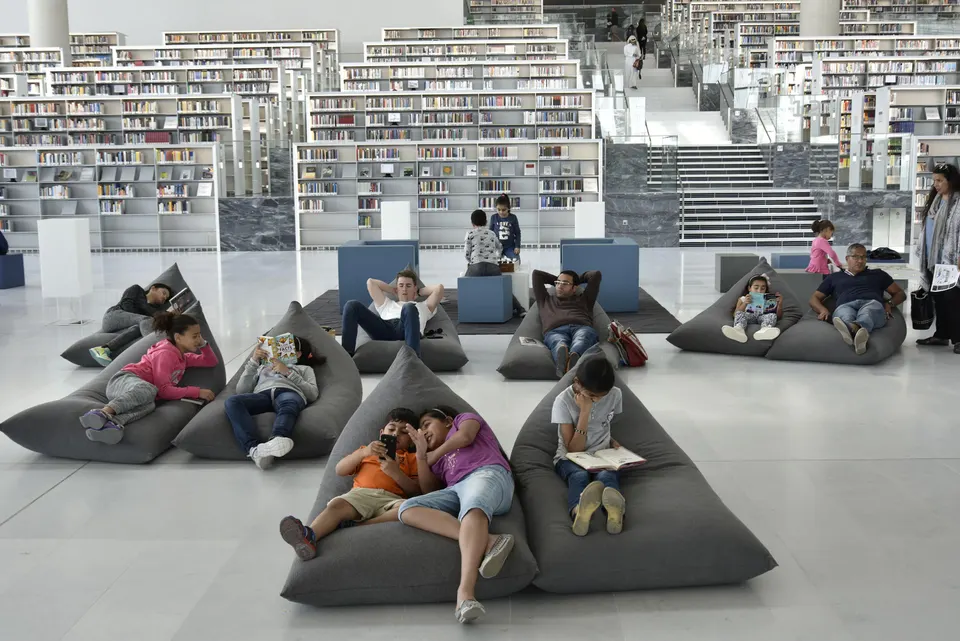
- © Iwan Baan – OMA
- © OMA
Also available in FrançaisDeutsch