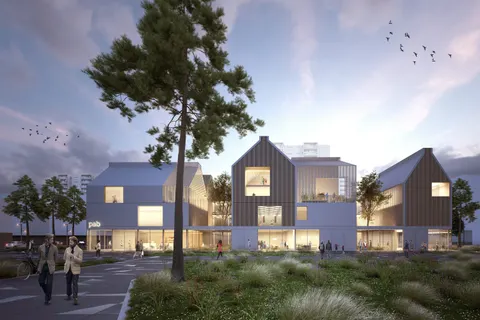
Atoll shopping centre in Beaucouzé by Vincent Parreira and Antonio Virga
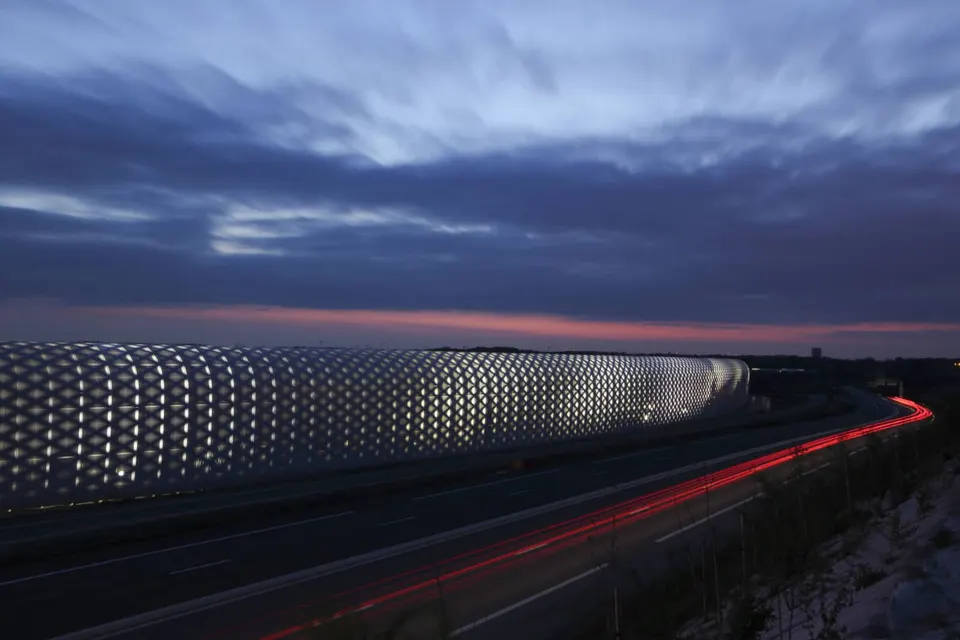
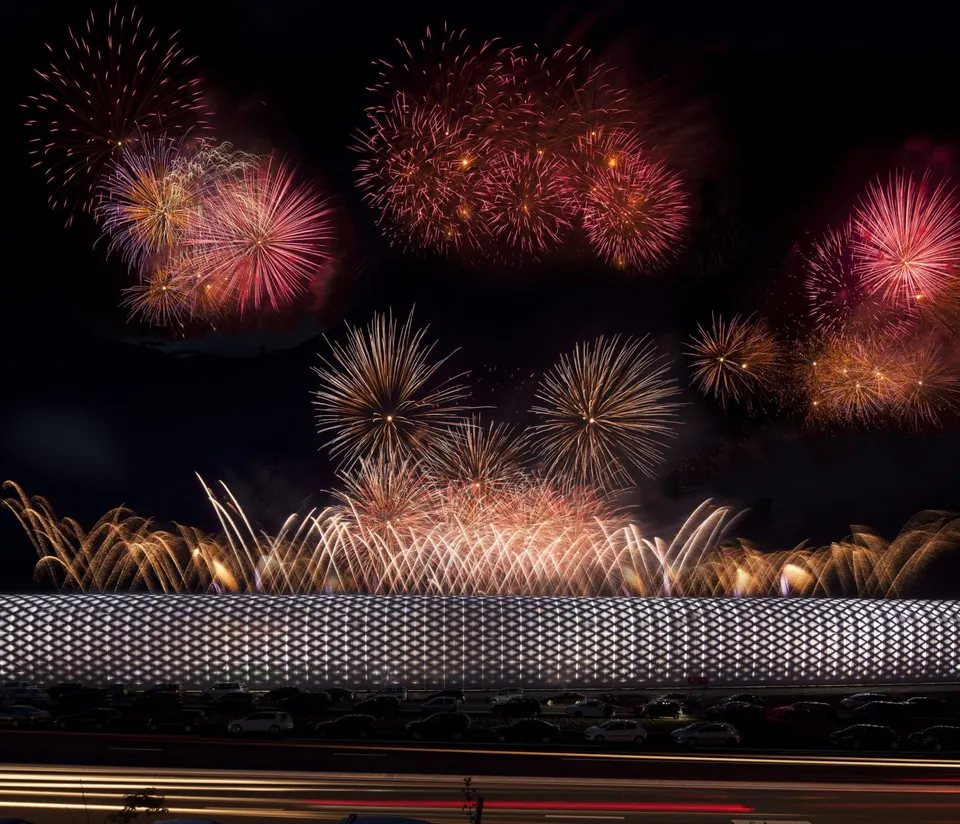
At last, a shopping centre that doesn't look like a shoebox!
Forget the scrapyard sheds that blight the outskirts of our towns and cities: shopping centres are not beyond the reach of architecture. That is the point the developer, Compagnie de Phalsbourg, wants to make through its retail schemes, and it has entrusted this project to the architects Vincent Parreira and Antonio Virga.
The project, which grew out of the SARA (Société de l'Aménagement de la Région d'Angers), occupies a 22-hectare plot within the 53-hectare ZAC du Buisson in Beaucouzé, on the edge of Angers. The developer's call for tenders drew some forty proposals. This eco-commercial park is dedicated to the home and in particular to furniture, with Alinéa, a subsidiary of Auchan, as its flagship retailer.
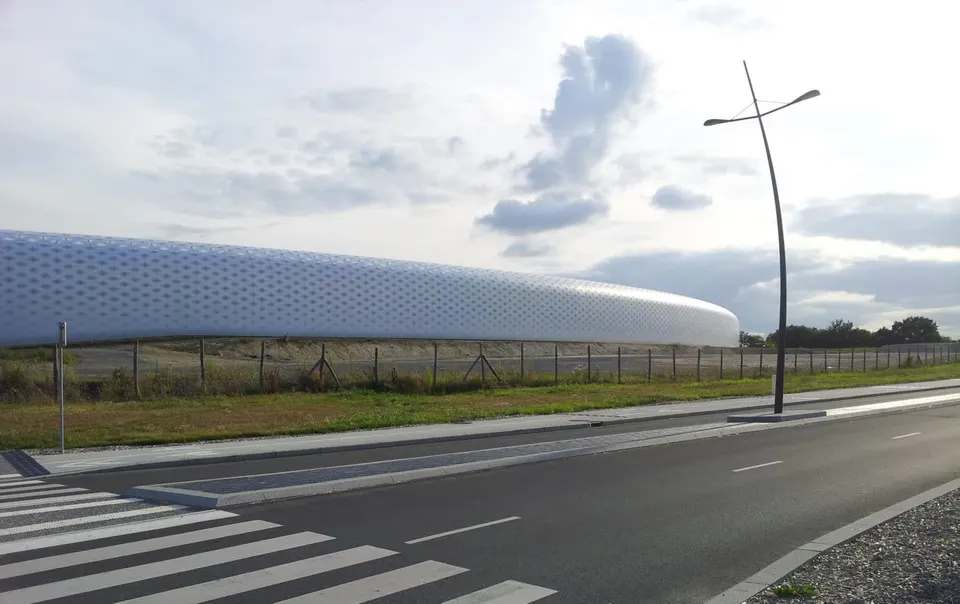
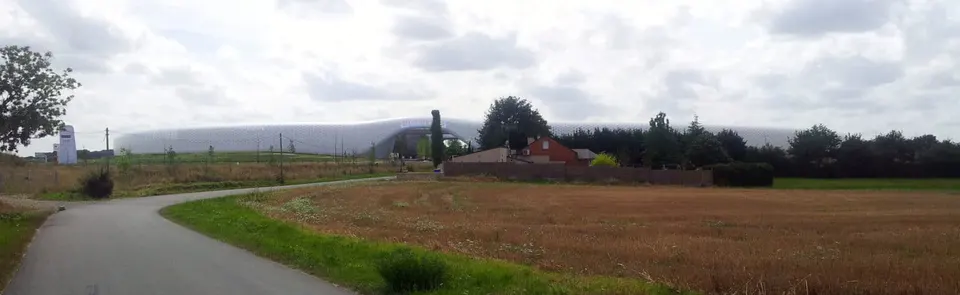
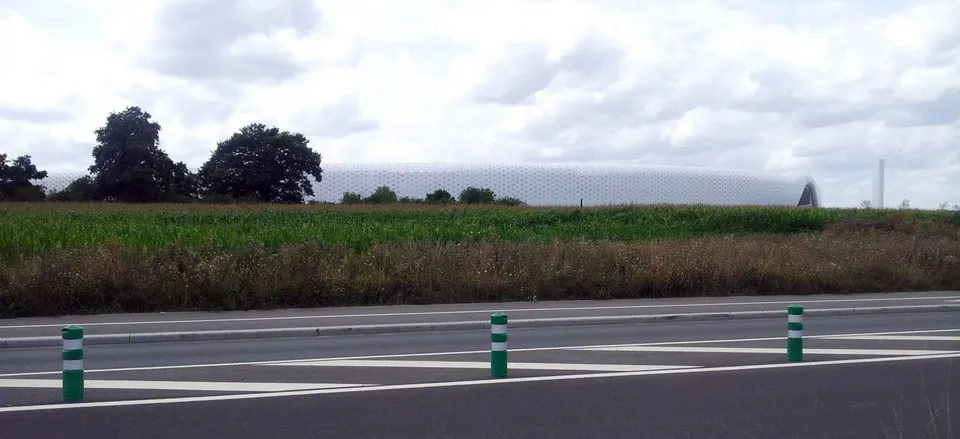
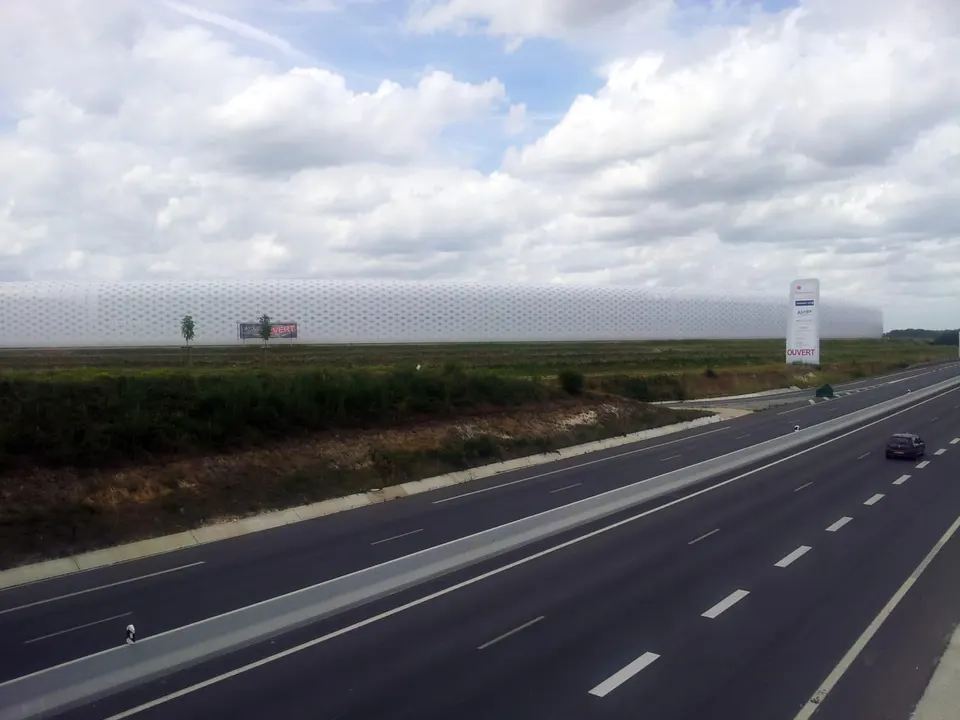
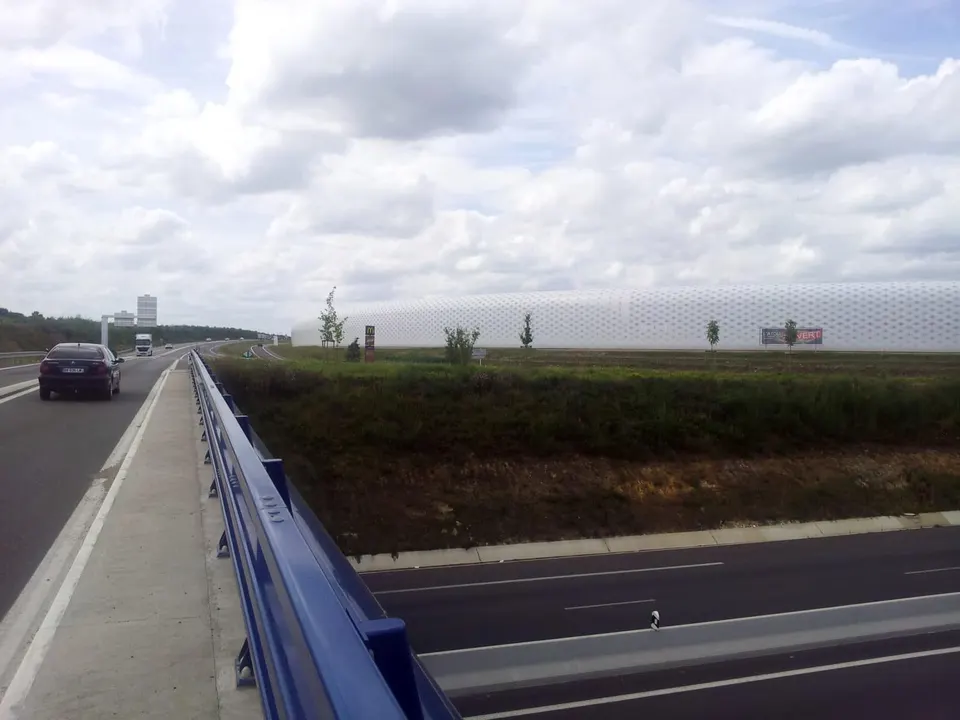
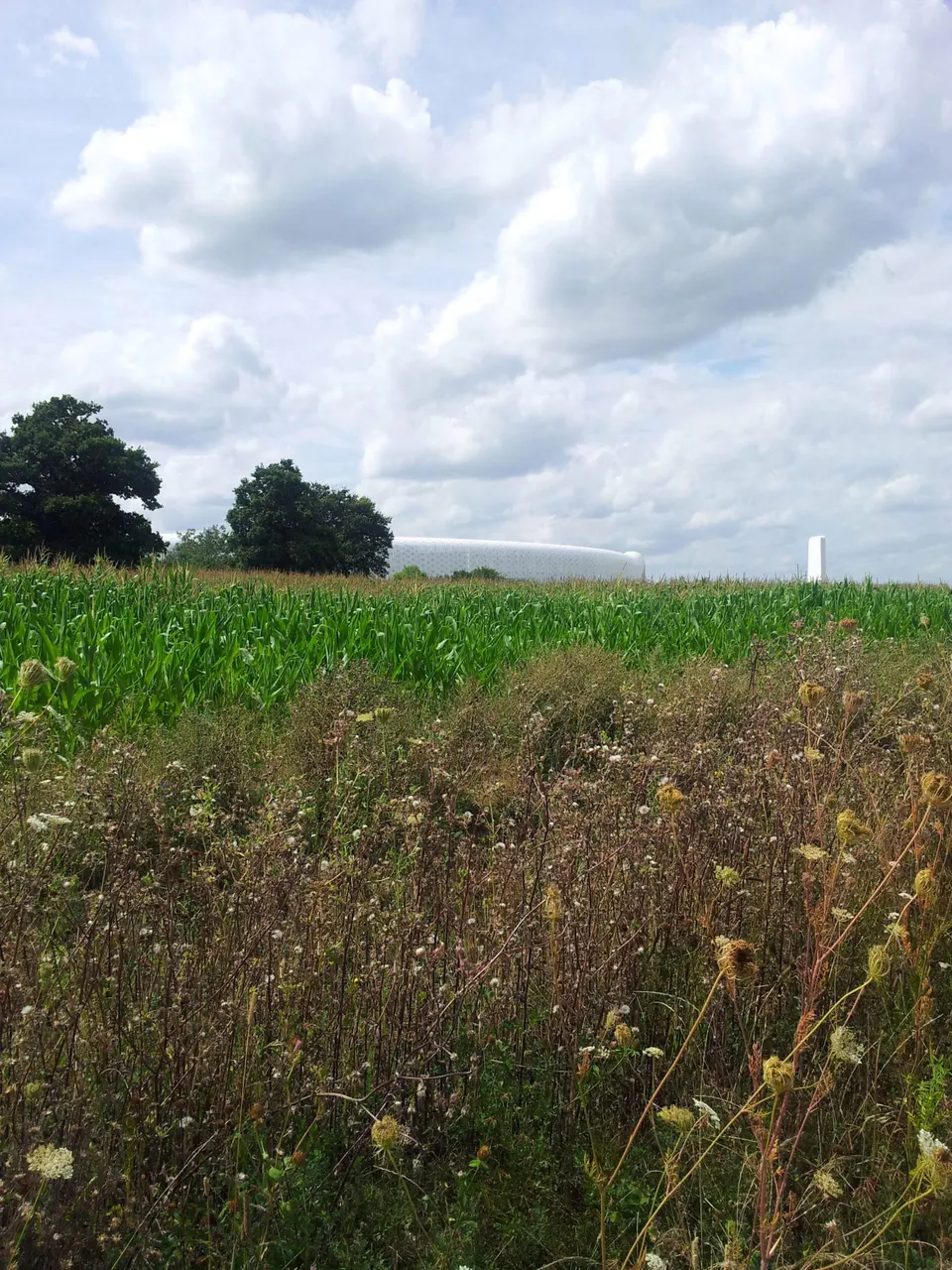
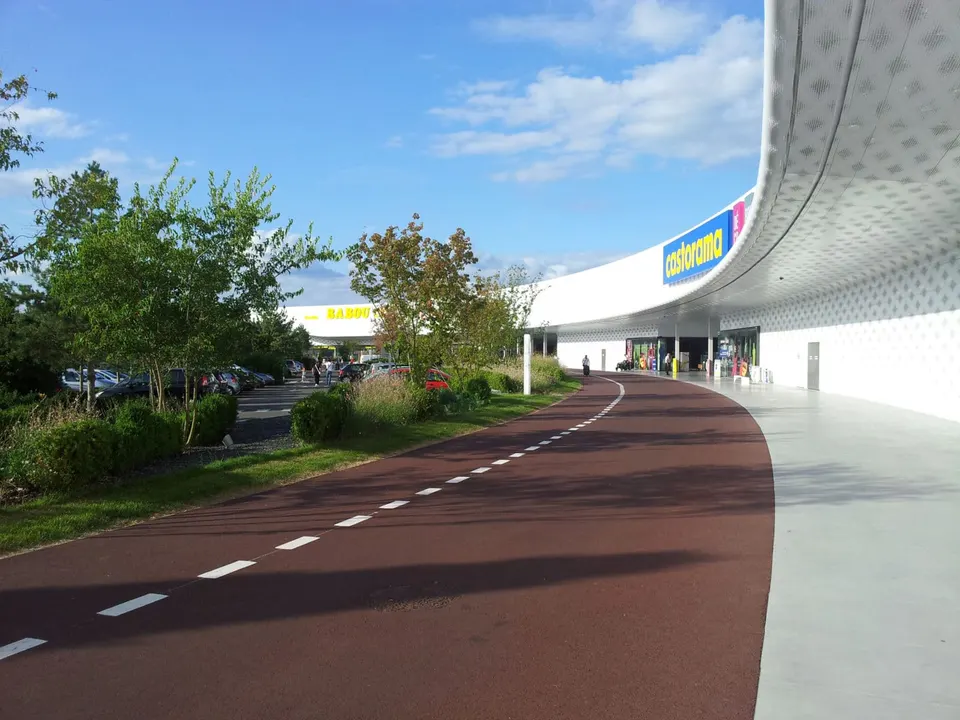
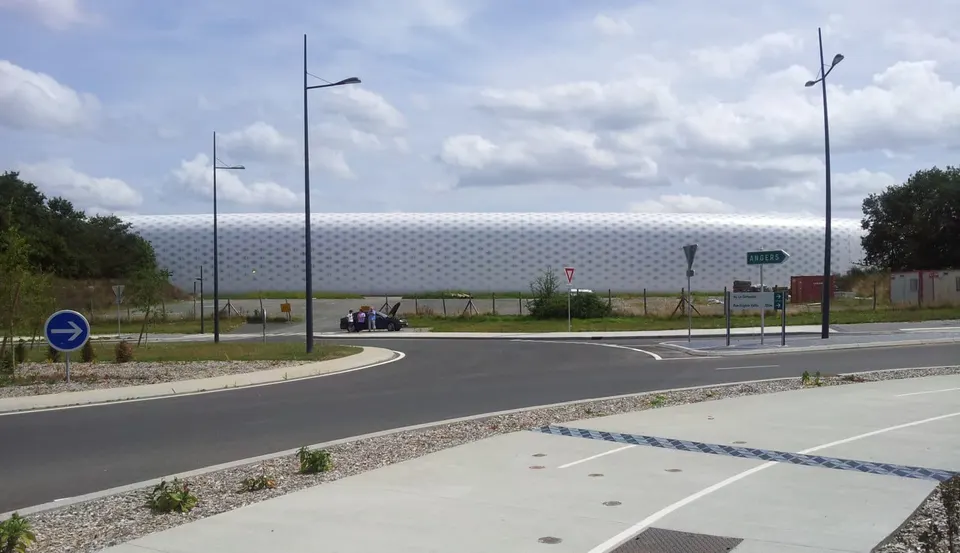
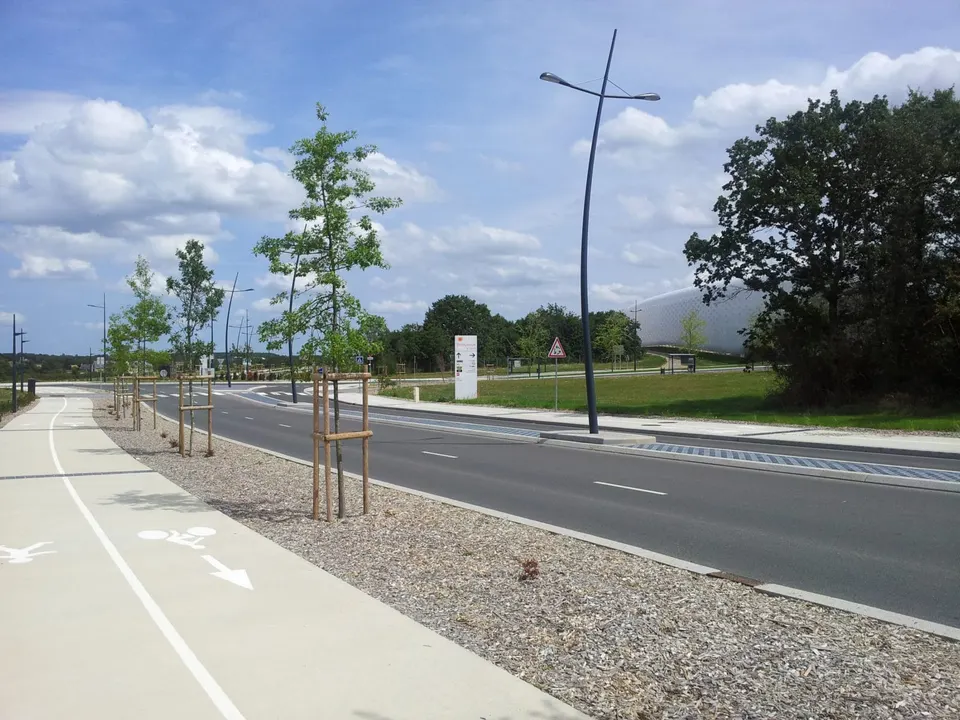
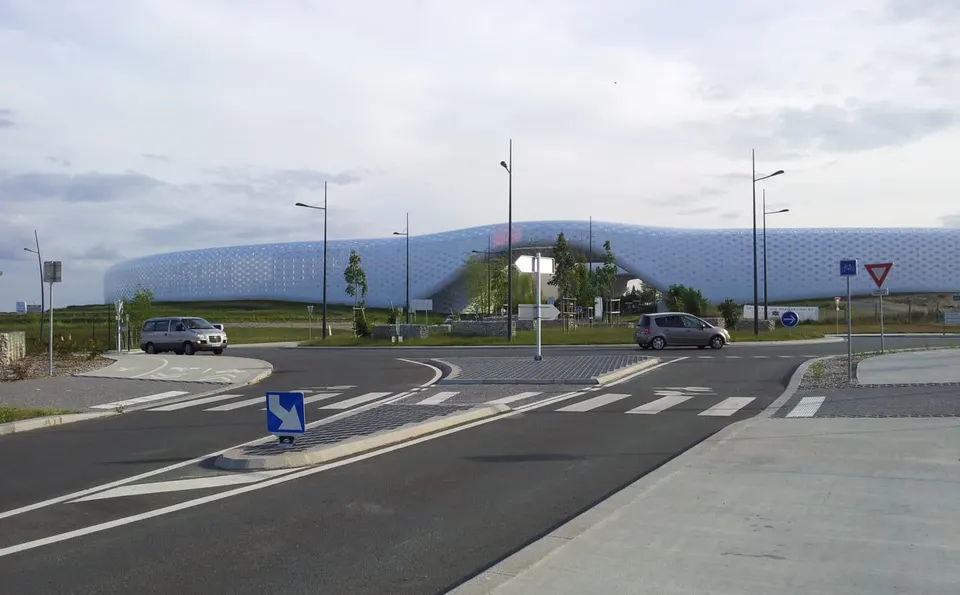
Driving past a town too often means running a gauntlet of brightly coloured signs. What first strikes you about the Atoll is how well it sits with the surrounding landscape despite its sheer size: 90,967 m² housing 50 retail brands.
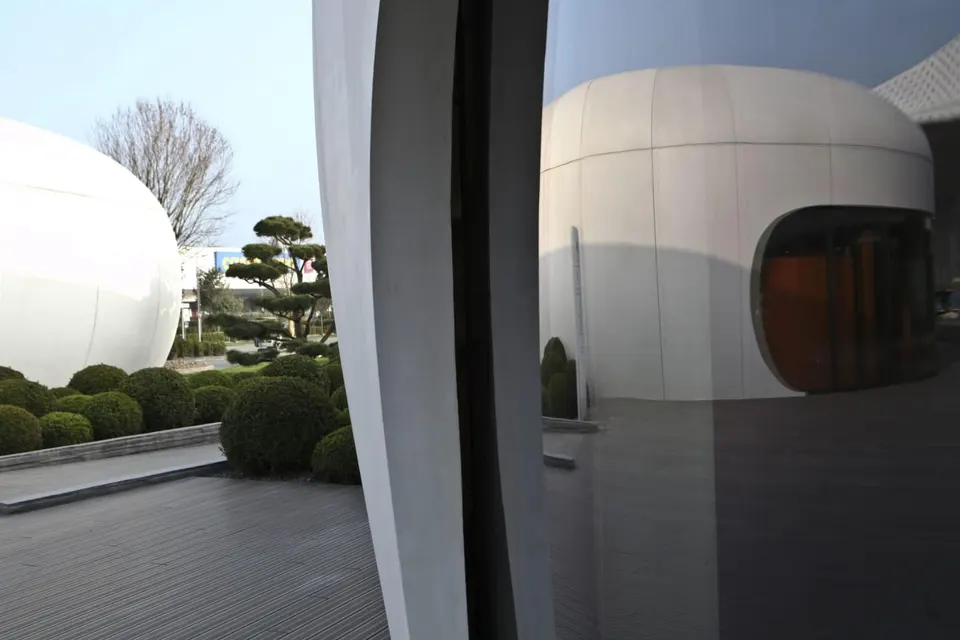
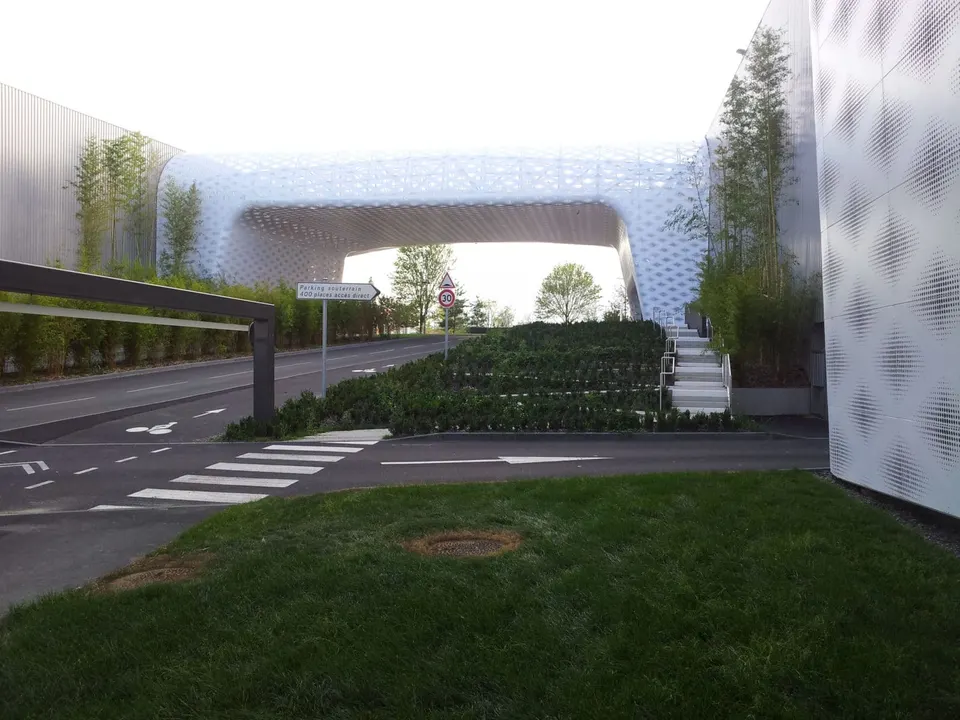
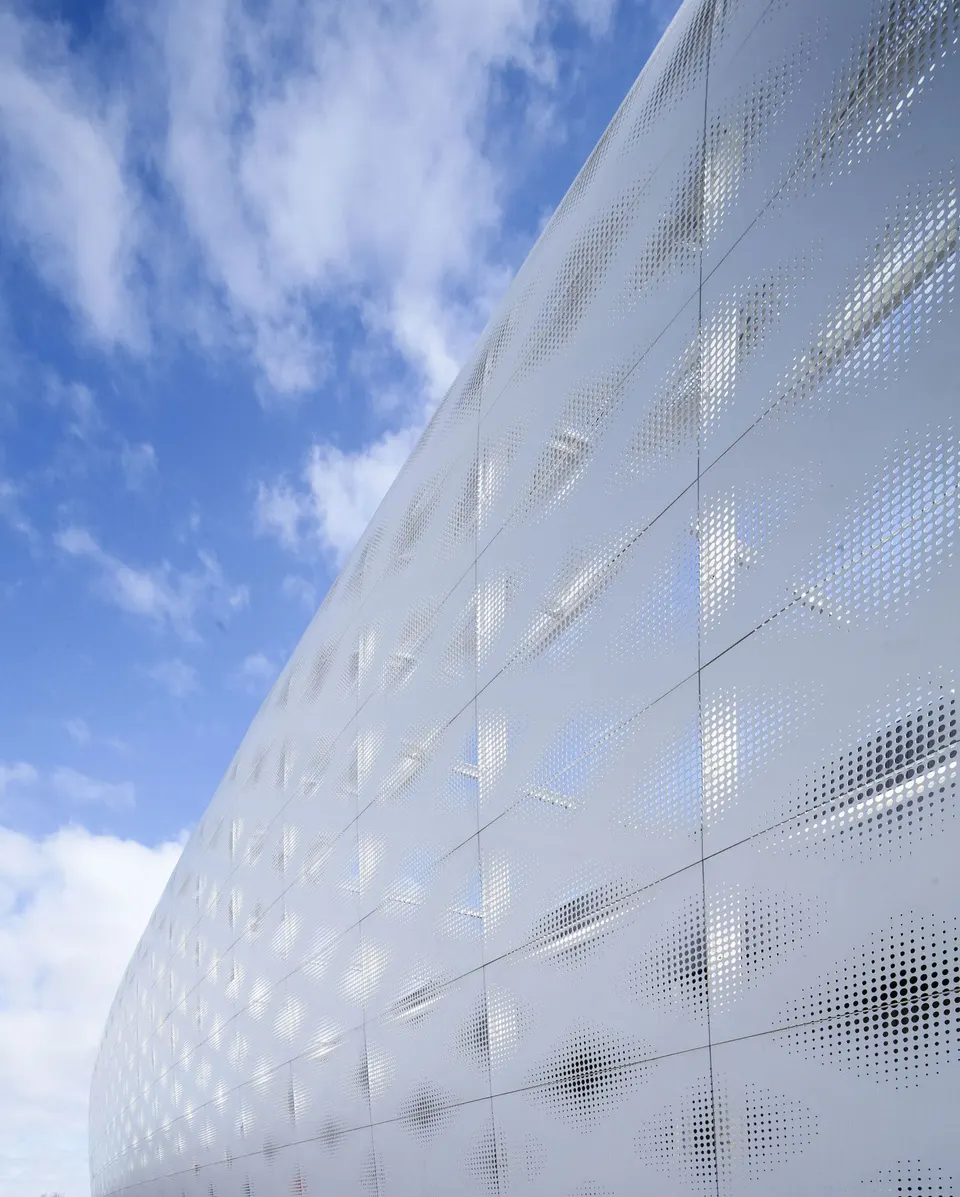
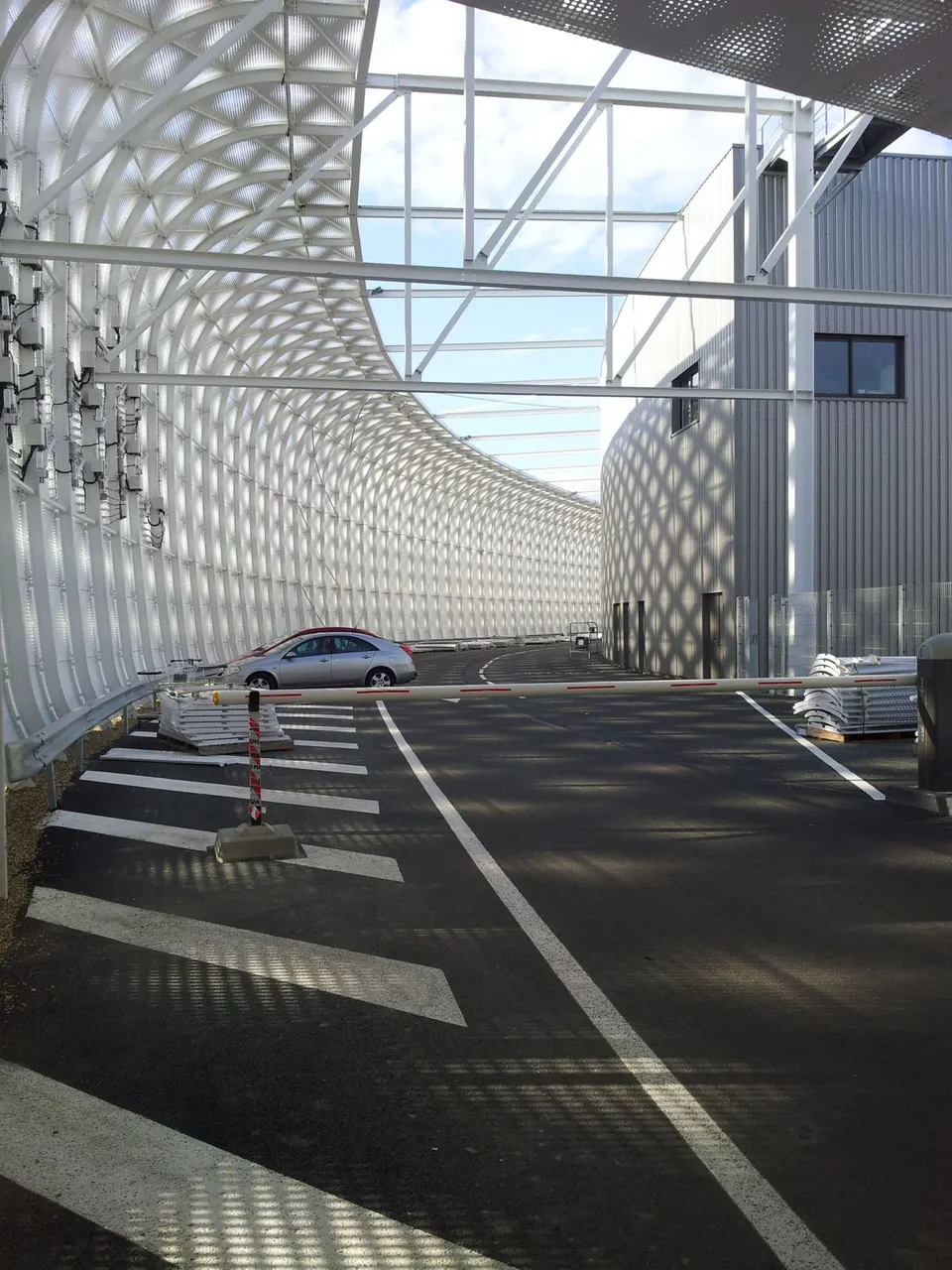
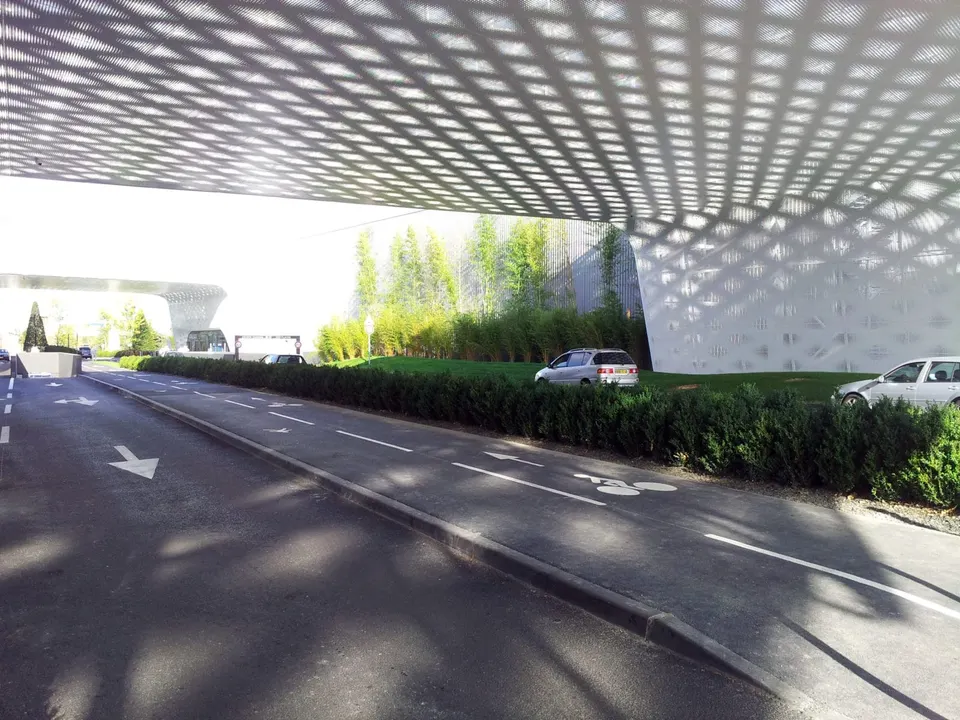
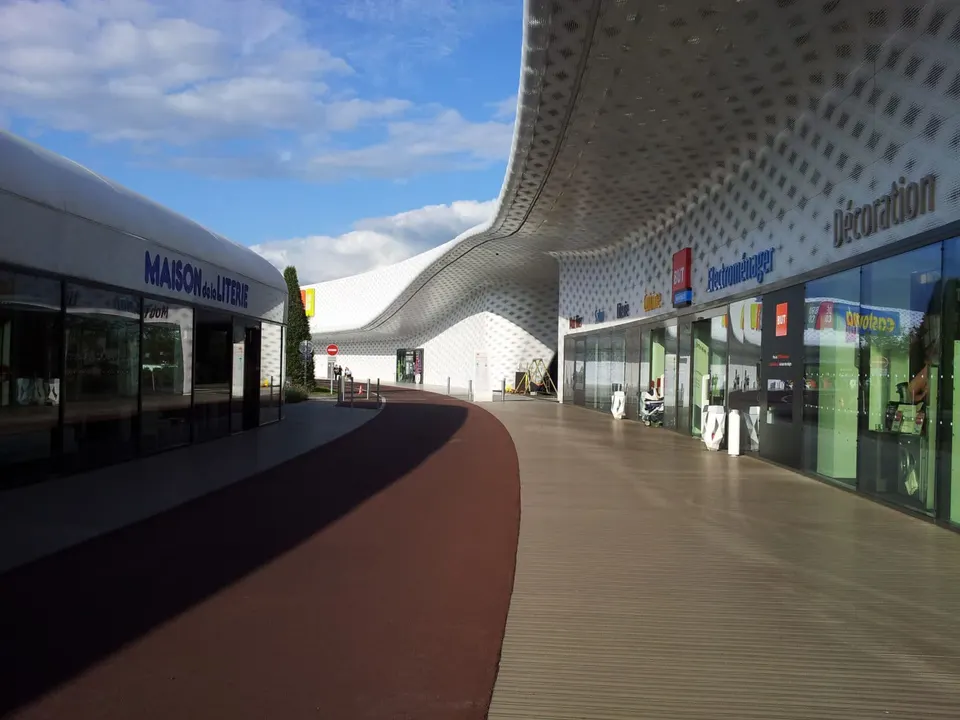
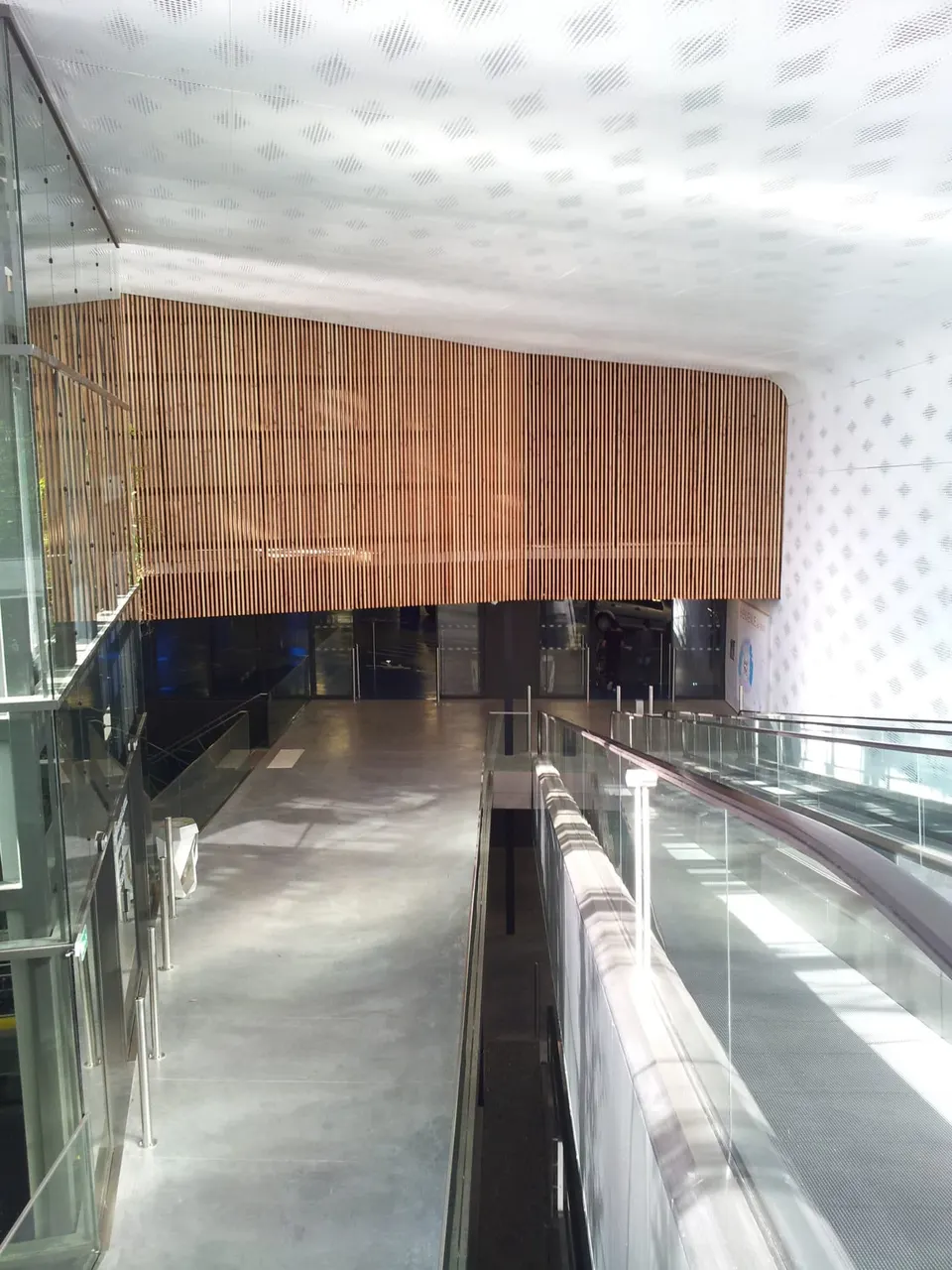
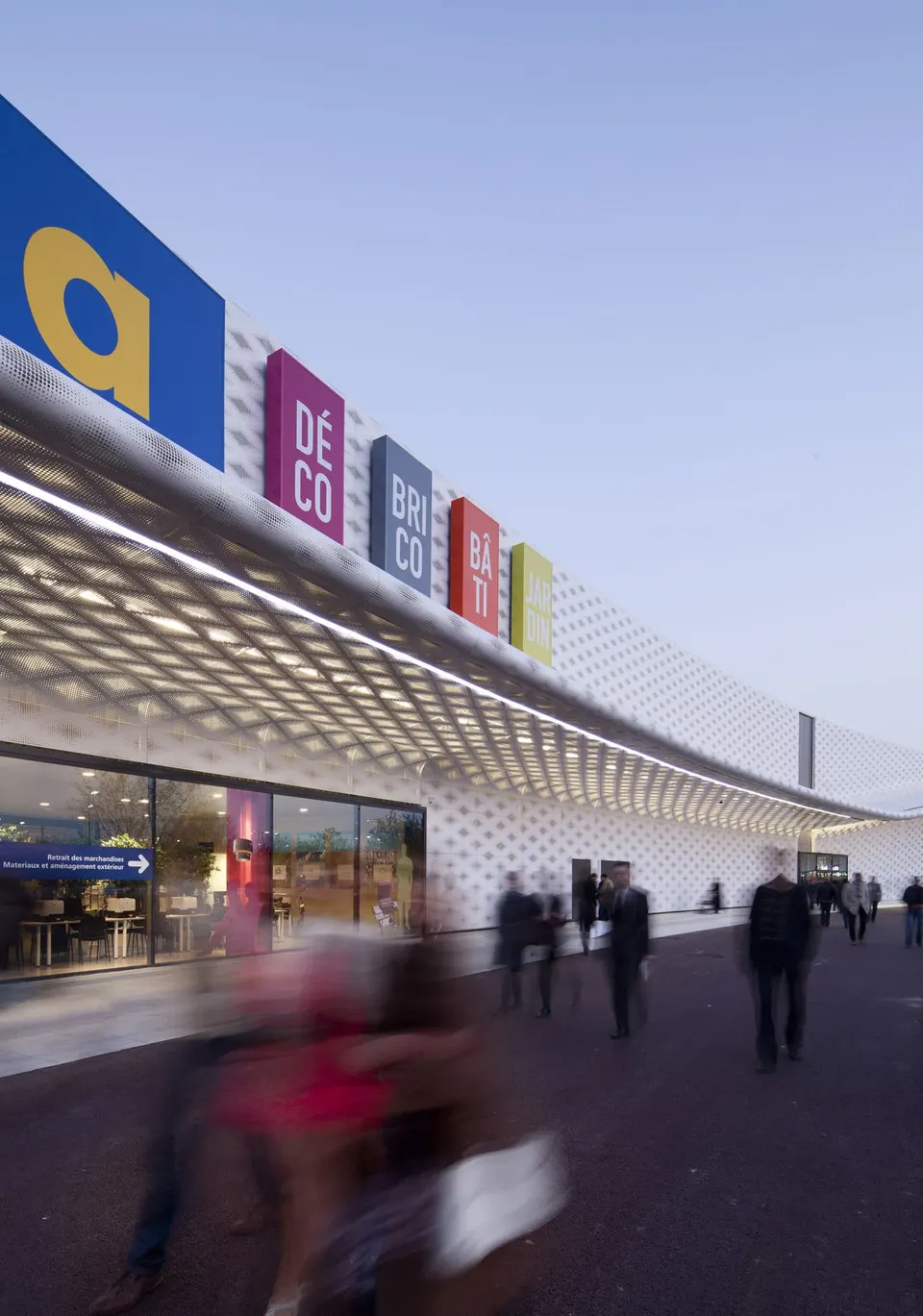
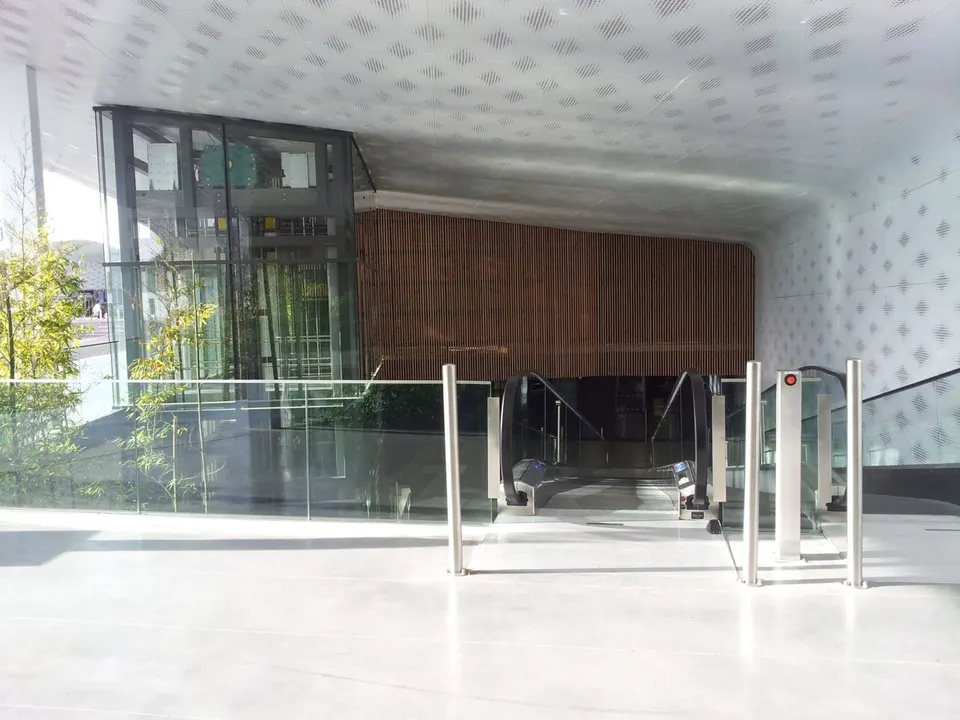
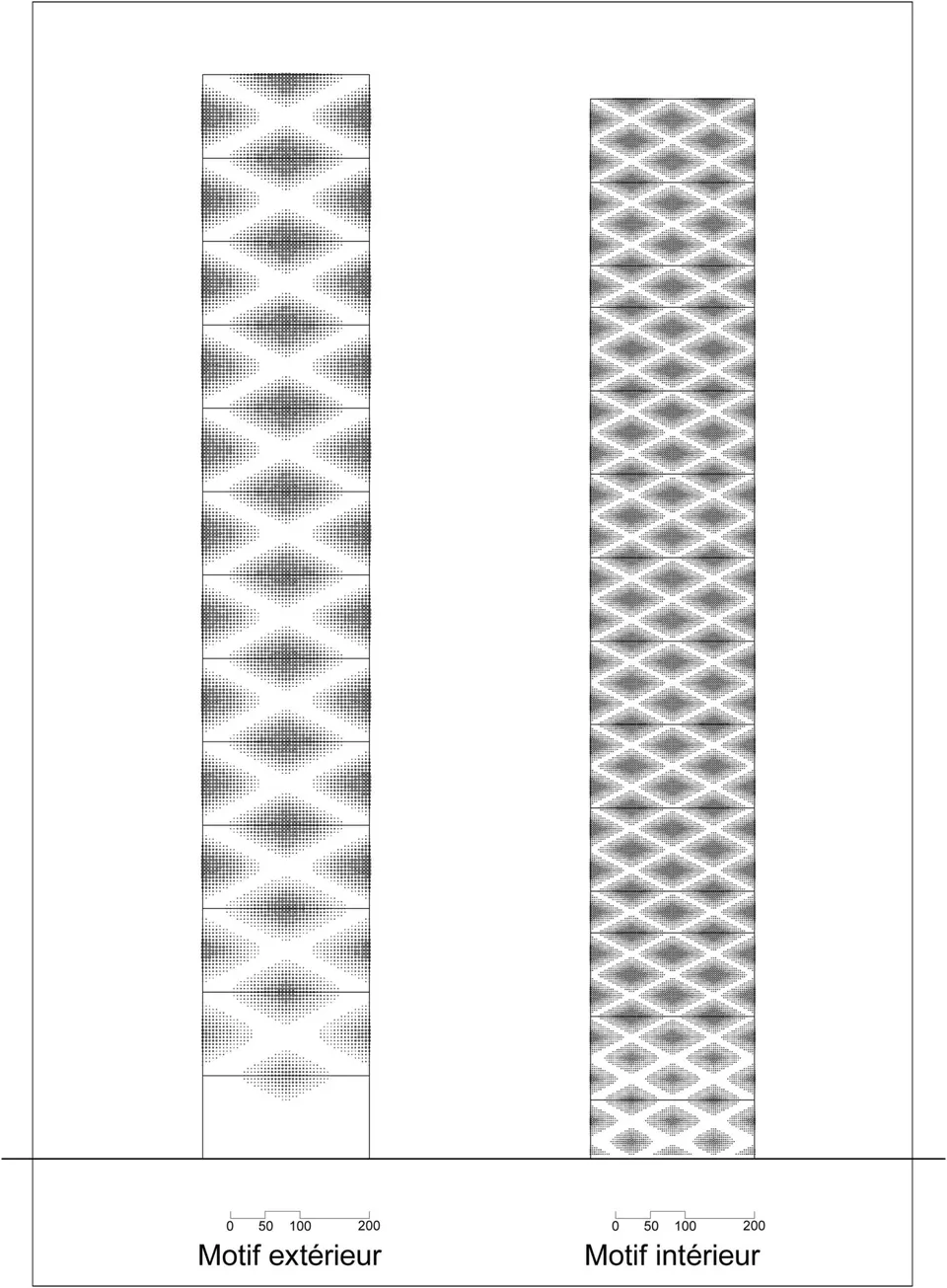
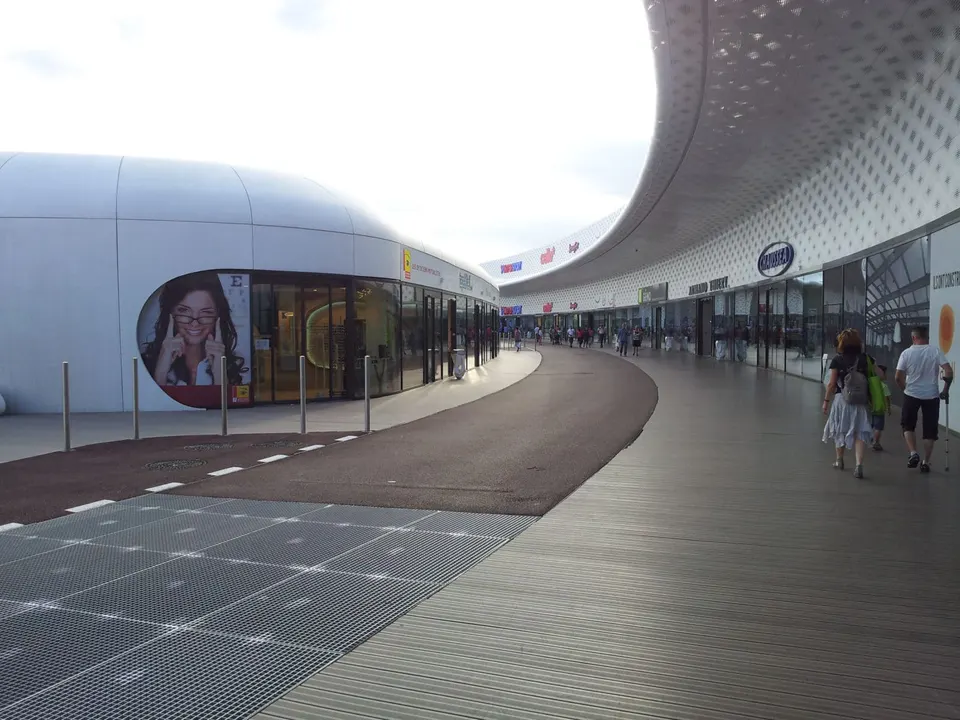
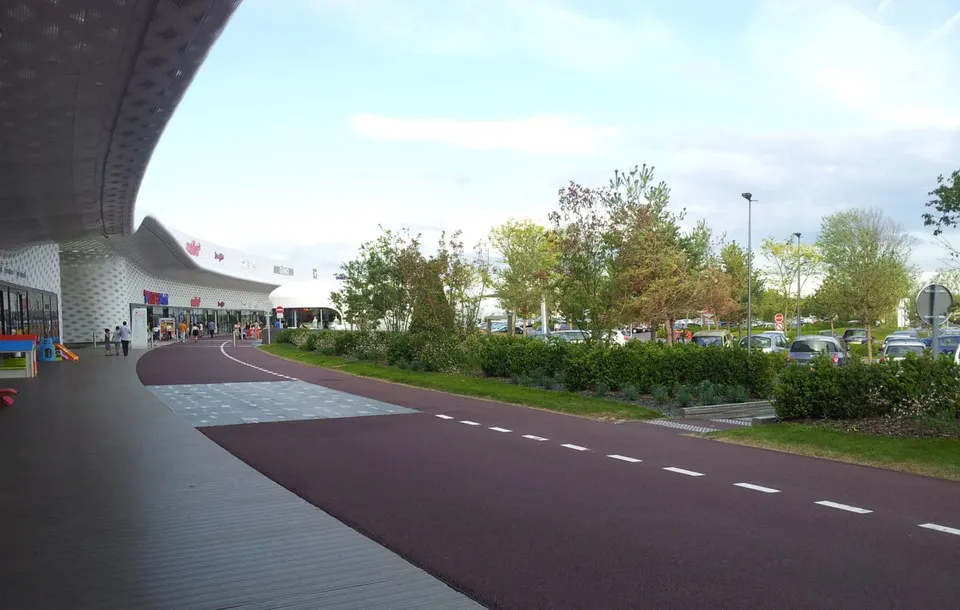
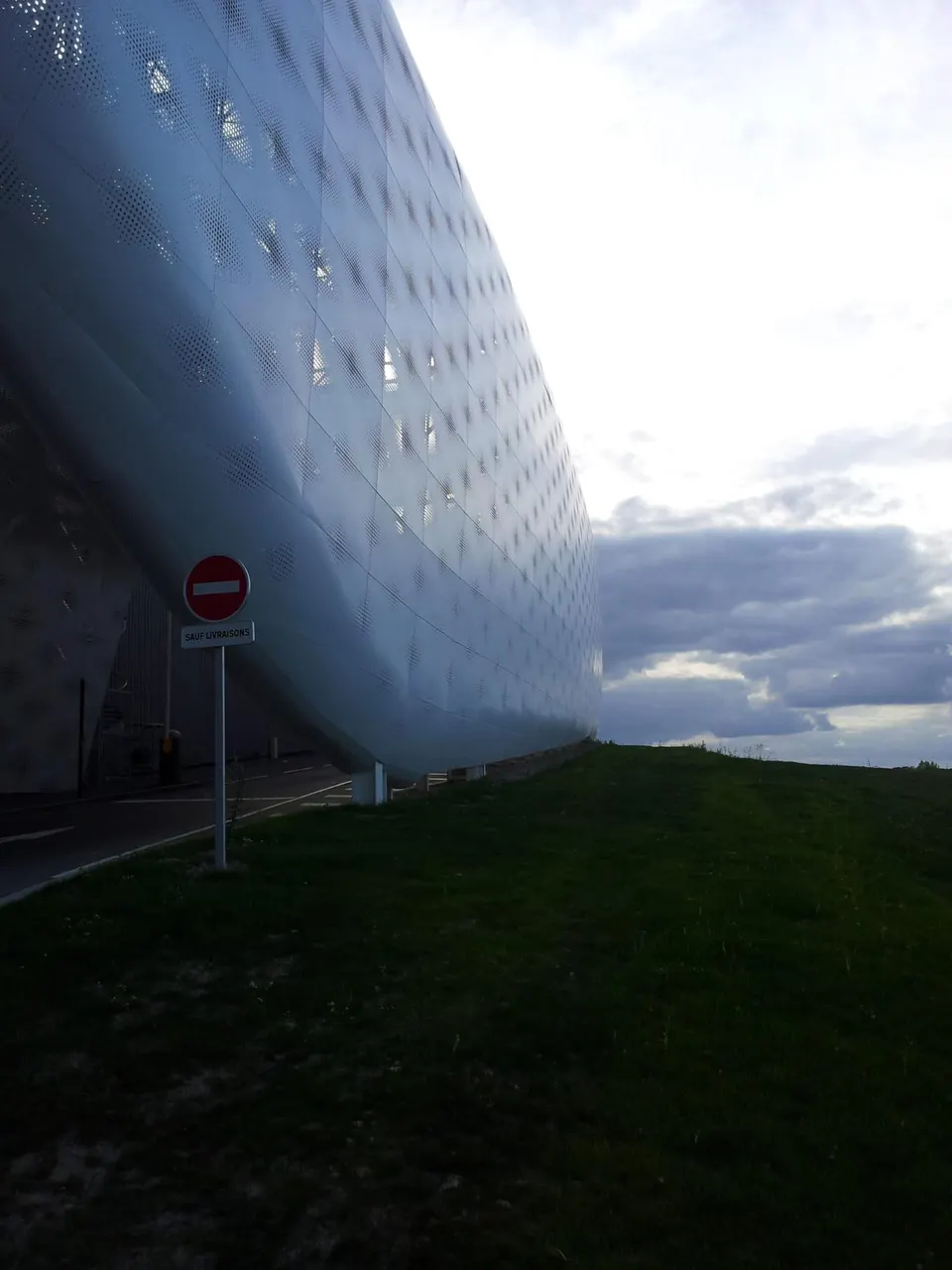
Structurally, the stores follow a conventional pattern, but a pearly white aluminium lattice screen wraps the programme and unifies the project in a single gesture.
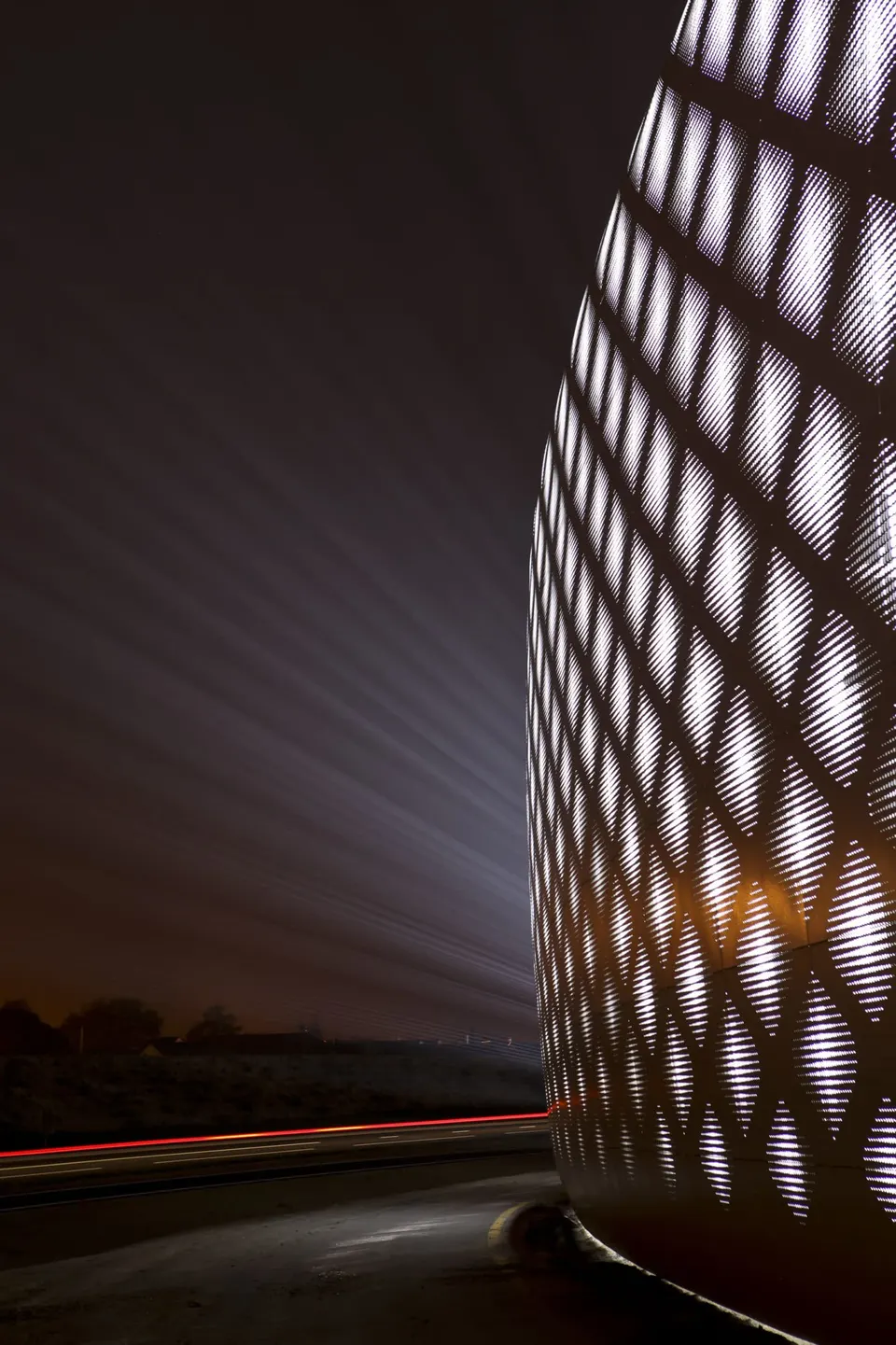
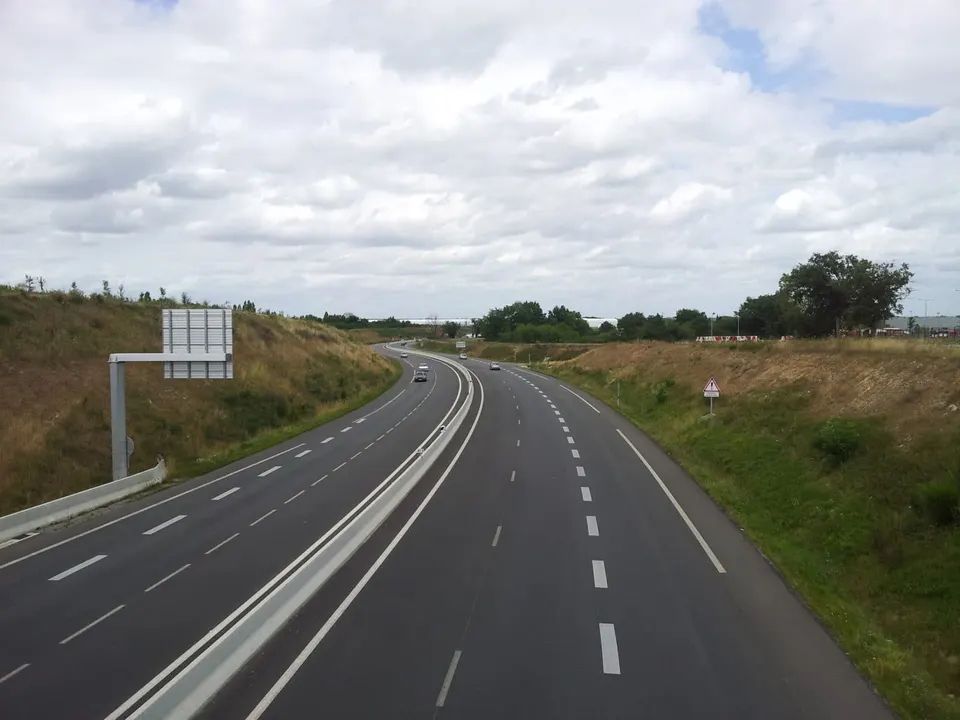
This envelope is far from purely aesthetic; it answers a number of technical constraints. Running alongside roads and a motorway, it acts as an acoustic barrier. The site is open and exposed to westerly winds, which the screen tempers. In addition, the perforations in its panels make it work as a brise-soleil.
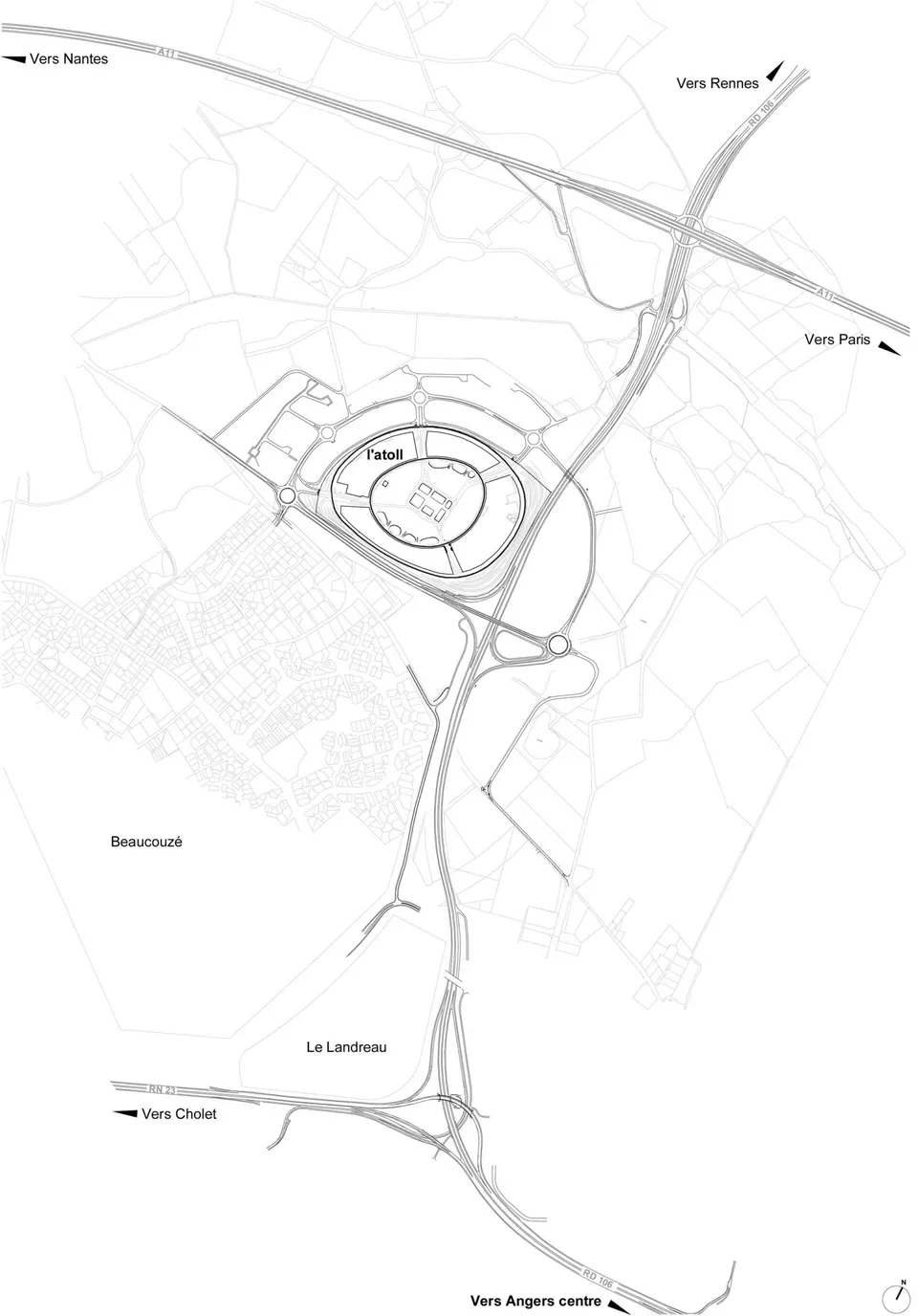
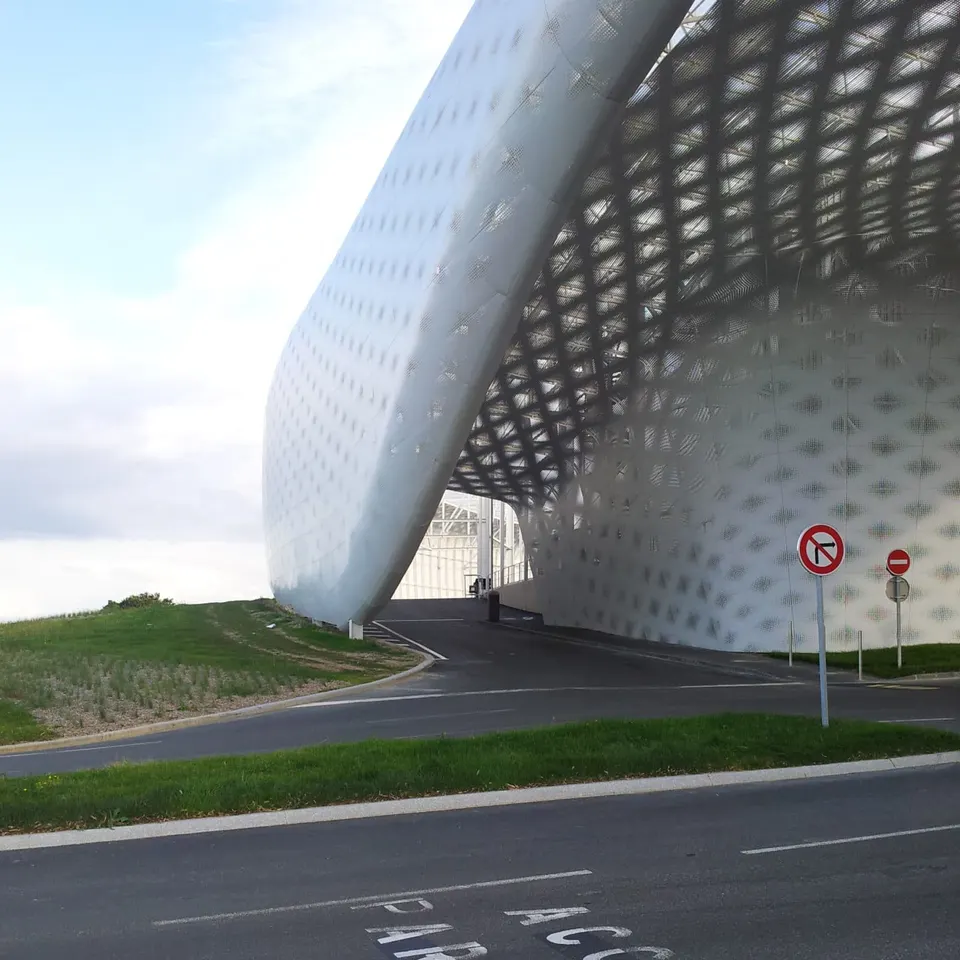
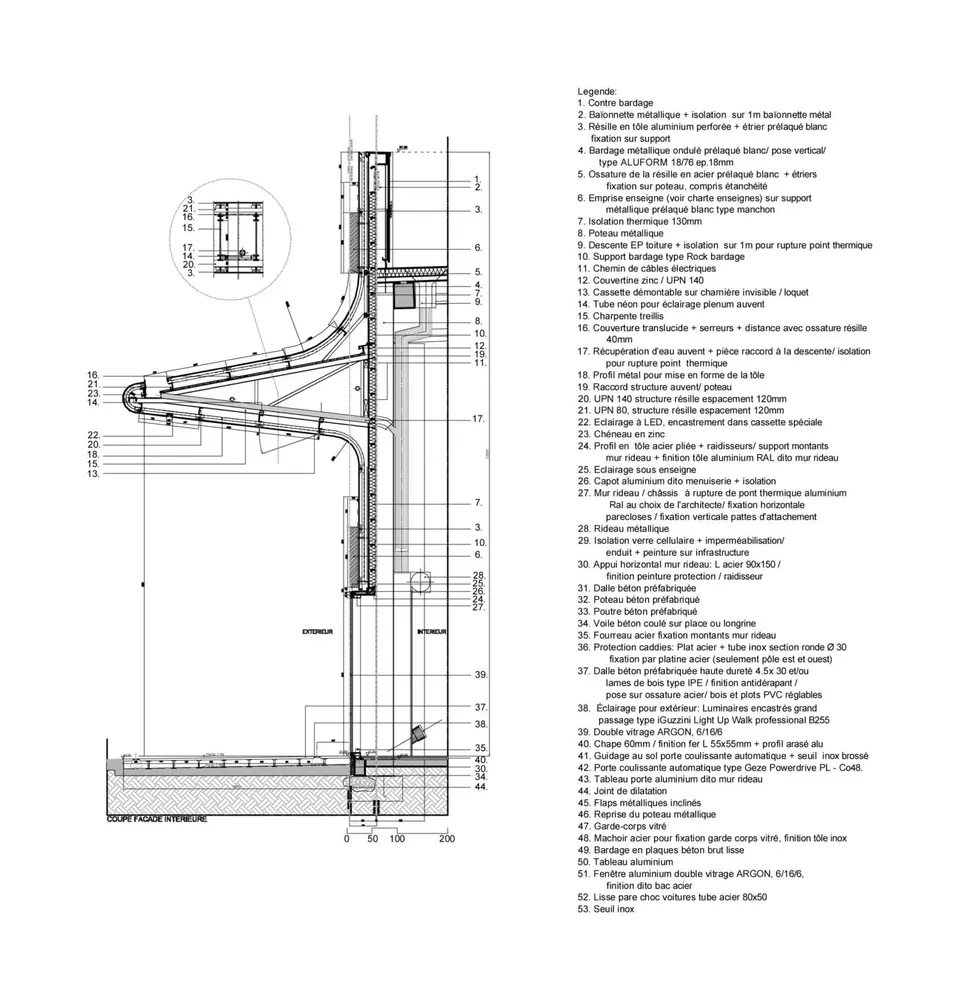
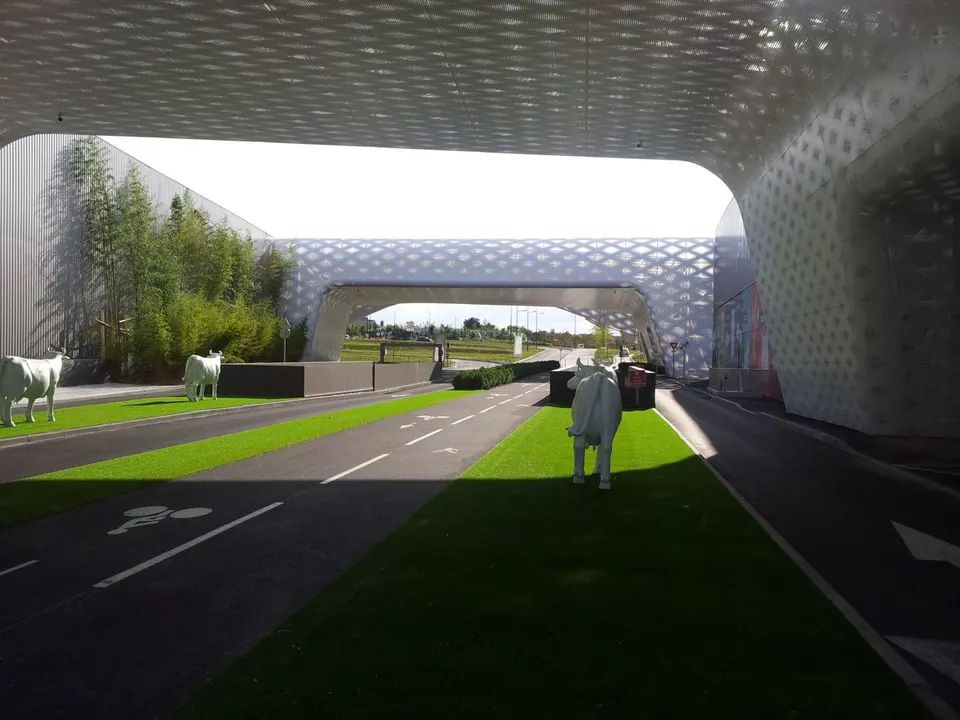
Stores need compaction and delivery areas, which are generally a visual blight. At its base the metal lattice is only lightly perforated, so as to hide this part of the programme from the outside. Higher up, it curves and breaks off to create an elevated passage that meets fire safety requirements.
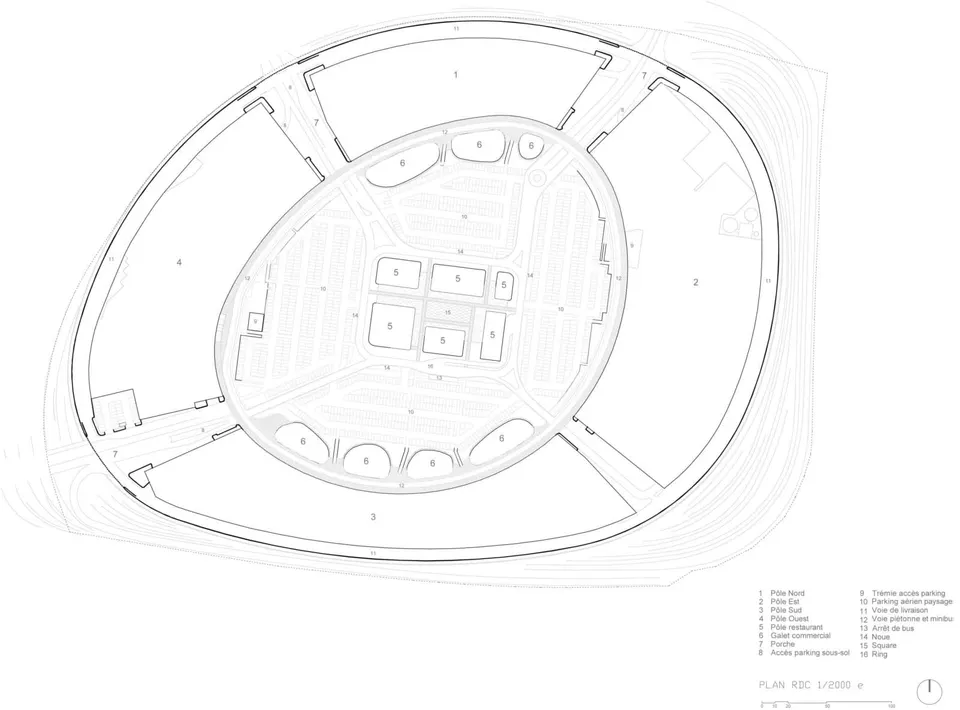
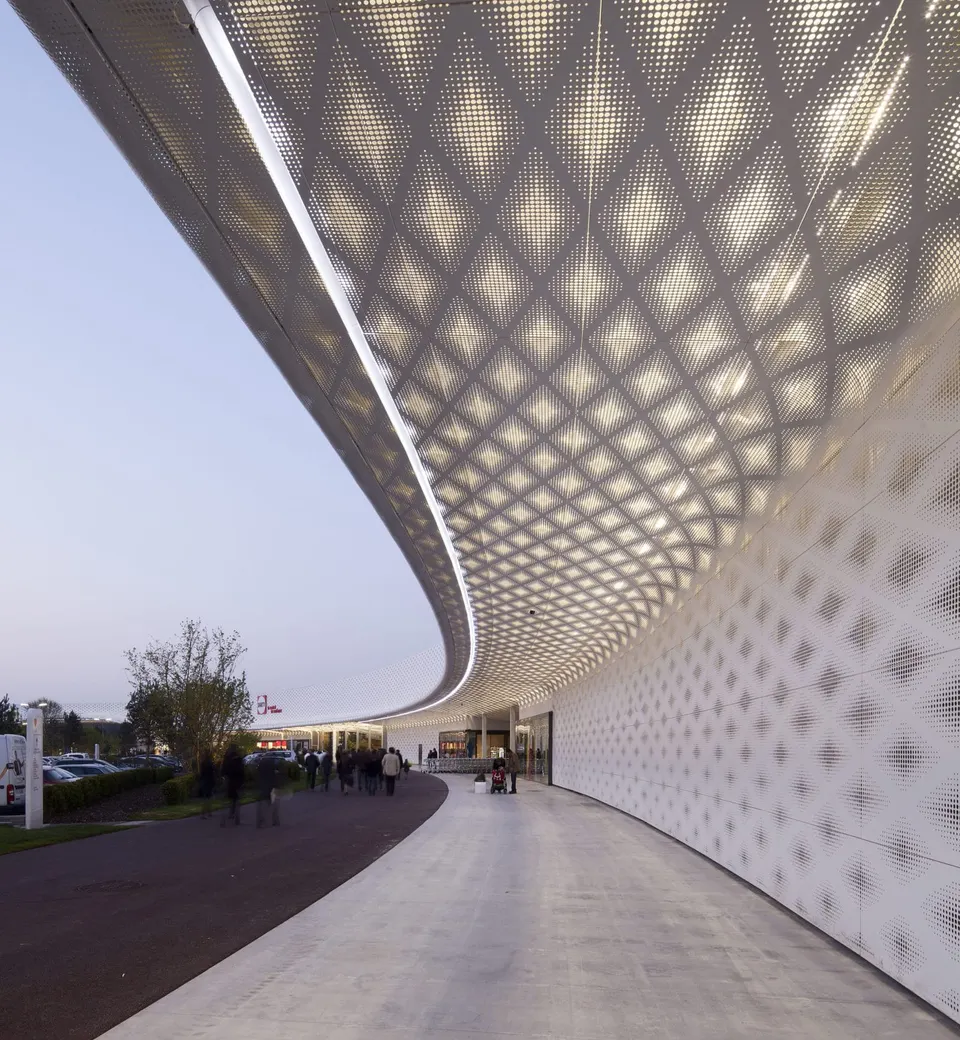
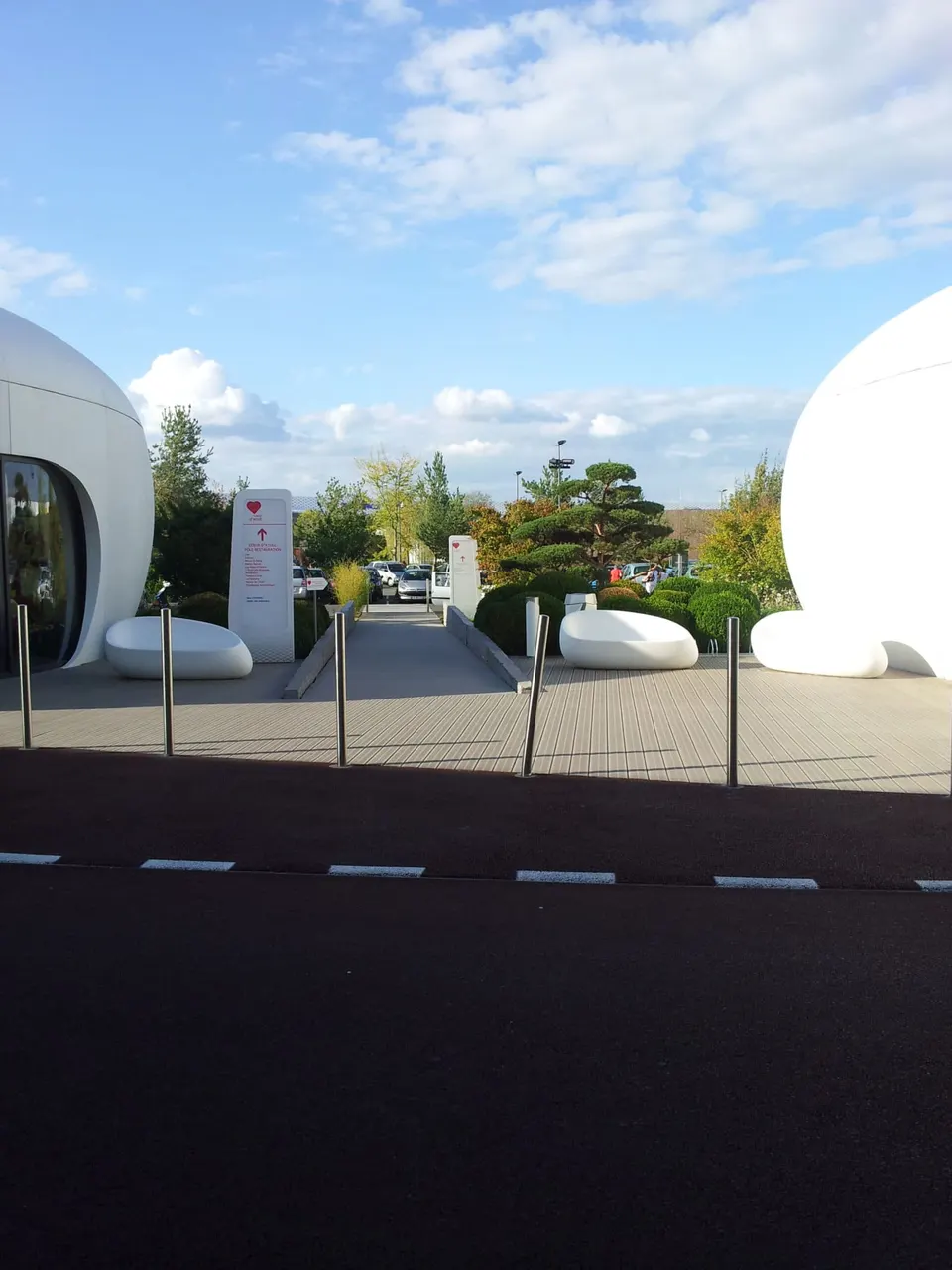
The entrances to the Atoll have not been neglected either: they appear in a captivating way, piercing the thickness of the building and revealing its true make-up. The entrances to the underground car park offer a first easing of road traffic. The inner skin gives way to the glazed shopfronts of the retailers, and the metal lattice folds to form a canopy sheltering the pedestrian street from rain and sun.
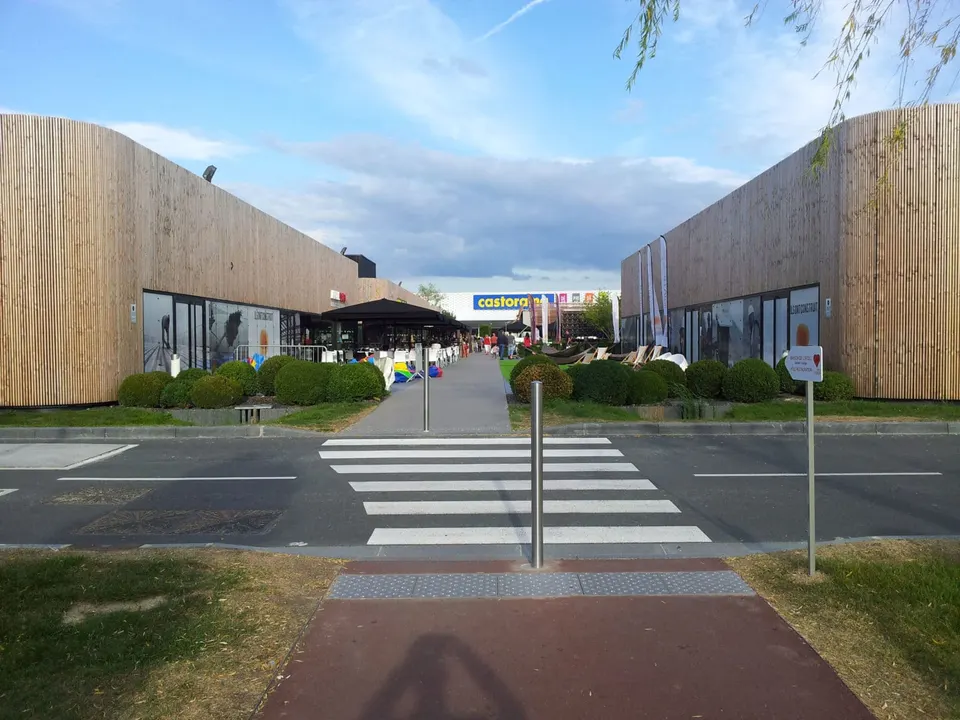
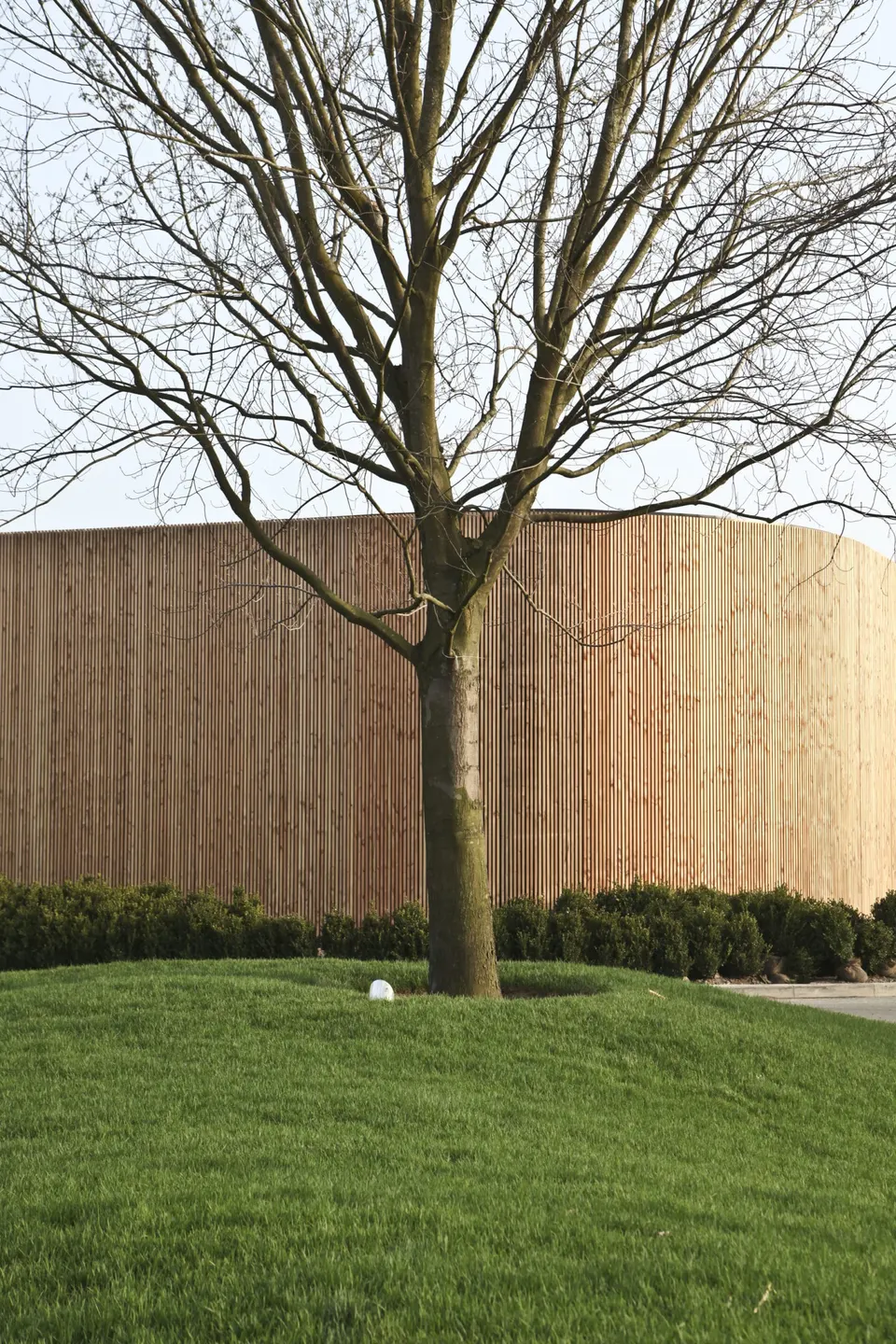
The centre of the block is given over to catering, with restaurants occupying six buildings clad in timber. This area is set apart from the shops by the parking spaces.
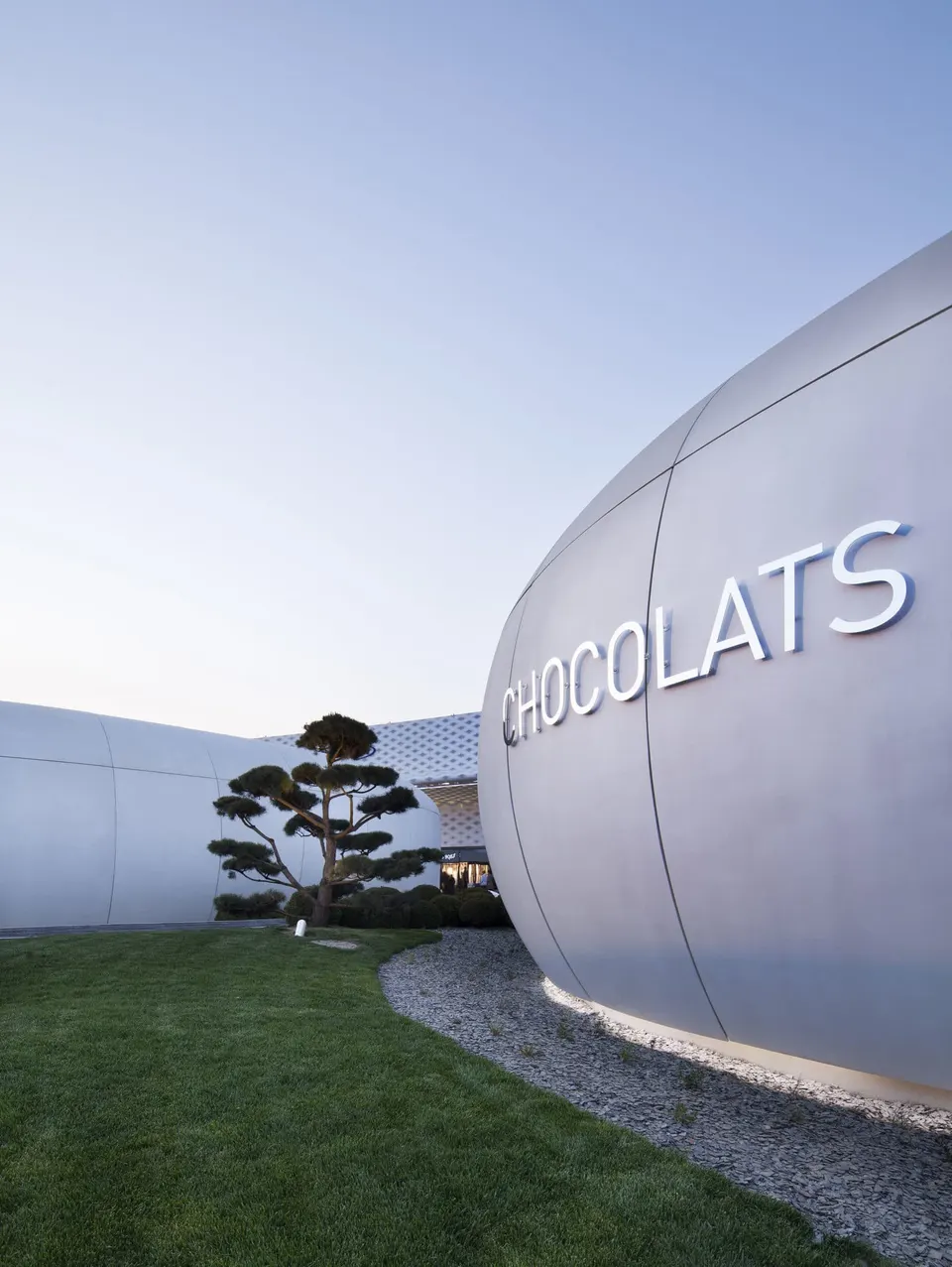
Compagnie de Phalsbourg, developer and owner of the Atoll, agreed to answer a few questions from Actuarchi. The answers come from Jean Sylvain Camus, marketing and communications director.
Kévin Poireau: What were the decisive factors in choosing the Vincent Parreira and Antonio Virga duo?
Jean Sylvain Camus: The deciding factor in choosing Vincent and Antonio was the overall concept of the project: the circular form (or nearly so), the façade clad in the lattice screen and, beyond its aesthetic dimension, the use of that screen to conceal the service roads for deliveries and waste collection from the shopping centre.
Kévin Poireau: The metal lattice enclosing the Atoll carries no shop signs. The enigmatic quality of the building makes you want to go in, but is that readily accepted by the retailers?
Jean Sylvain Camus: The negotiations were not easy, but the almost total absence of signage on the screen is, paradoxically, one of the Atoll's best assets.
Kévin Poireau: The centre of the block is occupied by small buildings with rounded corners, and a single fast-food chain refuses to fit in with the project, imposing its American brand. Could this have been avoided?
Jean Sylvain Camus: It was not possible to force McDonald's (that must be who you mean) to fit in with Vincent and Antonio's design. From a commercial point of view, McDonald's presence is indispensable. Even so, the aesthetic result is not disastrous.
Kévin Poireau: What has the initial feedback on the project been? Are all the units let?
Jean Sylvain Camus: In one year, the Atoll has welcomed more than 6 million visitors (by way of comparison, the Angers conurbation has 350,000 inhabitants). We still have 2,500 m² to let.
Kévin Poireau: Compagnie de Phalsbourg has set itself the mission of improving town entrances. That commitment represents an extra cost compared with your competitors' simple metal sheds. As a developer, is it really profitable?
Jean Sylvain Camus: Compagnie de Phalsbourg is a developer, but it is also an investor and therefore the owner of the Atoll. The decision to make the Atoll a showcase for what town entrances should be was therefore deliberate. The developer's margin does not come into it. A well-designed centre, unique in its architecture and its "landscaping", will be worth far more in 15 years' time than a shoebox. That can already be seen today when you compare the initial investment with the centre's fair value (the valuation is under way).
Kévin Poireau: The Atoll is an important project for your company; do you have any projects of a similar size under way?
Jean Sylvain Camus: Compagnie de Phalsbourg is currently developing two projects of comparable scale: Waves Grand Sud in Metz (architect Gianni Ranaulo), 68,000 m² in the Actisud zone at Montigny-lès-Metz, due to open in 2014; and Plan de Campagne (same architect), 130,000 m² in the region's major retail zone, due to open in 2016.
Reading this, we might like to see our dear Auchan, Carrefour and the like replaced by projects of this kind, but let us put the Atoll back in context. Let us use this scheme to move beyond contemplation and raise the discussion about shopping centres. This one is dedicated to the home: alongside Alinéa for the general public, there are also more upmarket brands such as Gautier and Château d'Ax furniture, and no food retailers at all. Visitors (customers) come to pick up decorating ideas, renew their furniture, or escape for a day. Their buying criteria will be led by looks, durability, guarantees and how well a piece fits in at home; for most, price will not be the deciding factor.
Now consider a shopping centre geared towards food, and why not discount food at that. For these products, price is a decisive factor in the decision to buy, and in customer loyalty too. Footfall is of course different, and we are generally less inclined to contemplate. Which store would you be tempted to do your weekly shop in: the shoebox or the work of art? Isn't there something reassuring about buying cheap products in an optimised metal box?
I think there is, but not in the form we know today. The standardisation and industrialisation of the act of buying has indeed led to an impoverishment of retail. It has cheapened places meant for pleasure, whether our own or other people's. These places, or rather these sites, have become repellent yet unavoidable.
The Atoll in Angers has hardly cost more than a conventional centre, since the structure of the stores is identical. It draws its strength not only from the aesthetics of its lattice screen but, above all, from its technical and logistical ingenuity. In that sense, the shoebox can go on structuring shopping centres.
Gallery
40 images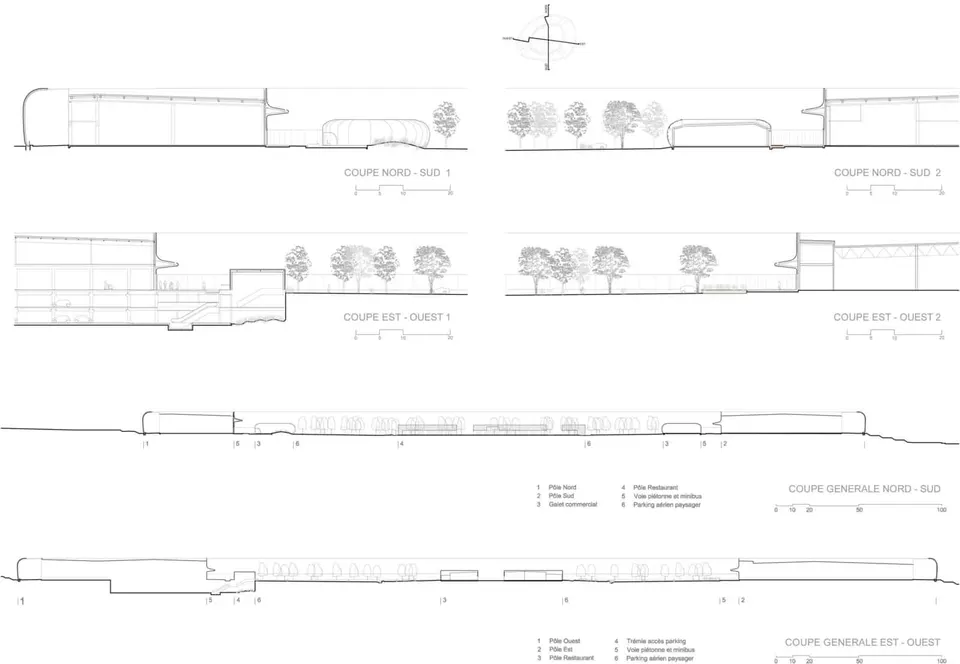

- © Luc Boegly
- © Eric Heranval
- © Actuarchi
- © AAVP Architecture – Vincent Parreira & Antonio Virga Architecte
Also available in FrançaisDeutsch