Buddhist temple in Bussy-Saint-Georges by Atelier Rolland & Associés
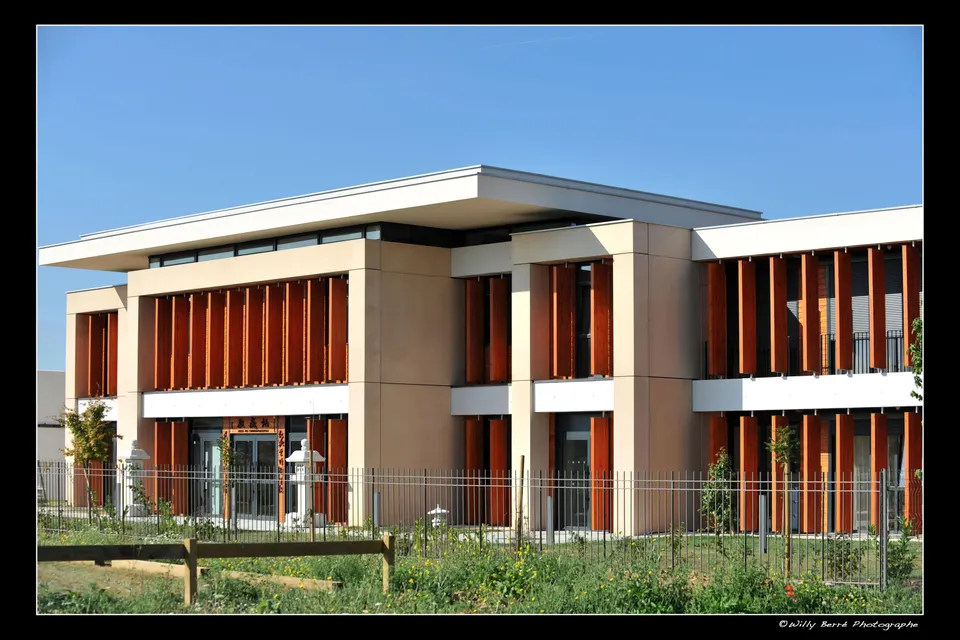
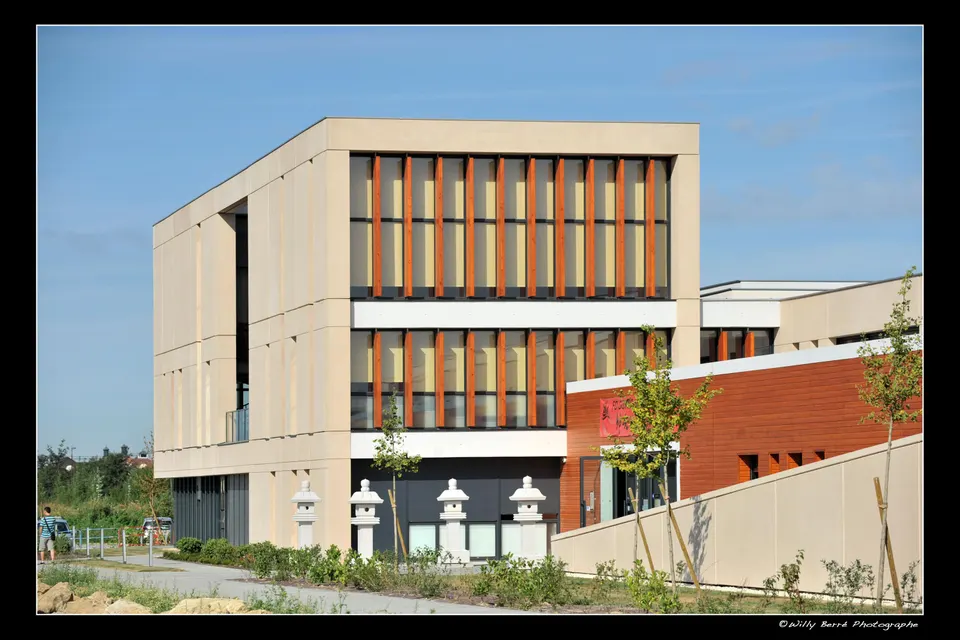
Frédéric Rolland's Angers-based practice completed the largest Buddhist temple in Europe this summer. Located in Bussy-Saint-Georges, in Seine-et-Marne, the project reflects the town's desire to offer a place of worship to each of its residents.
The building was commissioned by the Fo Guang Shan monastic order, based in Taiwan, and has a twofold purpose: to provide a place of worship for its members and to open this religious practice to the public. The order now has more than 200 places of worship and a million members, making it one of the most important in the Buddhist faith. In France it has six sites, with its headquarters in Vitry-sur-Seine.
The project sits within the Sycomore ZAC, an eco-district that will eventually house nearly 10,000 people. Running alongside the RER line, the 12-hectare site contains the listed Génitoy farm. The project originated with Fo Guang Shan, which wished to expand, as the Vitry-sur-Seine site was too small. The town of Bussy-Saint-Georges, which has a large community of Asian origin, offered a plot within its eco-district, where new places of worship (a mosque, a synagogue and others) are also being built. The client first approached the Taiwanese architect Kris Yao, who has several temples to his name. He had struck up a friendship with the American architect of Asian origin Polly Lo Rolland, wife and partner of Frédéric Rolland. Their practice, based in Angers with an office in Shanghai and a staff of nearly 110, has been carrying out large-scale projects in Asia for more than twenty years. Kris Yao therefore offered the project to the studio, setting out a few principles specific to the design of temples.
The building stands apart from the surrounding development to ensure maximum tranquillity. Running parallel to the road, a broad ramp stages an initiatory procession during ceremonies. Trees have been deliberately planted around the building and throughout its grounds to create a green lung.
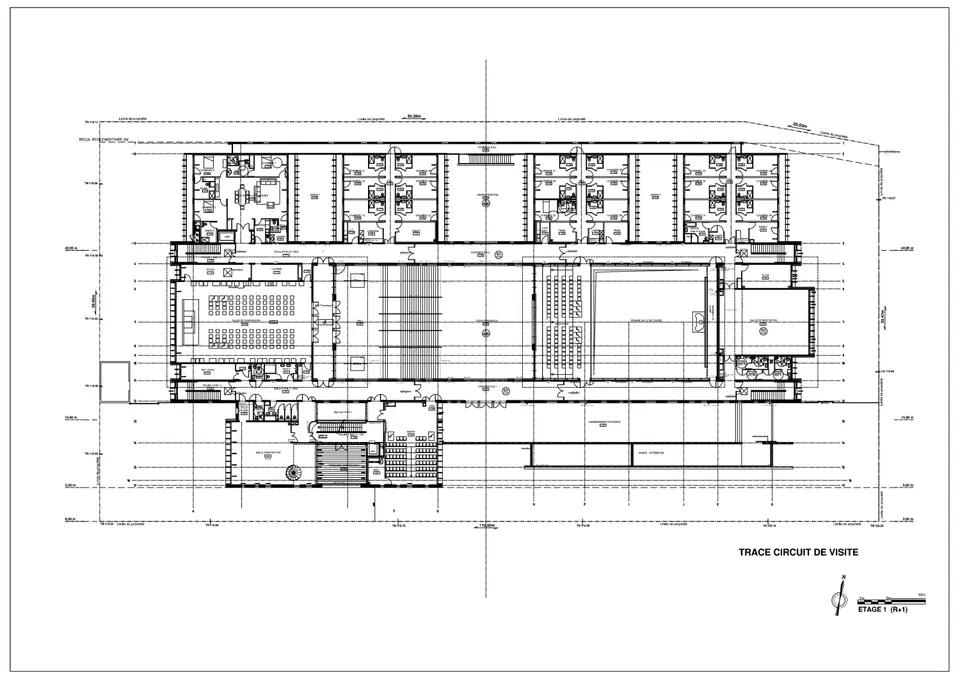
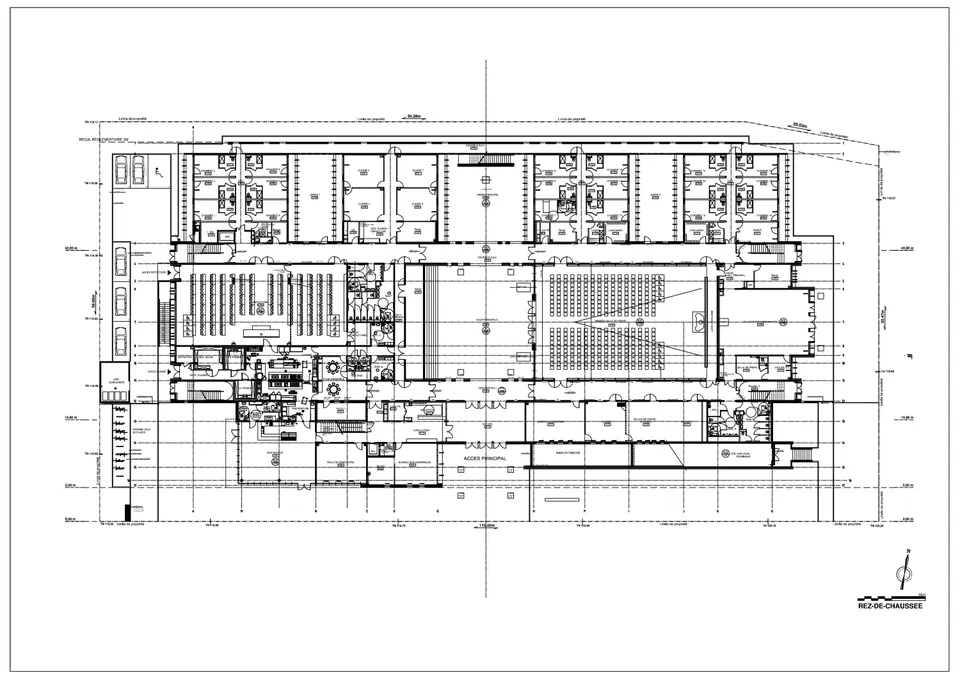
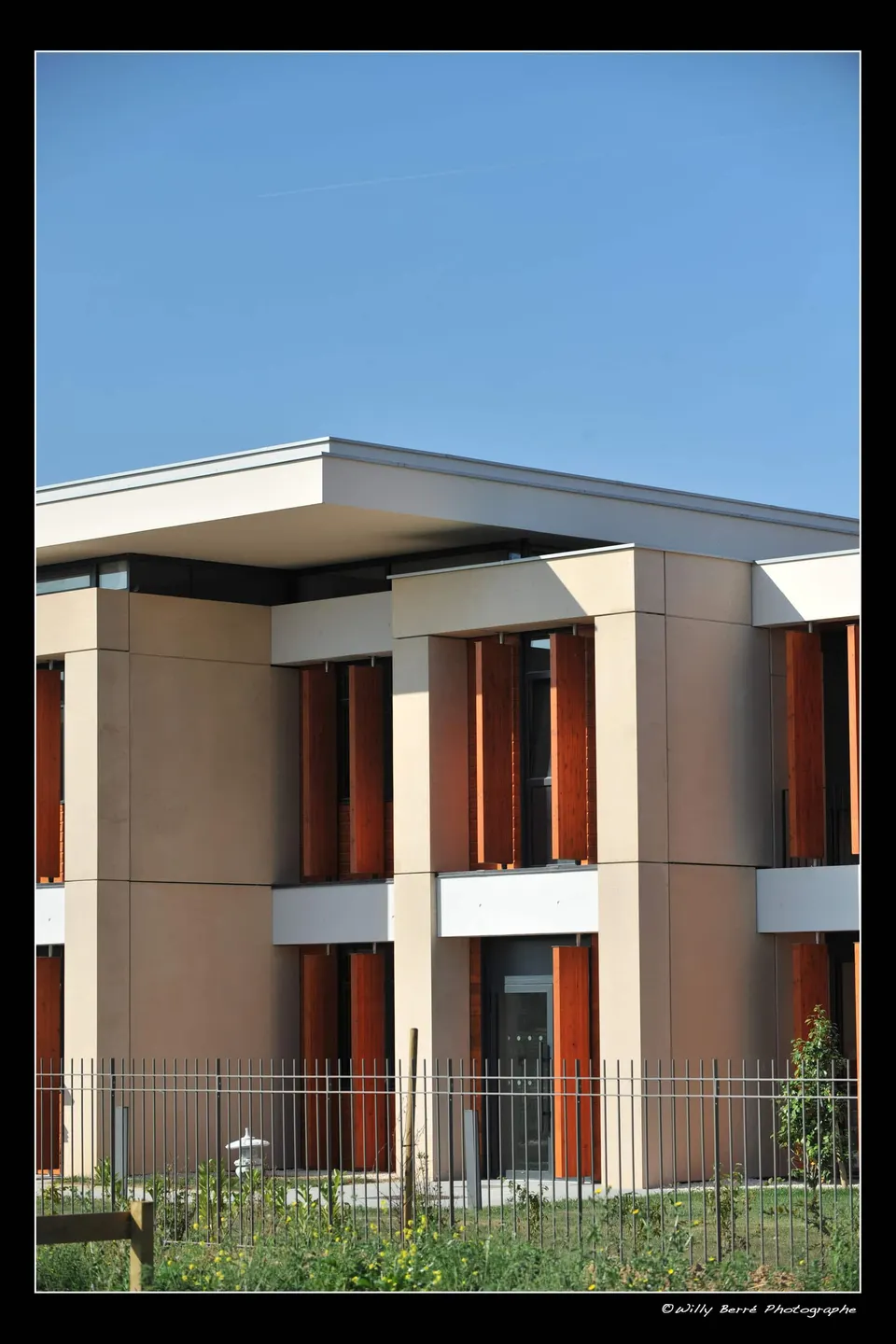
The building is organised into three parallel zones: cultural, religious and residential. They are separated by four concrete walls running east–west. Imposing and sculpted, these walls are intended to contain the programme, whose hierarchy can be read from the outside. Once the functions and directions have been set, the spaces within each zone are defined more lightly, whether through the façades, partitions or roof, in order to invite the spirit to rise.
The first zone houses the classrooms, the exhibition room, the tea rooms and the restaurant. It acts as a buffer between the worship area and the outside. Spread over two levels, the religious zone lies at the heart of the project. A central hall leads to the commemoration room, the meditation room, the compassion room and the 450 m² prayer hall. The last zone comprises 36 bedrooms for guests and venerables.
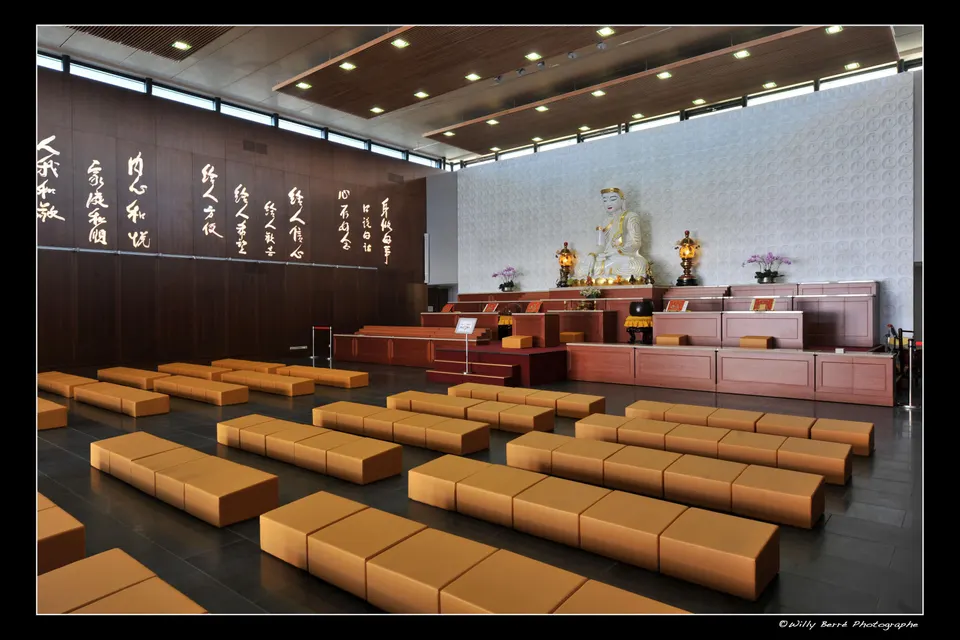
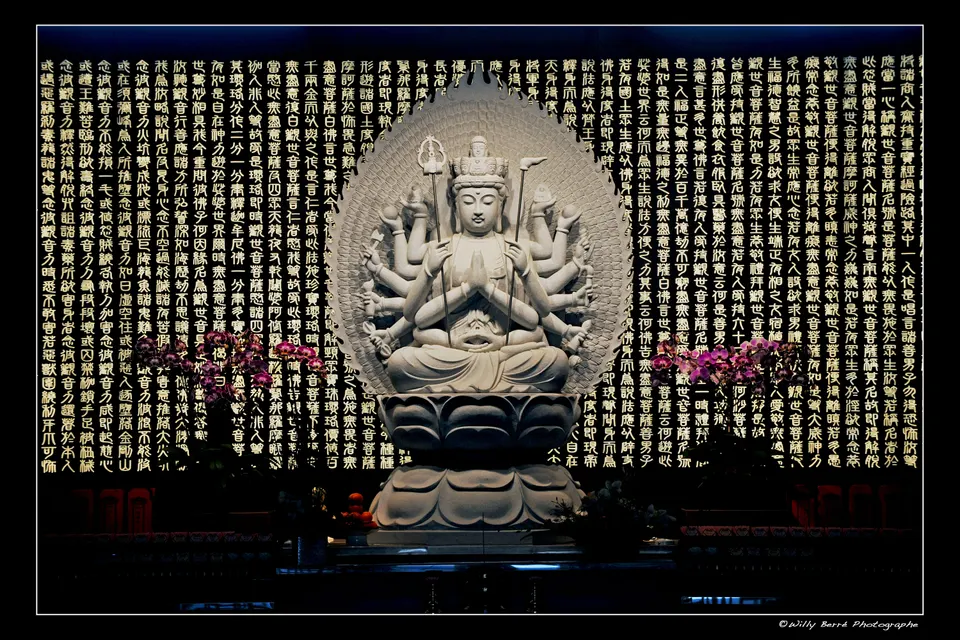
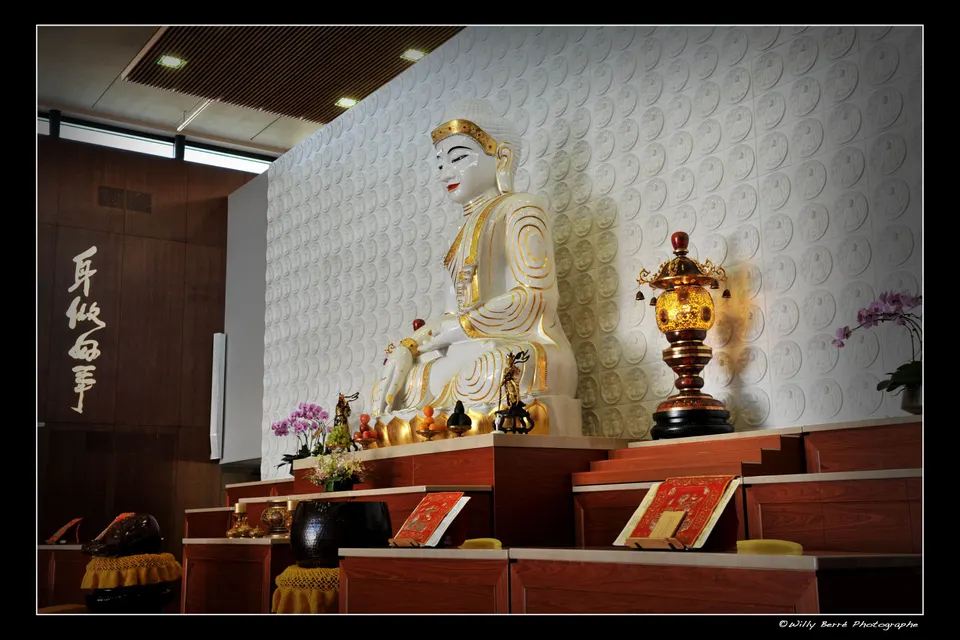
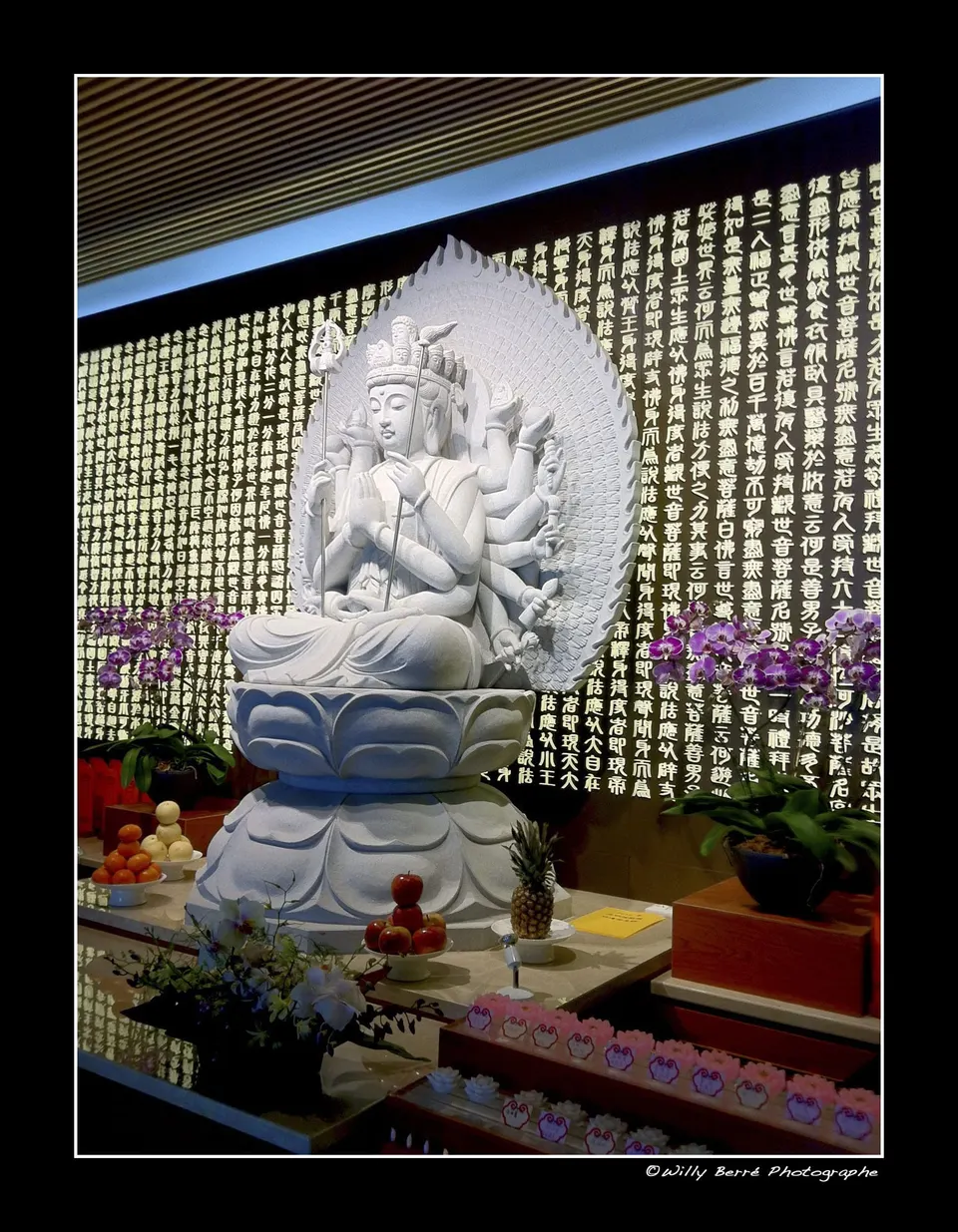
The large, column-free prayer hall houses an eight-tonne Buddha in white jade, gilded with gold and standing 4.5 metres high. Imported from Burma, it complicated the organisation of the building site, as an opening had to be left in the roof throughout construction. The statue stands on a timber plinth in front of a white concrete wall carved with 166 medallions of seated Buddhas. Lit naturally by a clerestory band that follows the line of the ceiling, the hall is inscribed with sacred quotations from the great master Hsing Yun. “The overall concept for this magisterial space is to recreate a spiritual transcendence through writing and the figure of the Buddha”, explains the architect.
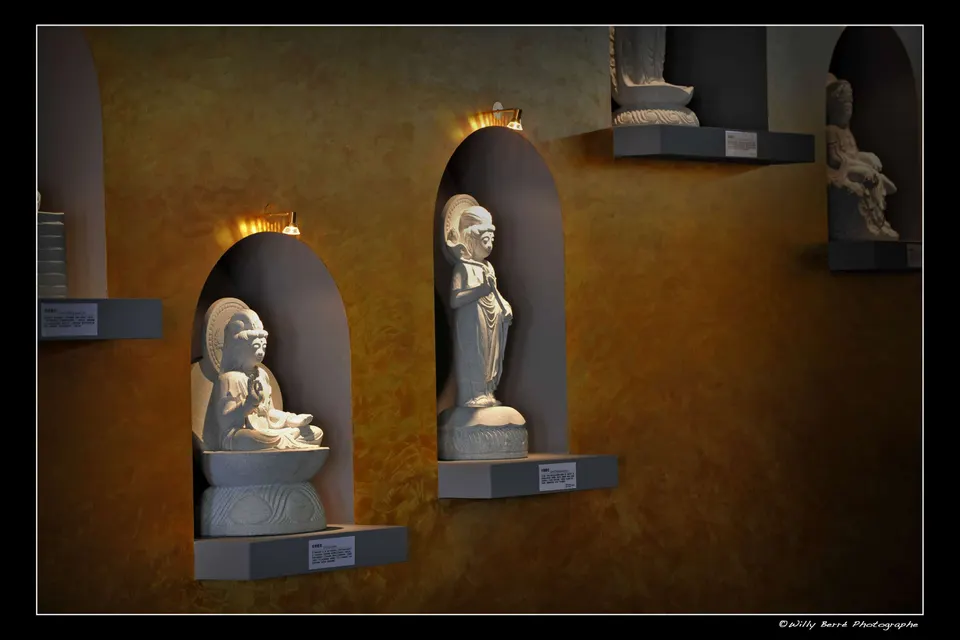
The compassion room, whose side walls are adorned with 32 small Buddhas in Chinese granite set into niches at different heights, is on the top level. This sacred space is dedicated to the Buddha of compassion. The meditation room, by contrast, is free of any decoration so as not to disturb the inner calm it is meant to foster. It is finished in white, with a parquet floor on which to sit.
Gallery
11 images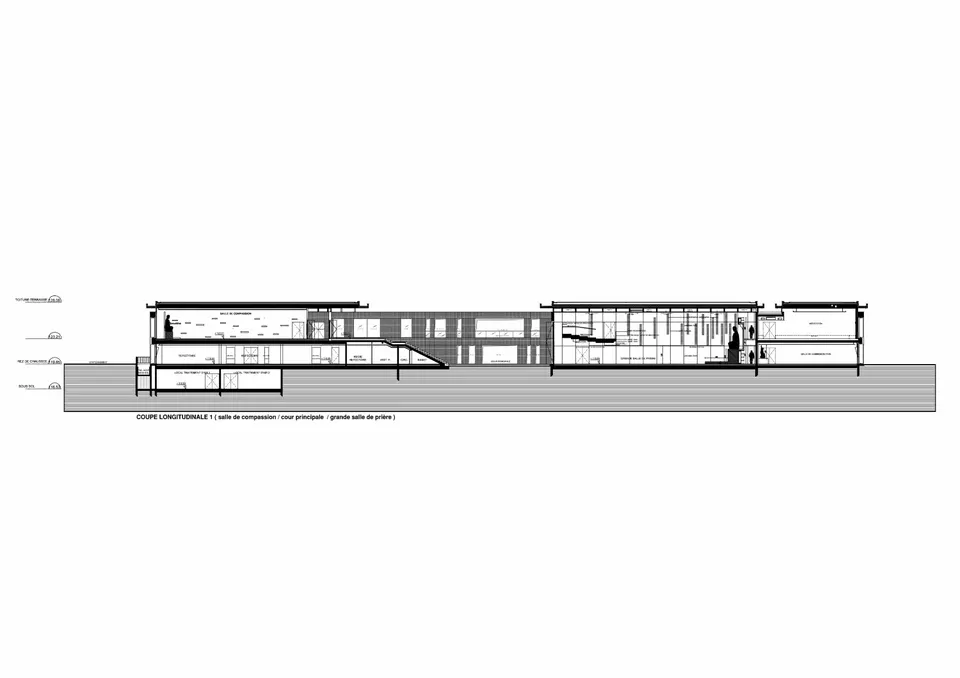
- © Willy Barré
- © Atelier Rolland & Associés
Also available in FrançaisDeutsch