
A prostitution centre in Lyon?
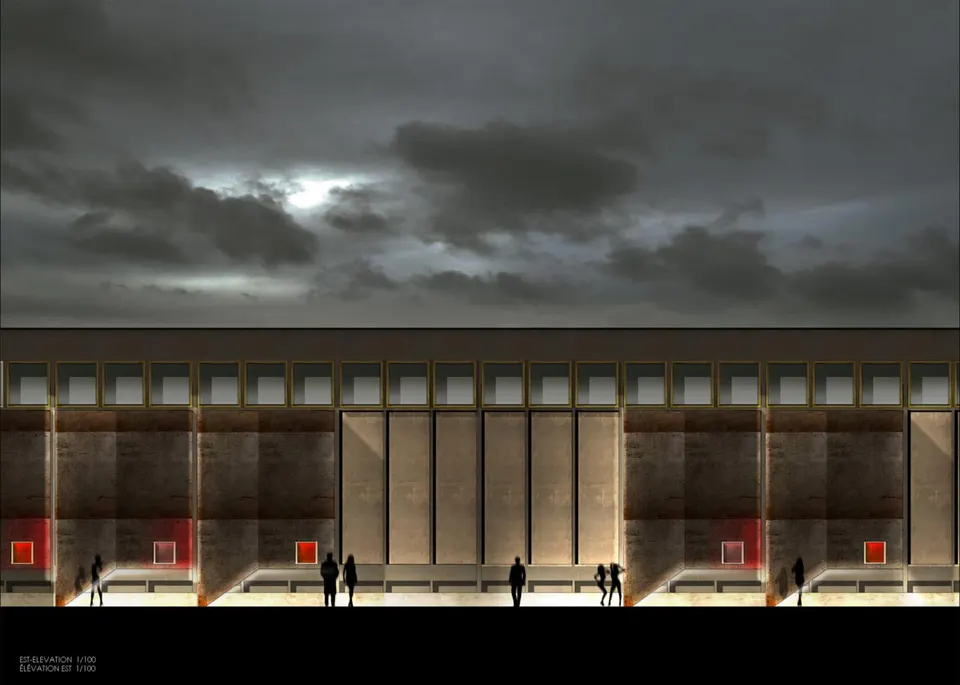
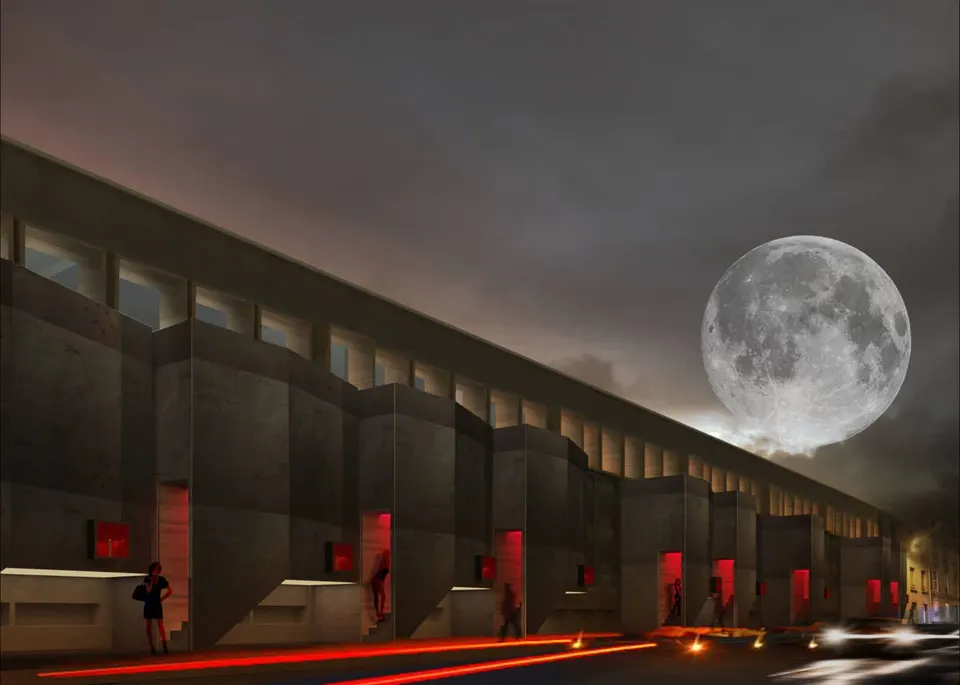
The Lyon-Confluence project is moving forward. We know about these big flagship schemes, but we forget that the warehouses were not all empty. Without entering into a political debate about prostitution, which is not the purpose of this article, two young architects wanted to look at a possible workplace dedicated to prostitution, integrated into the urban life of this changing district. Jérémie Taite and Laurie Paillet used last October's Gaudi competition to explore the question. The project did not win a prize because it did not fit the competition's "sustainable" spirit.
Kévin Poireau: The brief was to design an urban hall using an HQE approach, yet you sidestepped the subject. Why did it not interest you?
Jérémie Taite and Laurie Paillet: The brief was to create from scratch, or to rehabilitate, an urban space as a "sustainable covered market", the market theme evoking a place of conviviality and exchange that holds a special place in the city. The environmental aspect had to be very much in evidence, and the project had to take a stance on sustainable development.
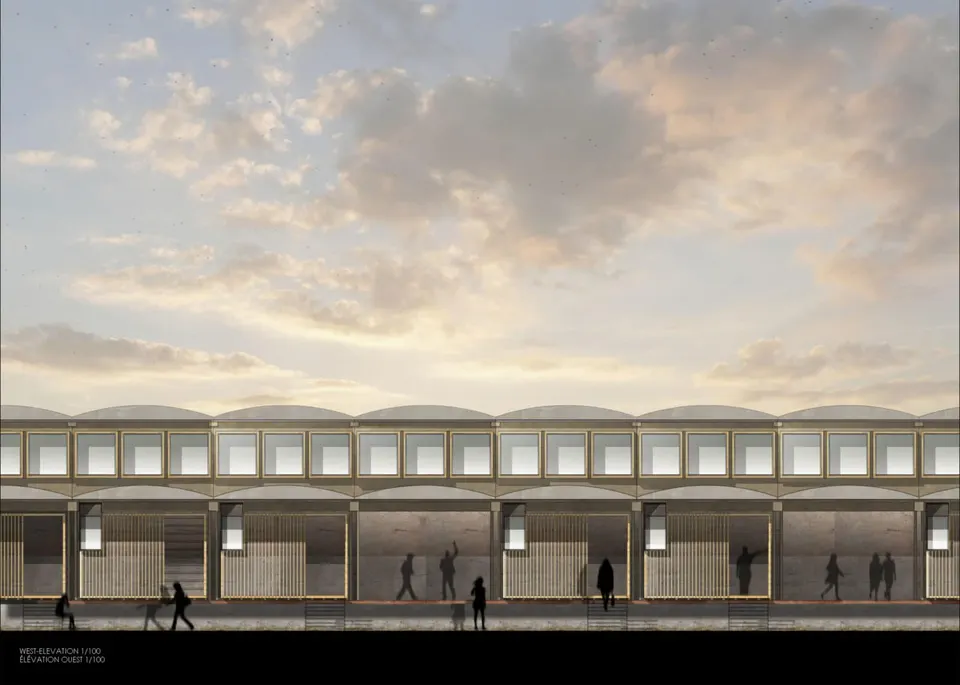
But we felt that, as is too often the case in architecture competitions for students, the notion of sustainable development was too central, at the expense of all the other major questions inherent in the design process. For us, sustainable development is of course important, but it should above all be a matter of common sense and be treated on the same level as the relationship to context, architectural language, construction and so on.
Kévin Poireau: How did the idea of creating a workplace for prostitutes come to you?
Jérémie Taite and Laurie Paillet: We fell in love with the former Marché Gare during concerts held inside it, but we had known the district for a long time. That was when the Marché Gare was still operating and neither the regional council headquarters, nor the port, nor the housing existed. At that time the district was very lively, animated by the ballet of lorries supplying the wholesale market. Prostitution was omnipresent on both sides of the market, all the way to the confluence, and the vans played a particular role and were part of the identity of the area. That said, the place was of course little frequented by the general public and local residents.
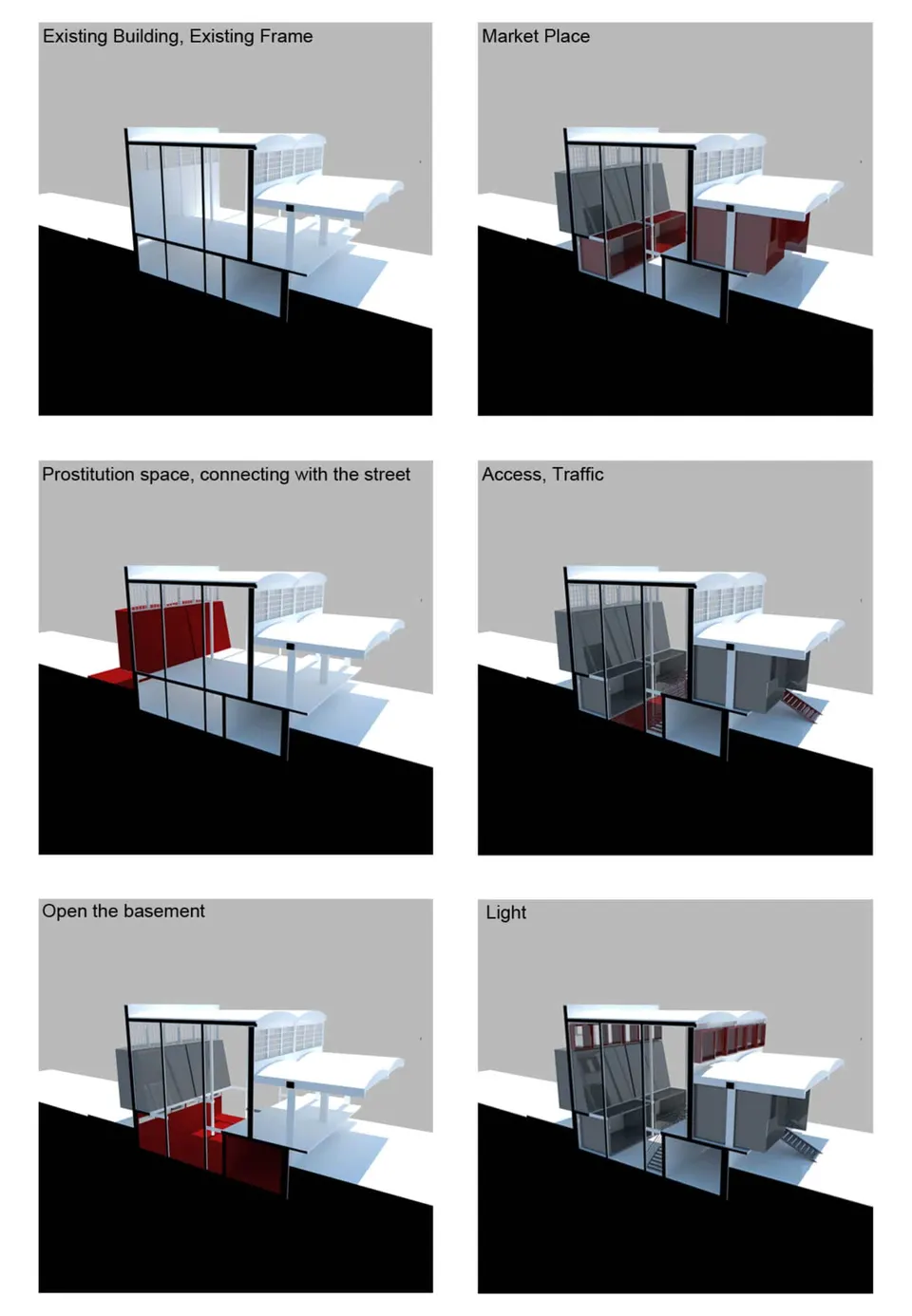
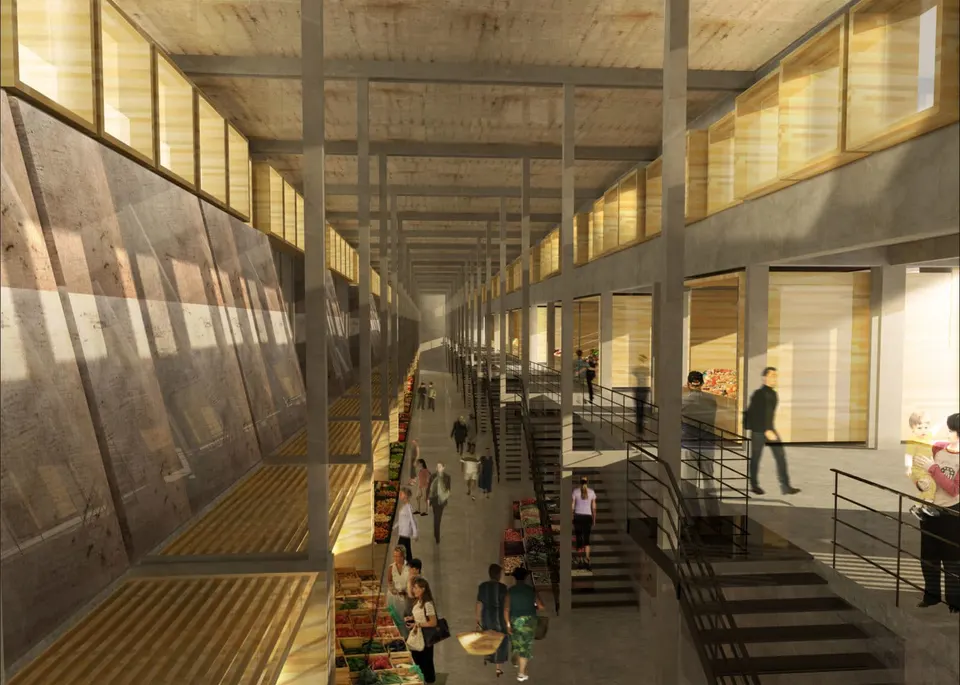
It was during a recent visit for a concert that we were surprised to find the place deserted… We then began to wonder about the future of this site, with its many possibilities, and about the situation of the prostitutes. So, through the theme of the Gaudi competition, we imagined a contextual rehabilitation of the place. A traditional market would fit in perfectly there, but why push prostitution out yet again? We therefore imagined what answers architects would give if prostitution were posed as a spatial and urban problem: how to bring together two spaces that are radically opposed in use. We wanted to consider a different solution to the systematic rejection of prostitution to the outskirts of cities.
Kévin Poireau: Your project is located in Lyon-Confluence, in a former warehouse that was heavily frequented by prostitutes. How does the Lyon-Confluence scheme plan to deal with this building?
Jérémie Taite and Laurie Paillet: It is the former Lyon wholesale market, the "true belly of Lyon". It is abandoned today, but it was not frequented by prostitutes either: they worked only on its periphery, at the roadside, and were driven out when the first phase of the Lyon-Confluence urban project began. The urban project offers no treatment for this building, simply its demolition.
Kévin Poireau: A centre for prostitutes or a prostitution centre?
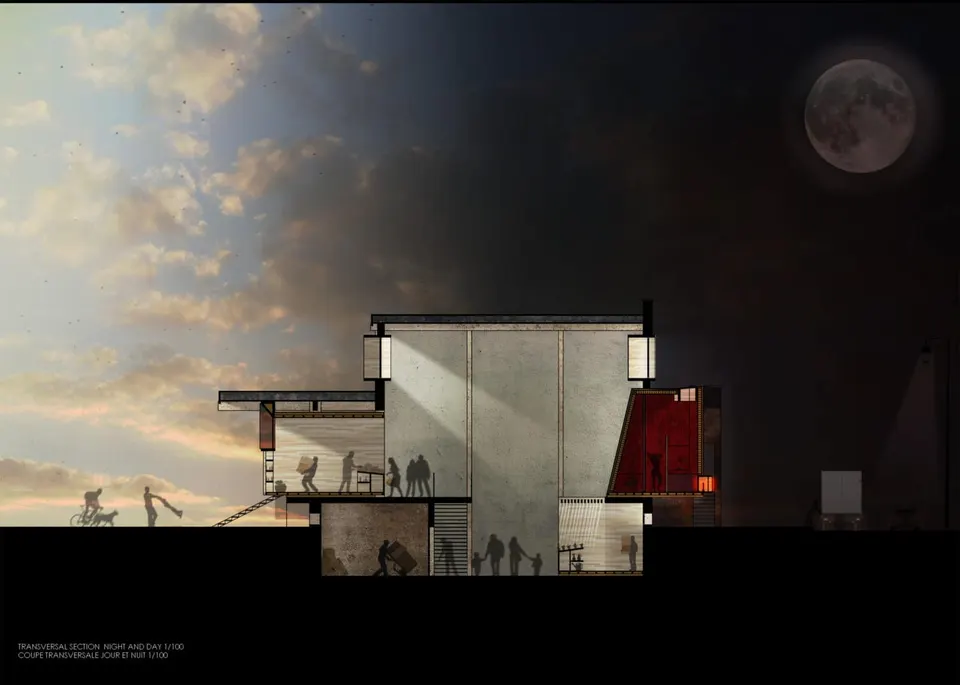
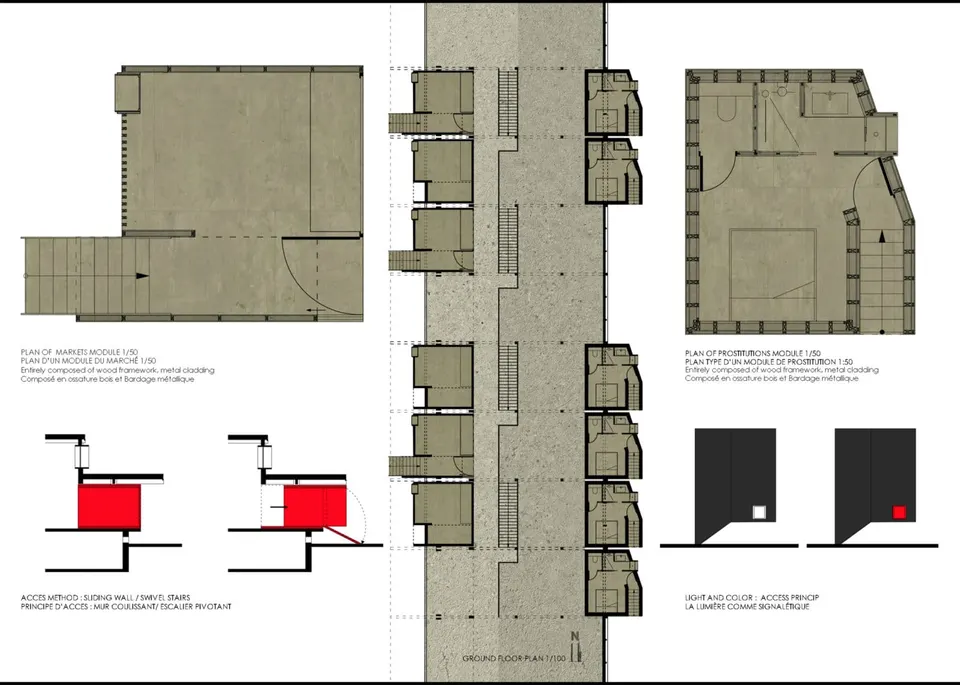
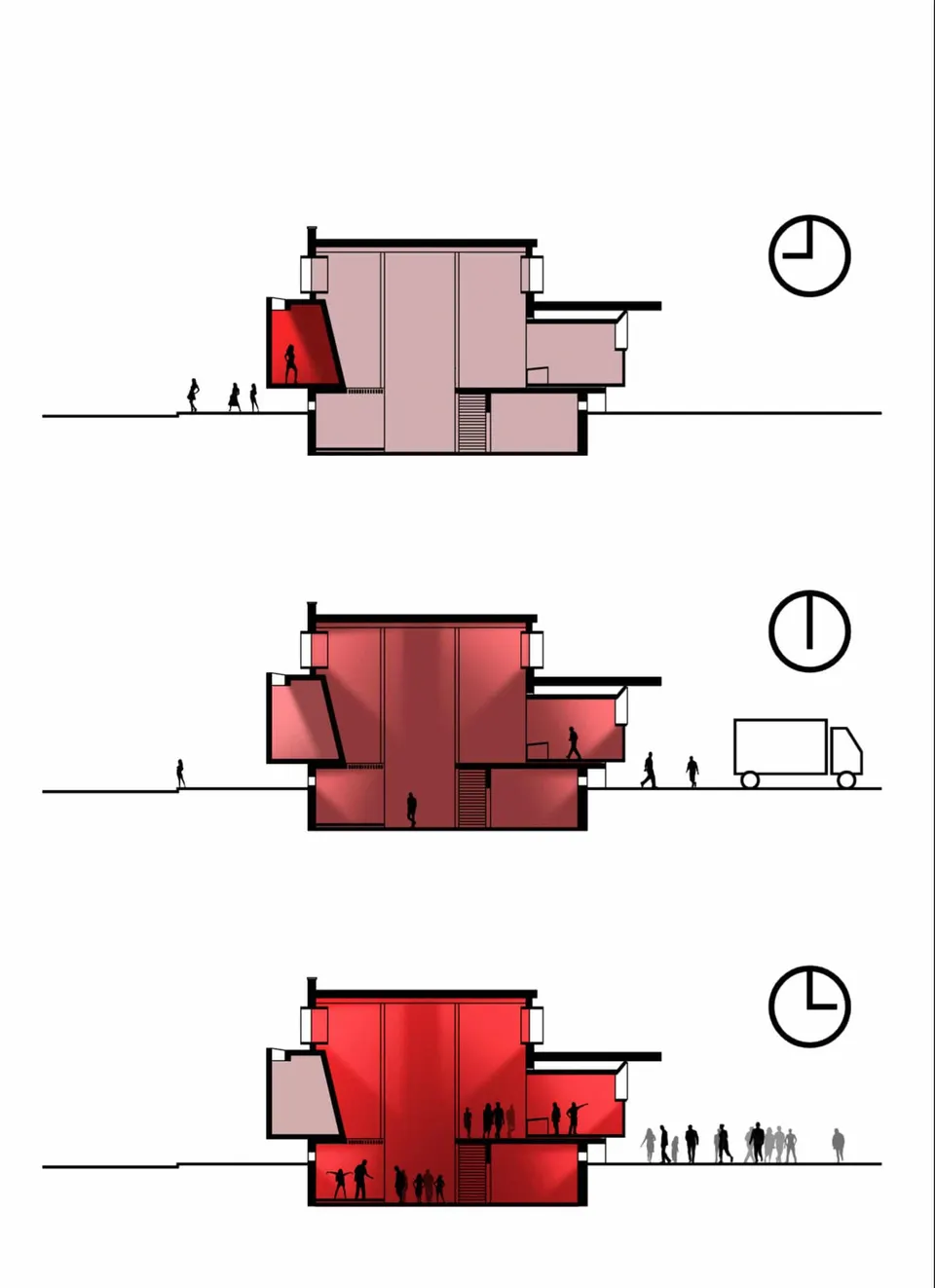
Jérémie Taite and Laurie Paillet: The project offers rooms to work in, adapted of course to the trade of prostitution (bed, sanitary facilities).
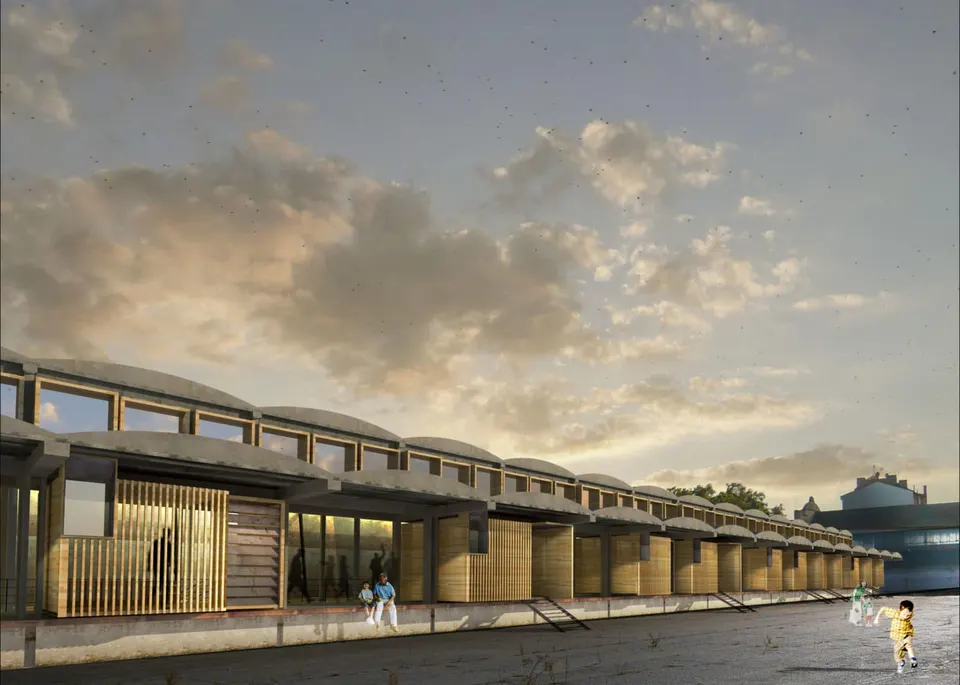
Kévin Poireau: Your project proposes bringing vegetable markets together with night markets, so you treat this trade on an equal footing with a butcher or a clothes seller. Is that not a sign of your commitment to defending their rights?
Jérémie Taite and Laurie Paillet: There is no question of comparing the two places, and we make no value judgement in that regard. In a city you find radically opposed activities that rub shoulders without being associated. They stand side by side because each meets a need. Moreover, there is no internal communication in the project. The prostitutes' modules and the market's modules turn their backs on each other and never communicate. Access is via the public highway.
We tried to maintain an almost theoretical neutrality. Whatever our opinion of prostitution, it is an activity that inevitably raises spatial and urban questions. Let us think about them as architects and put forward one possible response to the given subject.
Kévin Poireau: Did you meet any prostitutes to learn their views on the urban project and their forced displacement, or their expectations of a place like the one you propose (outside a working session, of course)?
Jérémie Taite and Laurie Paillet: Unfortunately we did not have the opportunity to meet any prostitutes, so we relied on various testimonies. Very often the two main concerns that emerge are a lack of safety and a lack of hygiene.
Gallery
10 images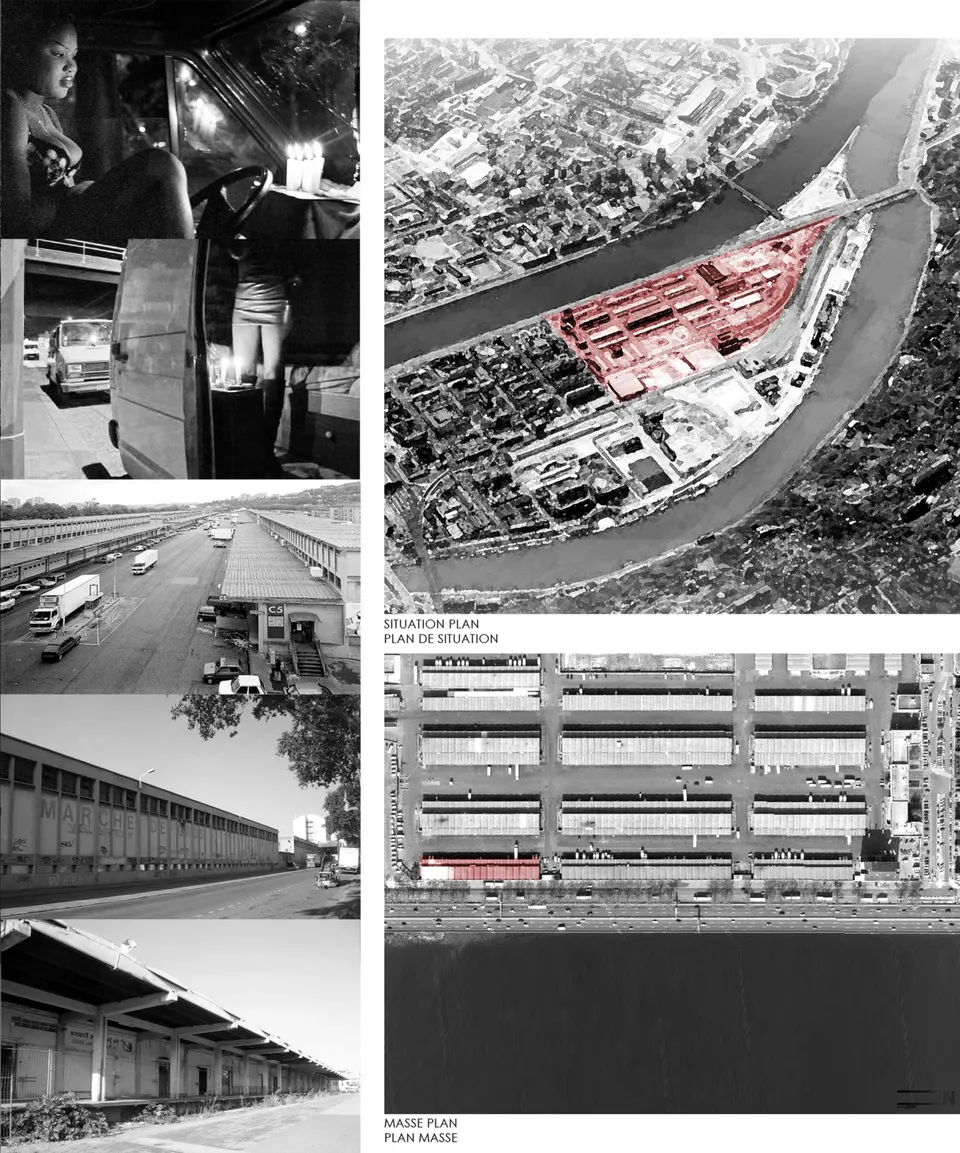
- © Jérémie Taite et Laurie Paillet