
In Vivo in Paris by XTU Architects
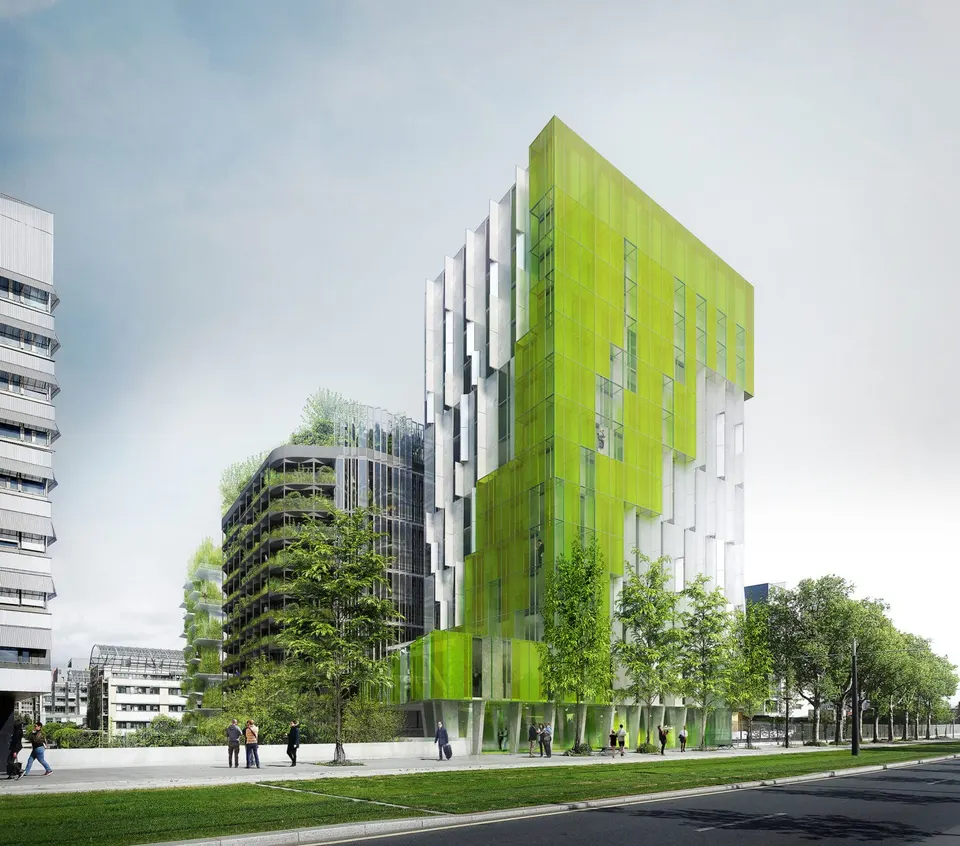
As part of the schemes to renew Paris, XTU Architects, working with the developer BPD Marignan, is among the winners with its In Vivo project, on plot M5A2 of the Paris Rive Gauche area in the 13th arrondissement. The scheme builds on the practice's work with the Symbio2 consortium, which Actuarchi presented some years ago alongside Olivier Scheffer. XTU Architects describes its work:
Rebuilding links between citizens, and with nature
Faced with the environmental and health impacts of runaway hyper-urbanisation, the approaching end of fossil fuels and growing inequality, cities are at the heart of a major challenge of the 21st century: encouraging social mix and openness among city dwellers, and bringing living nature into the city, in the service of a fairer, more sustainable and more resilient society.
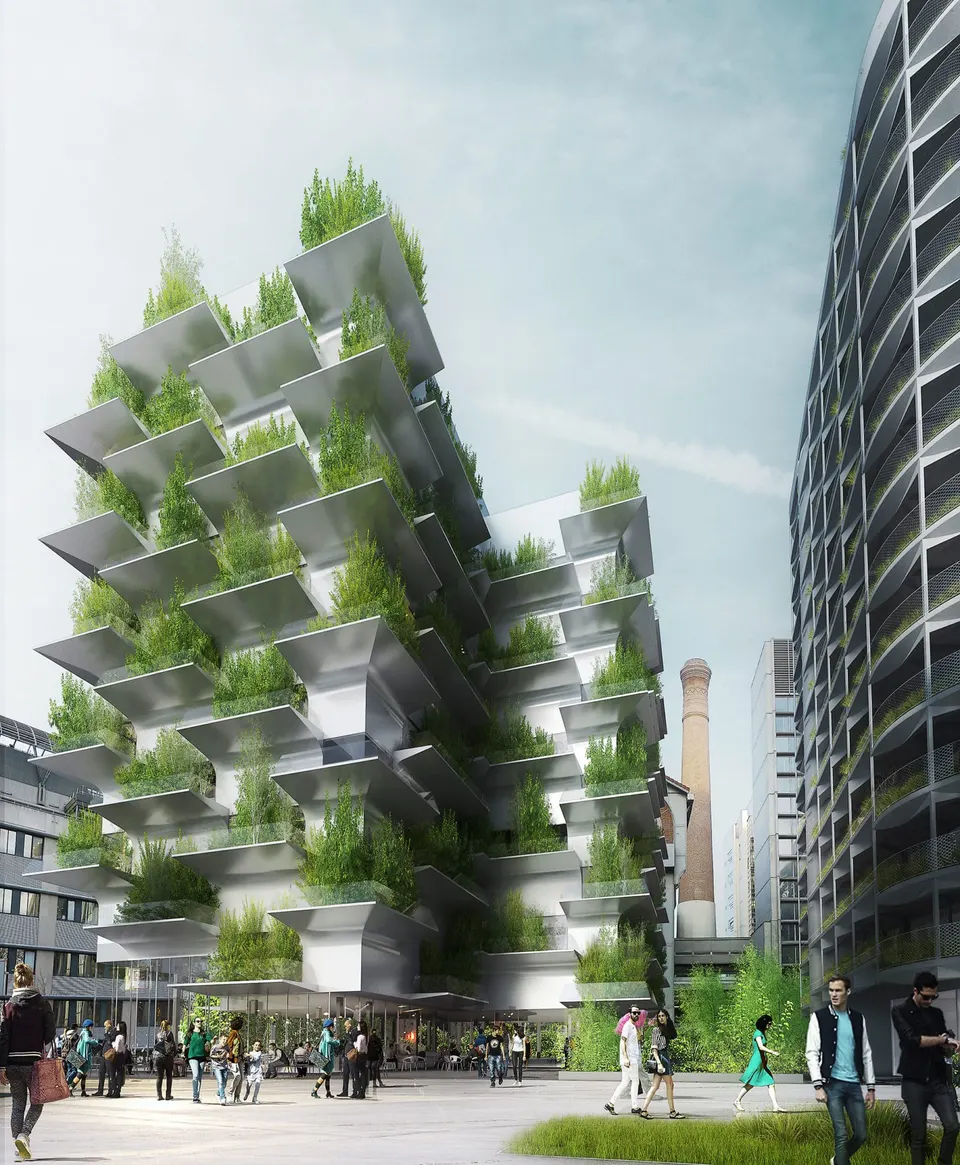
In Vivo answers this challenge, first by creating an architectural and programmatic environment that fosters permeability, social and functional mix, chance encounters and sharing between residents, users, neighbours… and the wider Grand Paris community. It comprises three buildings designed for views, aspect, natural light and natural ventilation, with optimal urban integration; 13,000 m² of housing, including homes for sale, intermediate-rent housing and a residence for students and young researchers; a 1,200 m² third place open to all; a 255 m² alternative café; and more than 2,000 m² of gardens and vegetable plots.
A manifesto building for bringing living nature into the city
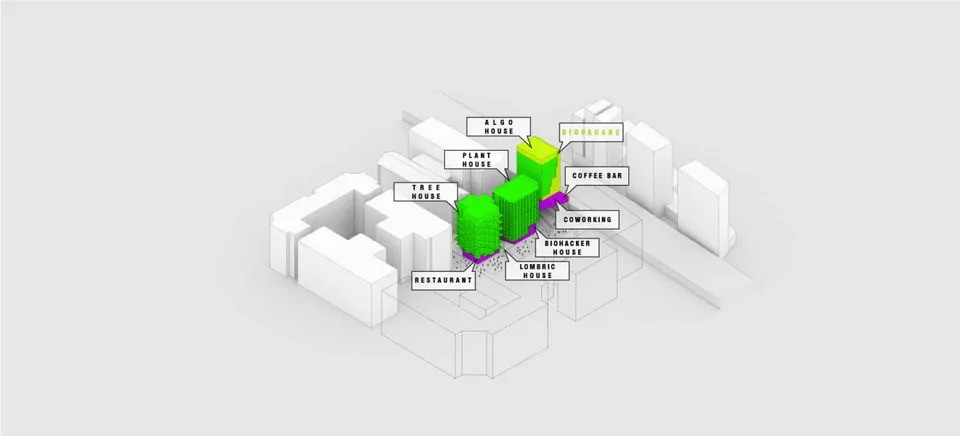
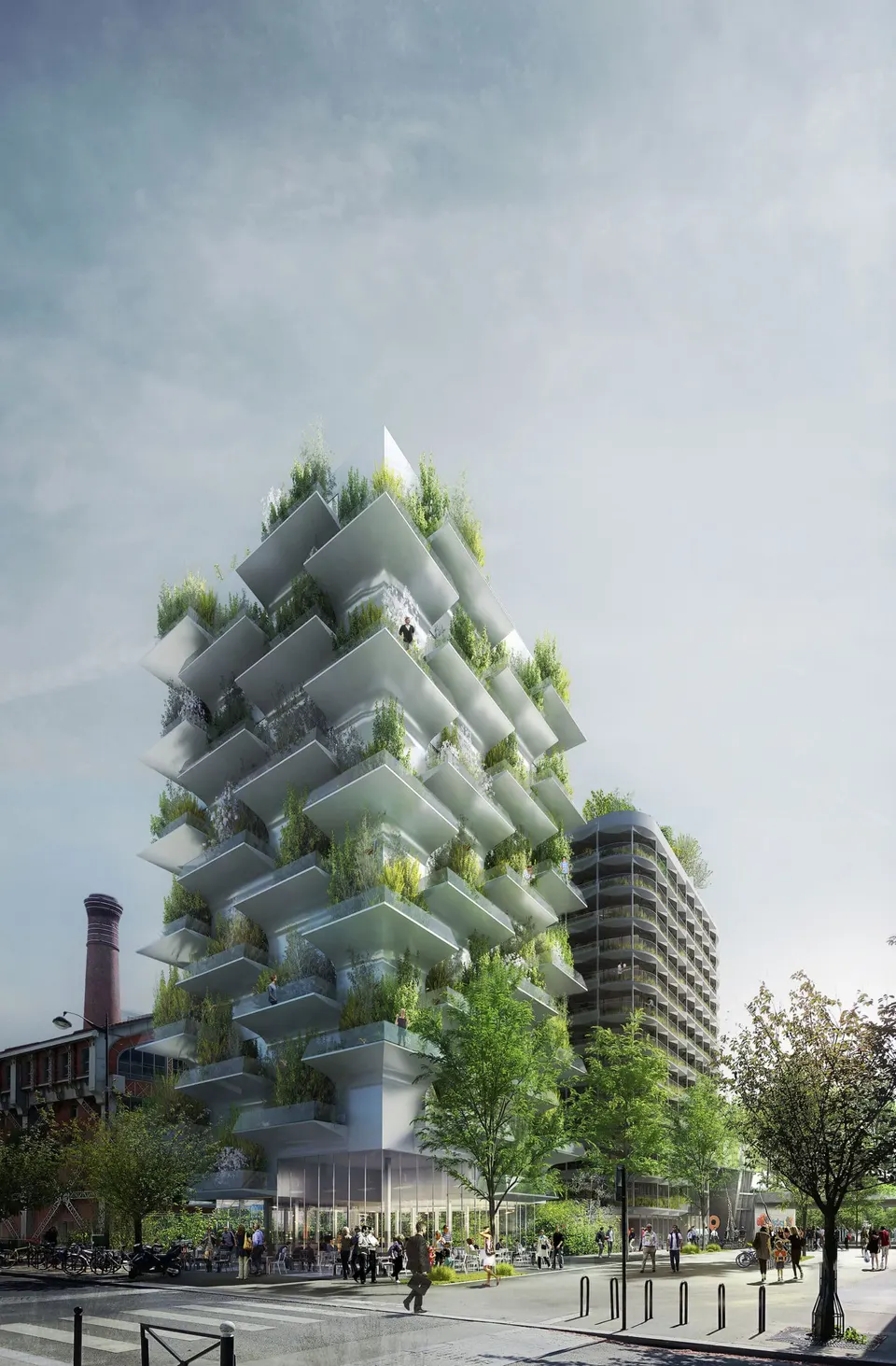
In Vivo sets out to be a manifesto for the innovative integration of living nature into the city, through three buildings for people… and one for earthworms. The Tree House has large planter-balconies on every façade, growing shrubs and trees that will welcome urban biodiversity. The Plant House is devoted to every form of vegetable garden and small-scale urban farming, in loggias, under greenhouses or in the open air on the roof. The Algo House has a biofaçade that produces microalgae for medical research. The Lombric House is a structure in which earthworms are raised, to vermicompost the residents' organic waste and enrich the soil for the crops.
A biofaçade producing microalgae for medical research
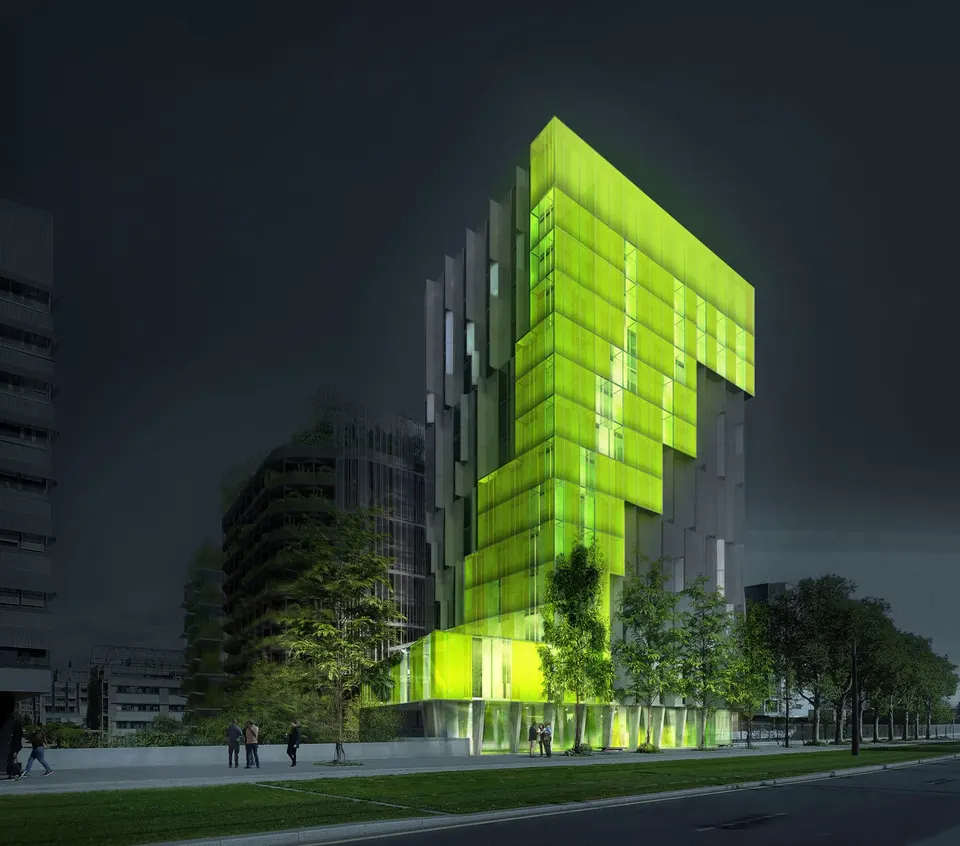
On boulevard du Général Jean Simon, the Algo House will showcase a major innovation developed by XTU and the SymBIO2 consortium: a "biofaçade". Operated by AlgoSource, this new-generation façade will make it possible to cultivate, inside "biological solar collectors" (photobioreactors), high-value microalgae for medical research.
It is at the heart of a research programme now taking shape on active compounds derived from microalgae for future bio-based medicines. The programme brings together the district's outstanding life-science expertise (Universités Paris 5, Paris 6 and Paris 7) and the University of Warsaw, under the direction of the GEPEA laboratory at the Université de Nantes. The productive biofaçade will also allow the building to make use of the heat captured by the photobioreactors for domestic hot water and heating, bringing its energy consumption below the Plan Climat de Paris threshold of 48 kWh/m²/year. After seven years of R&D, an industrial pilot plant of 200 m² is under construction in Champs-sur-Marne, on the CSTB site, by the company VIRY, a partner in SymBIO2.
Rising above the boulevards des Maréchaux on the south-east gable end of the future residence for young student-researchers, and lit at night, this living façade will be a strong signal at the southern entrance to the Masséna district and at the junction of Masséna, Bruneseau and Ivry.
A laboratory building, driving innovation and citizen participation
As a catalyst for innovation at the heart of In Vivo, a third place run by the open, citizen-led innovation lab La Paillasse will allow residents of the block and the neighbourhood, researchers, artists and entrepreneurs from all backgrounds, all passionate about the life sciences and the city, to meet, experiment and create within 1,000 m² of shared, convivial space.
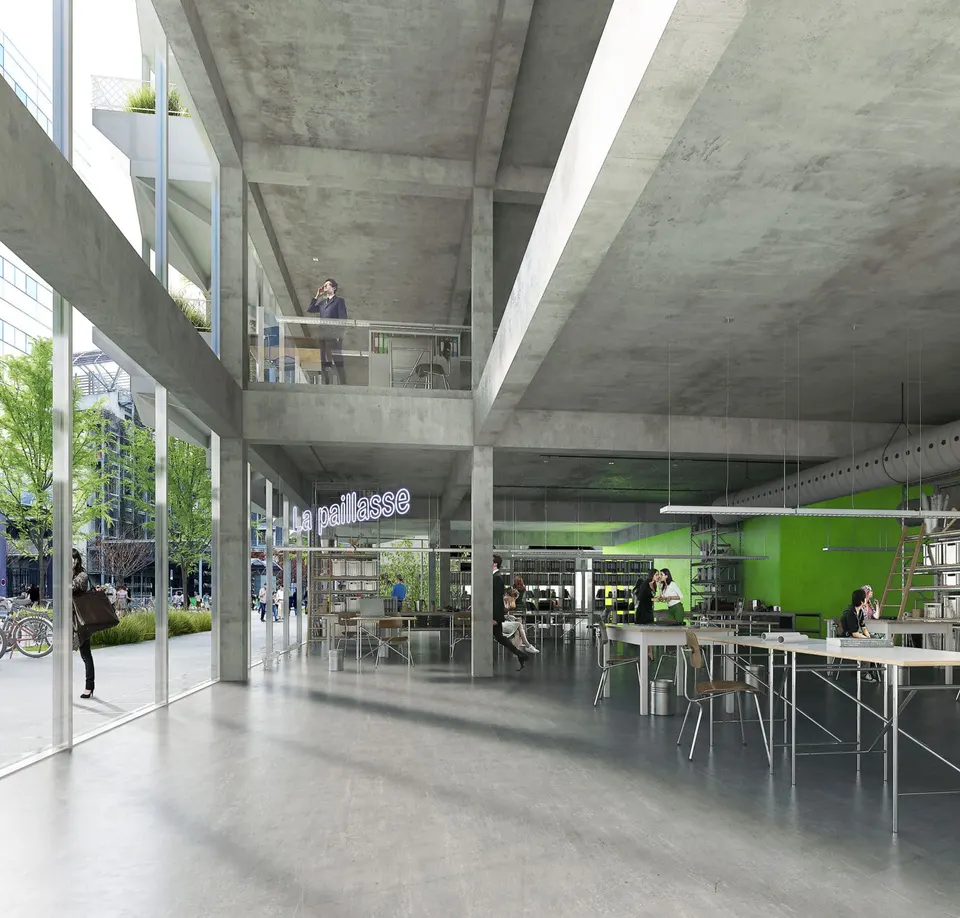
This citizen lab will form part of a broader participatory and collaborative process at neighbourhood scale, designed and led by the Centre Michel Serres and run by associations such as Toits Vivants (with Vergers Urbains and the Collectif Babylone), services such as Mon P'tit Voisinage, and street artists such as the association Le Mur.
A model of social mix
Beyond its architectural and environmental innovations, In Vivo is a strong response by the SNI group to the need for housing across Greater Paris. A model of social mix at the heart of the metropolis, the programme comprises 48 intermediate-rent homes in the Plant House, managed by SNI Île-de-France, and 141 homes for students and young researchers in the Algo House, managed by EFIDIS, a subsidiary of the SNI group.
BPD Marignan will also market 104 homes for sale in the Tree House. "We are convinced that to become compatible with living nature again, the housing of the future must work like living nature. The M5A2 site, and the extraordinary skills and energy around it, can become the home of the 'In Vivo' experiment," comments architect Anouk Legendre of XTU.
Gallery
6 images- © XTU - MU
- © XTU