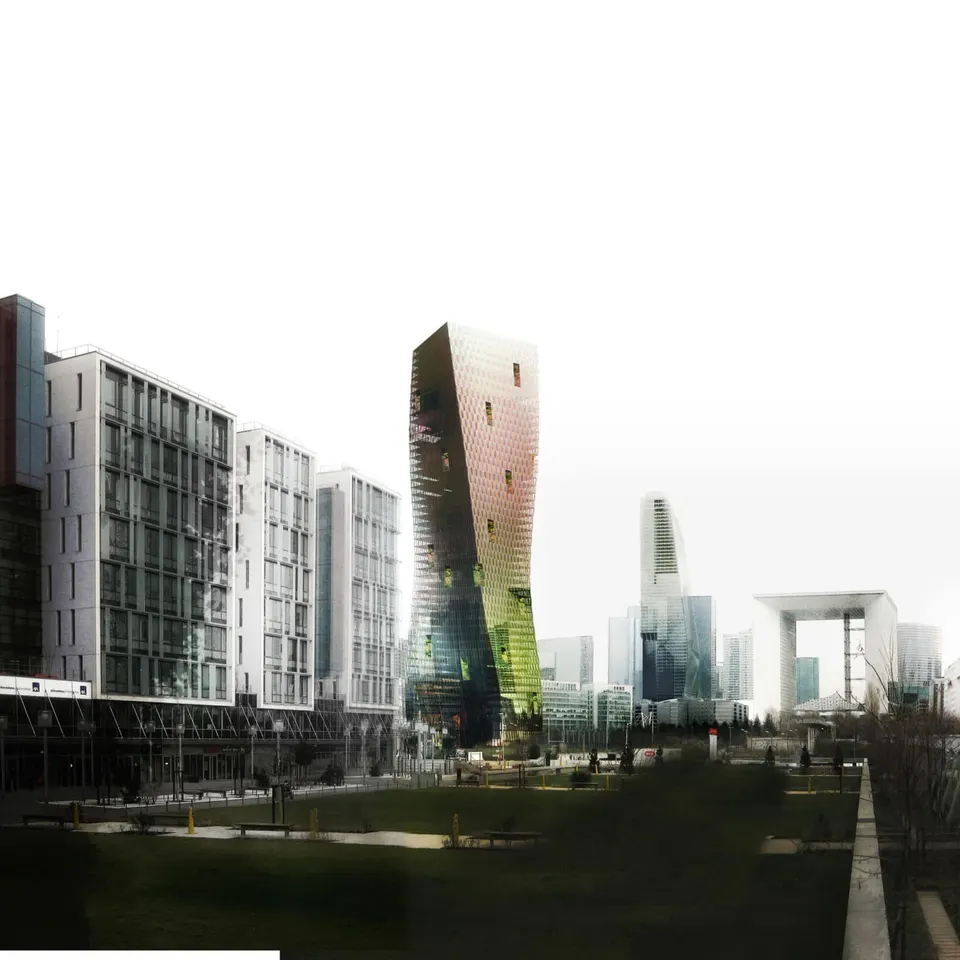
SymBio2 unveils its first prototypes of microalgae-based biological solar collectors
The practice X-TU Architectes and the GEPEA laboratory at the Université de Nantes (CNRS UMR 6144), together with Algosource Technologies, R.F.R and Permasteelisa France, their partners in the SymBio2 consortium, are unveiling their first prototypes of biological solar collectors based on microalgae.
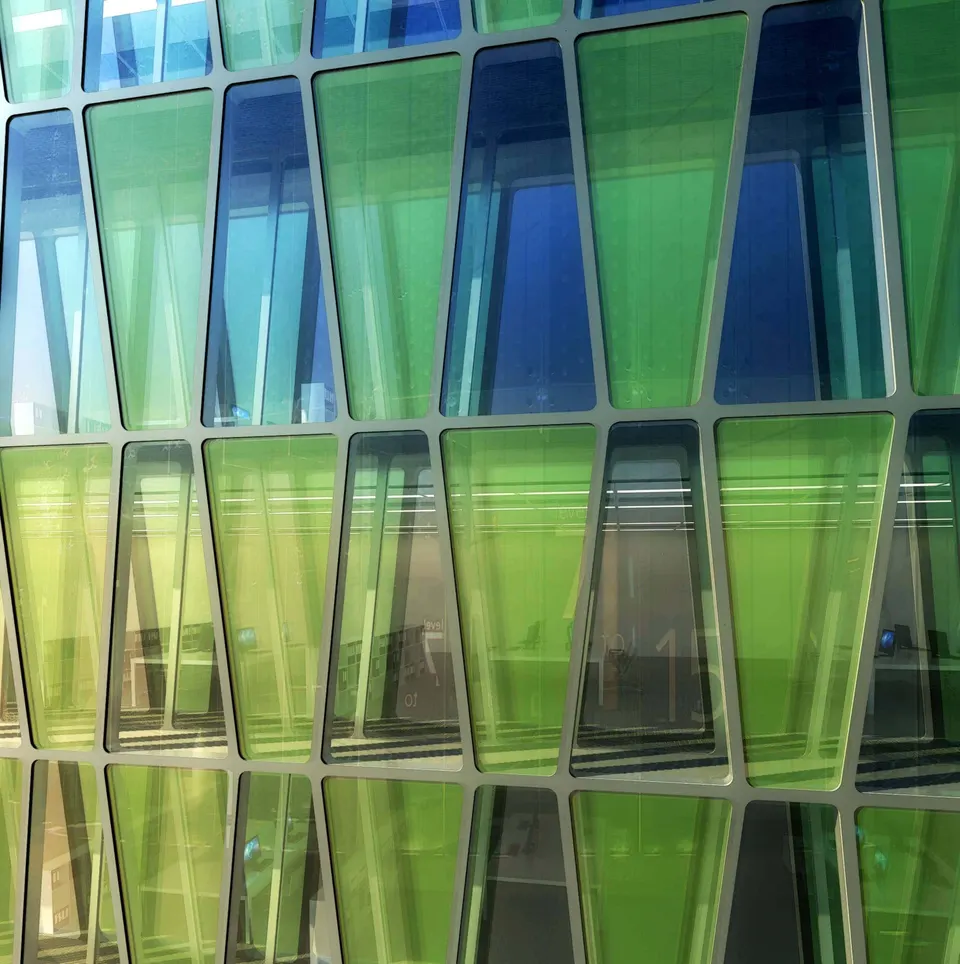
X-TU has been working since 2007 on curtain walls that incorporate microalgae cultivation. The concept stems from the observation of urban sprawl and aims to make use of unused façade surfaces to grow microalgae. This foodstuff is rich in protein, lipids (omega-3 and omega-6), antioxidants, essential vitamins and natural pigments, for humans and animals alike, and could in future also be used as an algal biofuel or as a material. A 40% reduction in production costs is possible for the algae-farming industry. For the south-facing façade of a large tower, production is estimated at 33 tonnes of biomass per "vertical hectare"; for the client, the investment pays for itself in seven years, not counting the image benefits of a commitment to sustainable development.
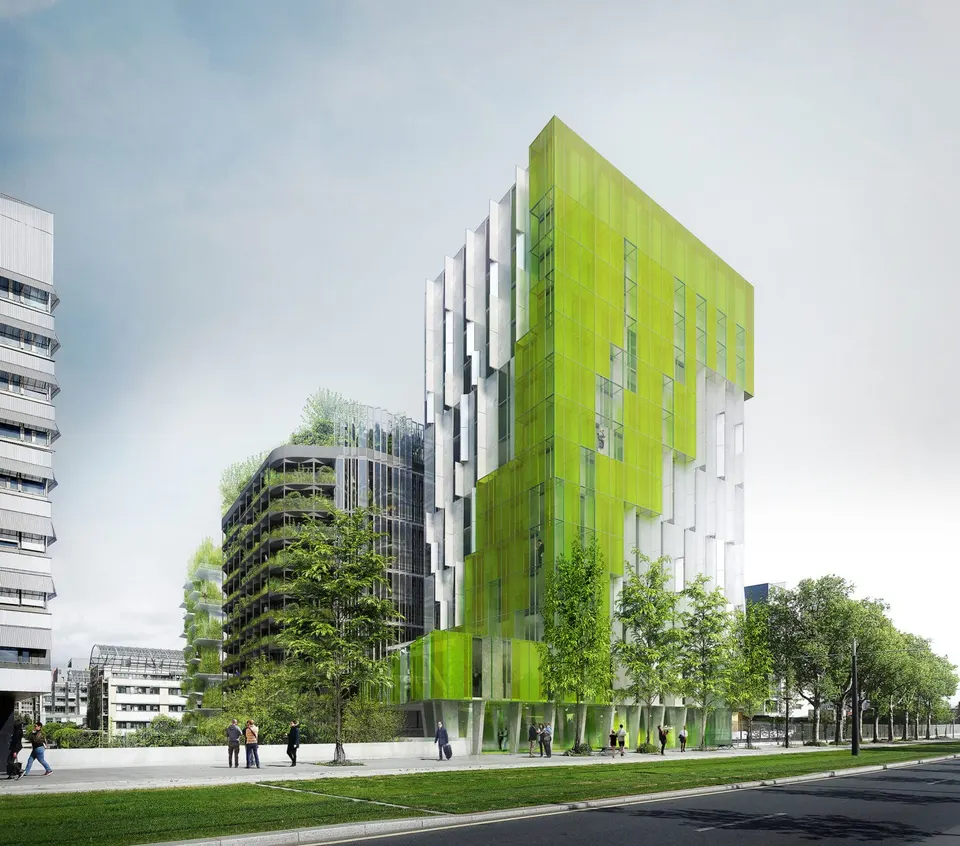
The first prototypes are now up and running, making it possible to analyse how the culture behaves and to measure the performance of this green façade. The consortium has teamed up with a manufacturer so that the system can be mass-produced, for new-build projects and refurbishment alike. This skin is particularly well suited to high-rise buildings, since the panels reduce overheating. It can also be connected to the building's water supply or greywater network. Olivier Scheffer, head of research at X-TU, talks us through the green façade concept in more detail.
Kévin Poireau: How do you plan to maintain these panels?
Olivier Scheffer: In this type of photobioreactor (PBR), the medium is agitated by injecting pressurised air (a so-called "air lift" system), which stops the microalgae adhering to the inner walls (an "antifouling" system). If fouling does occur despite this – which is rare – the PBR is emptied and flushed with pressurised water, with certain detergents in extreme cases, which cleans it thoroughly. Finally, the glass is laminated, so if it is struck the liquid will not escape. The PBRs are removable and replaceable.
Kévin Poireau: Does this façade system work panel by panel, or across the whole façade?
Olivier Scheffer: Each floor is connected in series, and each PBR can be bypassed if there is a problem.
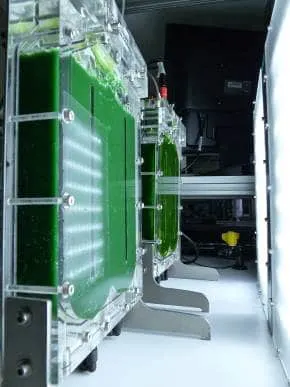
Kévin Poireau: How do you plan to "harvest" the algae? How long does a cycle last? What are the optimum conditions for this kind of façade? What are its limits?
Olivier Scheffer: Harvesting is carried out floor by floor, using a system of pumps and solenoid valves controlled by an industrial PLC, which directs the filtered algal medium to a plant room in the basement, where a technician can pre-process it. The length of the cycle varies according to the strain being grown and the climatic conditions, from 8 hours to several days. The optimum conditions for the strains we cultivate are the same as for humans (hence the appeal of combining microalgae cultivation with buildings): between 18 and 25°C, even though microalgae are also found in Antarctica and in tropical regions. The main current limit of PBR façades is the cost of thermal regulation. This is a problem we are tackling with our own patented double-skin biofaçade, which regulates the temperature of the microalgae passively through the greenhouse effect in winter and natural ventilation in summer, as well as through heat exchange with the building's water network.
Kévin Poireau: How would the cost of this type of product compare with more conventional panels with similar thermal performance?
Olivier Scheffer: A large part of our development work has focused on industrialising the PBRs, in collaboration with our partner Permasteelisa Group, so as to make them simple, robust, low-cost products that are easy to install and maintain. They draw on the research of our partner GEPEA (CNRS UMR 6144), the world's leading laboratory on the controlled cultivation of microalgae in intensified PBRs (and yes, they are French!), and on Permasteelisa's industrial experience, brought together by our practice X-TU and our partner R.F.R (façade engineering consultants). The prototypes built in the laboratory are now the most efficient available, at least 50 times more efficient than previous-generation PBRs.
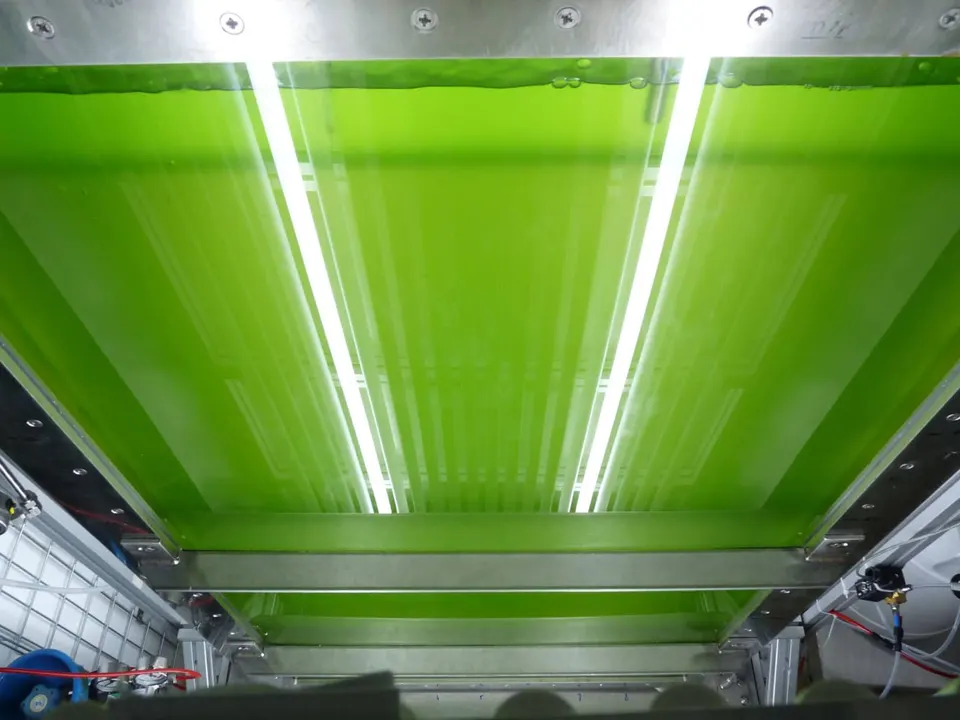
Kévin Poireau: Their characteristics seem restrictive (weight, dimensions, how the glass behaves). What aesthetic does this produce?
Olivier Scheffer: As for the aesthetics, I think the result demonstrates how well these PBRs can be integrated architecturally. As for weight, Permasteelisa sometimes uses armoured glazing in its projects that is far heavier. Moreover, the PBR allows 50% of the façade to be glazed with cheaper glass than on conventional curtain-wall façades. The glass is sized to carry the weight of the water, which remains limited given the thin profile of the PBRs.
Kévin Poireau: What would be the benefits for a client of cultivating these algae?
Olivier Scheffer: There are many benefits: thermal regulation of the building from the outside, for a small additional cost compared with an HQE façade; a profitable microalgae yield in "green chemistry" applications (the profitability claimed by some players in the field for algal biofuels or water treatment is hype with no concrete reality behind it); potentially a rent or lease payment, and therefore a regular income, from the operator; not to mention the creation of local industrial jobs and the brand image of a "biotech" building...